Palmitos Park, Gran Canaria: The Complete Visitor Guide
What to see at Palmitos Park, how to plan the shows, how long you need, how to get there from the south and how to get your tickets: the honest guide to the park in the palm canyon.
Martín PazCanarian Resident · Foodie
Share
Palmitos Park is the classic inland excursion of southern Gran Canaria: a botanical garden and animal park planted high up a canyon of palms, twenty minutes from Maspalomas beach. You can do it properly or do it halfway, and the difference comes down to arriving at the right hour with the shows already planned. This guide is for doing it properly.
Palmitos Park in short
What it is
A botanical and animal park in a canyon of palm trees
Where
Barranco de los Palmitos, above Maspalomas
From Puerto de Mogán
About 35-40 minutes by car
From Maspalomas
About 15-20 minutes
How long you need
Between 4 hours and a full day
Who it suits
Families with children, and anyone into animals and plants
What Palmitos Park actually is (and why it is not just another zoo)
The park opened in the 1970s as a garden of exotic birds, and that heritage shows: rather than a zoo with cages, it is an entire canyon turned into a garden, with the enclosures scattered among thousands of palms. In 2007 a huge wildfire destroyed a large part of the grounds, and what you visit today is largely the rebuild, with facilities more modern than many European parks of its size.
The mix is its signature: in the same visit you go from an aviary to an orchid house, from the dolphins to a cactus garden, and from a tropical butterfly house to birds of prey flying free over the canyon. It is not enormous (this is not Loro Parque) and for families that is more a feature than a flaw: you can see all of it without heroics or early alarms.
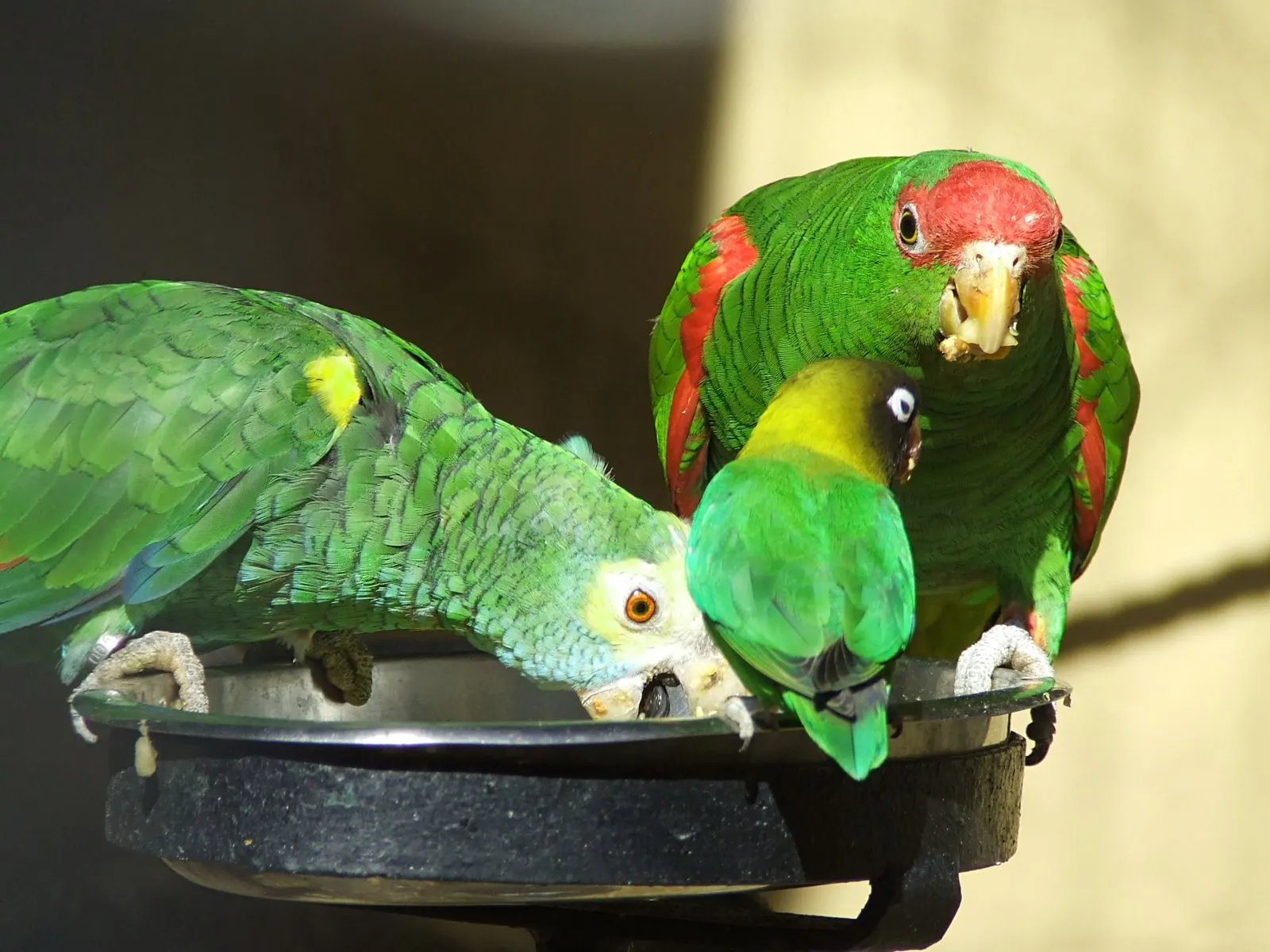
The parrots, the park’s original heritage: it opened as a garden of exotic birds.
What to see: the essentials
The shows, which set the rhythm of the day
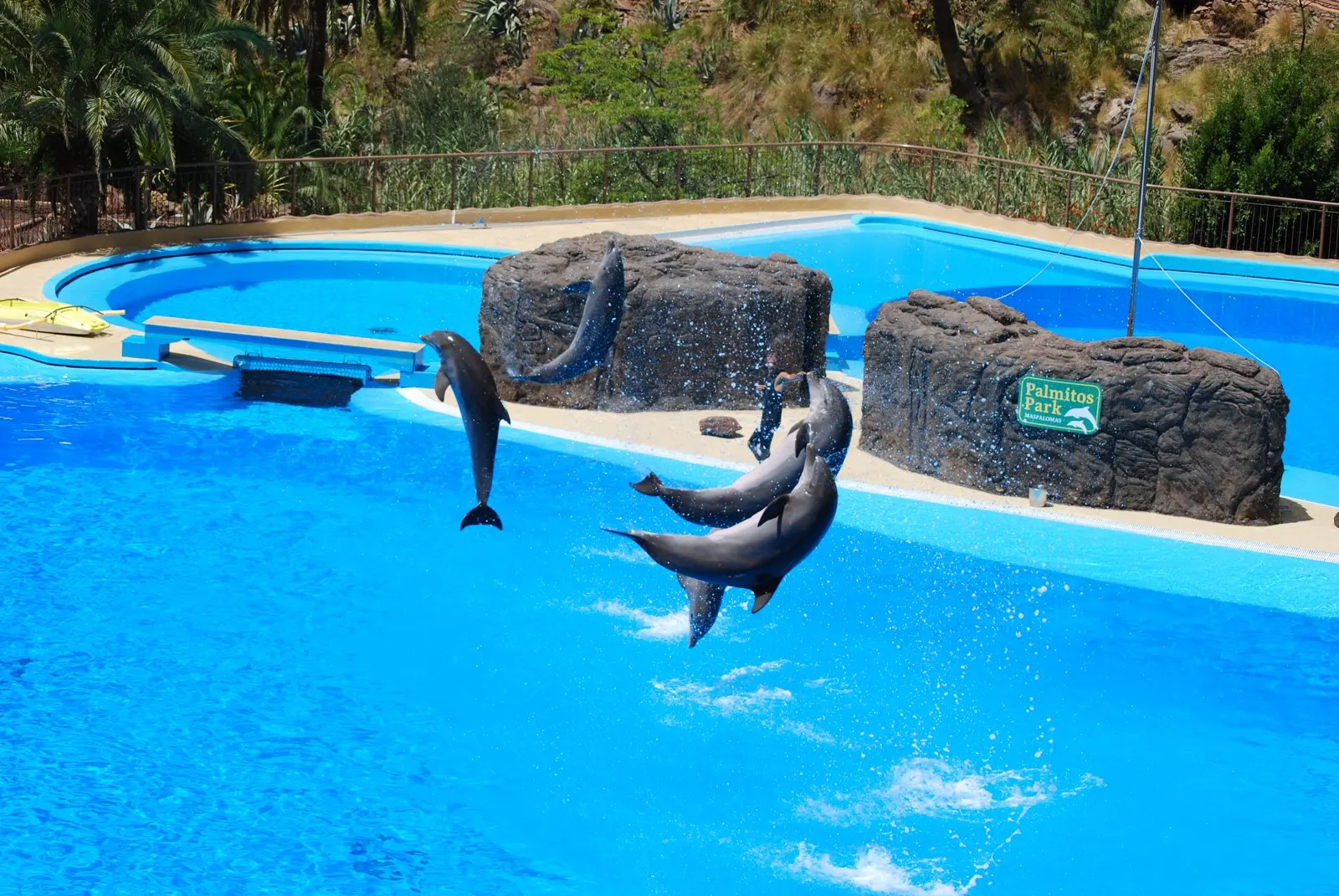
Three of them structure the visit: the parrot show (the park classic), the free-flight birds of prey (eagles and falcons skimming heads with the canyon as a backdrop) and the dolphinarium. Times change with the season, so your first stop inside should be the day’s schedule board: build the visit around the shows and fill the rest at your own pace.
The free-flight display, with the canyon sky as the stage.The dolphinarium, the show that fills up first: arrive ten minutes early.
The greenhouses: orchids and butterflies
The orchid house and the butterfly house are the two corners that most surprise visitors who came expecting only animals. The butterfly house is among the largest of its kind in Europe and is crossed slowly, with butterflies landing wherever they please. On a hot day they are also the best shade in the park.
The aquarium and the rest of the walk
The aquarium runs through tropical fish from several seas, and between one enclosure and the next you keep meeting meerkats, primates, flamingos and the cactus garden, which anywhere else would be the attraction and here is almost a rest stop. The canyon itself does the rest: the vegetation is half the visit.
The ground crew: meerkats, gibbons and friends
Between aviaries and greenhouses the park keeps producing its land animals: the meerkat colony (a compulsory stop with children, there is always one on sentry duty) the gibbons on their island of palms, flamingos, tortoises and a reptile house whose most famous resident is the Komodo dragon, in its day the first that could be seen in the Canary Islands. It is not an endless collection, and that is the charm: every enclosure gets its moment, without the conveyor-belt feeling of the big parks.
With children: the plan by age
With babies and under-3s the park works as a stroll: shade in the greenhouses, big visible animals, and the dolphin and parrot shows, which already land at that age. The one catch is the slopes with a pushchair: take them slowly and do not try to see absolutely everything.
Ages 4 to 8 are the sweet spot: the shows hypnotise, the meerkats and the butterfly house do the rest, and the park’s size matches what a child that age can enjoy without melting down. The right order: an early show, animals, lunch, second show, greenhouses and home.
Ages 9 to 12 get the most out of the free-flight birds and the reptile house. Beyond that, the waterslides start competing: if yours are adrenaline kids, look at the Aqualand combo at the end and split the trip across two different days.
When to go: season, day and weather
The park opens all year, and this is one of the few excursions on the island where winter plays in your favour: from November to April the canyon’s heat turns into perfect temperature, while the coast can be windy. In summer the visit works just as well, but arriving at opening time goes from advisable to mandatory.
As for the day of the week, avoid mixing with cruise-ship arrivals and the peaks of the organised excursions: a weekday at opening time is the combination with the fewest people in front of each glass. And if the day dawns cloudy in the south (rare, but it happens) the canyon usually sits above the cloud belly: it is the perfect plan B.
Planning the day: the strategy that works
The classic mistake is arriving at midday. The park sits in a canyon sheltered from the wind, and that means hotter than the coast exactly in the middle hours. The good strategy is the opposite:
Arrive at opening. The first two hours are the best: pleasant temperature, active animals and a half-empty park, because the bulk of hotel visitors lands between 11:30 and 12:30. Check the show board as soon as you enter, lock in the shows you want and walk the rest between them, saving the greenhouses and the aquarium (shade) for midday.
The canyon shelters you from the wind, and in summer that translates into several degrees more than at the beach. A cap, water and sunscreen are not optional, least of all with children. There are shaded spots and food inside, but the sun between enclosures is serious.
How long you need
With the three shows and the full circuit, between four and five hours. With small children, or eating inside at a calm pace, it is a full day without forcing anything. Under three hours means choosing between shows and circuit, and then the ticket price stops making sense: if you go, go with time.
Getting there
The park sits at the end of the road that climbs the Palmitos canyon from the Maspalomas area. By car it is simple: from Maspalomas you climb in a long quarter of an hour, and from Puerto de Mogán it is about 35-40 minutes via the GC-1 and the canyon road. There is free parking at the gate.
Without a car, the options are the bus from the Maspalomas area (check the route and times for the day on the Global website, because frequency is limited) or tickets with transfer included from the southern hotels, usually the comfortable option if you are staying in Mogán.
A taxi from Maspalomas or Playa del Inglés is viable for groups (the climb is short and splits well between four) but from Puerto Rico or Mogán the maths stops working against a hire car or an organised transfer. And a note for first-time drivers: the canyon road is an ordinary road with bends, none of the drama of the summit routes; any car climbs it without white knuckles.
By road, without traffic. Add a good fifteen minutes in high season.
DestinationKmTime
Maspalomas10 km17 min
Playa del Inglés12 km20 min
Puerto Rico25 km30 min
Puerto de Mogán32 km38 min
Las Palmas65 km50 min
Tickets, without the queue
The ticket office works, but buying online skips the opening-time queue, which is exactly when you want to walk in. You can book here with instant confirmation; and if the plan is to pair the park with a day of waterslides, the Aqualand combo works out cheaper than two separate tickets:
If you are staying in the southwest, the park pairs beautifully with a slow afternoon return. This is the outline we recommend to anyone who asks us at the harbour:
Palmitos Park from Puerto de Mogán
9:00
Leave Puerto de Mogán on the GC-1. No rush: it is about 40 minutes and the park opens mid-morning.undefined
10:00
Into the park (straight in with the online ticket). Photo of the schedule board and a two-minute plan for the day.undefined
10:15
Walk the upper part while it is cool: aviaries, meerkats, cactus garden.undefined
12:00
First show and lunch inside, in the shade.undefined
14:00
Dolphinarium and the greenhouses (orchids and butterflies) through the hottest hours.undefined
16:00
Head back. In Maspalomas you can finish with sunset over the dunes, or drive straight to Mogán for the evening swim.undefined
Palmitos Park or Aqualand?
It is the classic dilemma for families with one free morning, and the answer depends on age and the kind of day you want:
Swipe to see the full table →
Palmitos Park
Aqualand
Type of day
Nature, animals and shows
Waterslides non-stop
Ideal age
From age 2 up, and adults without kids
From 6-7 up, teenagers
How tiring
A walk with slopes: medium
High: it is a physical day
In the heat
Better first thing
The hotter the better
Real duration
4-5 hours
The whole day
The good news: you do not have to choose forever. The combo ticket in the section above covers both parks on different days and beats buying them separately.
The good and the improvable, minus the marketing
The good
The setting: an entire canyon of palms, not a concrete compound
Shows of real quality, especially the free-flight birds of prey
Manageable size: you see it all without exhausting the children
A butterfly house and an orchid house you do not expect in an animal park
Free parking and an easy drive from the whole south
The improvable
Serious midday heat in summer: the canyon blocks the wind
Food is decent but park-priced: captive-audience rates
Show times force you to plan the visit around them
Slopes: with a pushchair or reduced mobility, take it slowly
Seven local tricks
1. Photograph the schedule board. The moment you pass the turnstile, take a photo of the day’s show times. It is the treasure map of the visit and saves last-minute uphill sprints.
2. The dolphinarium fills first. If you want a shaded seat, arrive ten minutes before the show. The parrot and bird-of-prey shows leave more margin.
3. Footwear matters more than at the beach. The park is a canyon with slopes and steps: pool flip-flops no, comfortable trainers yes. With a pushchair, check the brakes.
4. Bring the water. There is food inside, but a refillable bottle saves money and stops. In summer, one per person at minimum.
5. Animal hours are your hours. First thing and late in the day the animals are active; at midday, they are looking for shade too. One more reason for the early start.
6. The greenhouses are the heat wildcard. Orchids, butterflies and the aquarium are the covered stops: save them for the middle hours and the day balances itself.
7. The return through Maspalomas. If you leave mid-afternoon, the road down passes ten minutes from the dunes: sunset from the lighthouse boardwalk is the perfect close before heading back to the southwest.
Common questions
Before you go
Is Palmitos Park worth it?
If animals and plants are your thing, yes: it is the most rounded inland excursion in the south of the island, and one of the few that works equally well with small children and without them. If you are after a huge safari-style zoo you will find it small; if you are after a well-built day in a spectacular setting, you will not.
How long does the park take?
Four to five hours with the shows included. With children, or eating inside, plan the full day.
What time should I arrive?
At opening. You dodge the midday heat, the animals are more active and the bulk of visitors arrives from 11:30 onwards.
Is it doable with a pushchair or wheelchair?
The park sits in a canyon and has slopes. It can be done, but take it slowly and plan rests in the shaded areas.
Is there food inside?
Yes, there are restaurants and kiosks in the grounds. You can also bring snacks; the water, in any case, always bring your own.
Can you visit on a windy or cloudy day?
Yes, and it is often a good idea: the canyon is sheltered from the wind that sometimes sweeps the coast, and the northern clouds rarely reach this far south. It is the classic plan B for odd days.
Do I need to book a specific date?
The online ticket books a date, which is advisable in high season to organise the rest of the week. The real advantage is walking straight in at opening time, which is the good hour.
Is Palmitos Park in Mogán?
No: it sits in the Palmitos canyon above Maspalomas, in the neighbouring municipality. From Puerto de Mogán it is about 35-40 minutes by car, and there are tickets with transfer from the southwest hotels.
In short
Palmitos Park is the most complete inland excursion of the south: a canyon turned garden, three shows that carry the day and a size that lets you see everything. The formula is simple: online ticket, arrival at opening, shows locked in before you start walking, and the greenhouses saved for the hottest hours. Do that and it is hard for the day to go wrong.
Teijo Hakala · CC BY-SA 2.0 · vía Wikimedia Commons · Juan Ramón Rodríguez Sosa · CC BY-SA 2.0 · vía Wikimedia Commons · Felix König · CC BY 3.0 · vía Wikimedia Commons
The critical eye behind every recommendation. A Canarian local and self-confessed foodie who knows every corner of Mogán. His mission: for every visitor to experience Mogán like a local.
Local Tip
From the heart of Mogán
“With fish, instead of ordering from the menu ask what came in today. The harbour still lands a catch and the answer changes daily. A vague reply tells you what you need to know.”
How to get there and where to park, why the water is so calm and the sand so golden, the seafront walk to Puerto Rico, when to go to dodge the crowds, and which southern beaches to weigh it against.
How to get there and where to park, what the sand is really like, what the Tauro blowhole is and when it erupts, where the cave sits, where to eat without emptying your wallet, and which southern beaches to weigh it against.
Everything about Puerto de Mogán’s Friday market: opening hours, where it is, what to buy, how to get there, where to park and the boat trips to enjoy it without a car.