Natural Pools of Gran Canaria: The Ones Worth It, and How to Swim Safe
The best natural pools and lava ponds of Gran Canaria, from Agaete to La Garita: what they are like, when to swim safely, and how to build the full day from the south.
Martín PazCanarian Resident · Foodie
Share
Gran Canaria has beaches for every taste, but its best-kept secret bathes in something else: lava ponds and natural pools, ocean water calmed by the rock itself. The bad news for anyone staying in the south is that nearly all of them sit on the north coast. The good news: they are exactly the excuse you need to cross the island for a day, and this guide builds you the whole excursion, including the safety part almost nobody explains.
The natural pools, in short
What they are
Lava ponds by the sea, filled by the ocean
Where
Nearly all on the north coast: from Agaete to Telde
Cost
Nothing: open coastline, no ticket office
When to swim
With a calm sea and, in general, high tide starting to fall
From the south
Between 45 minutes and 1 h 15 on the GC-2
Non-negotiable
Respect the swell: the north is not the Mogán shoreline
What a natural pool actually is (and why the north has almost all of them)
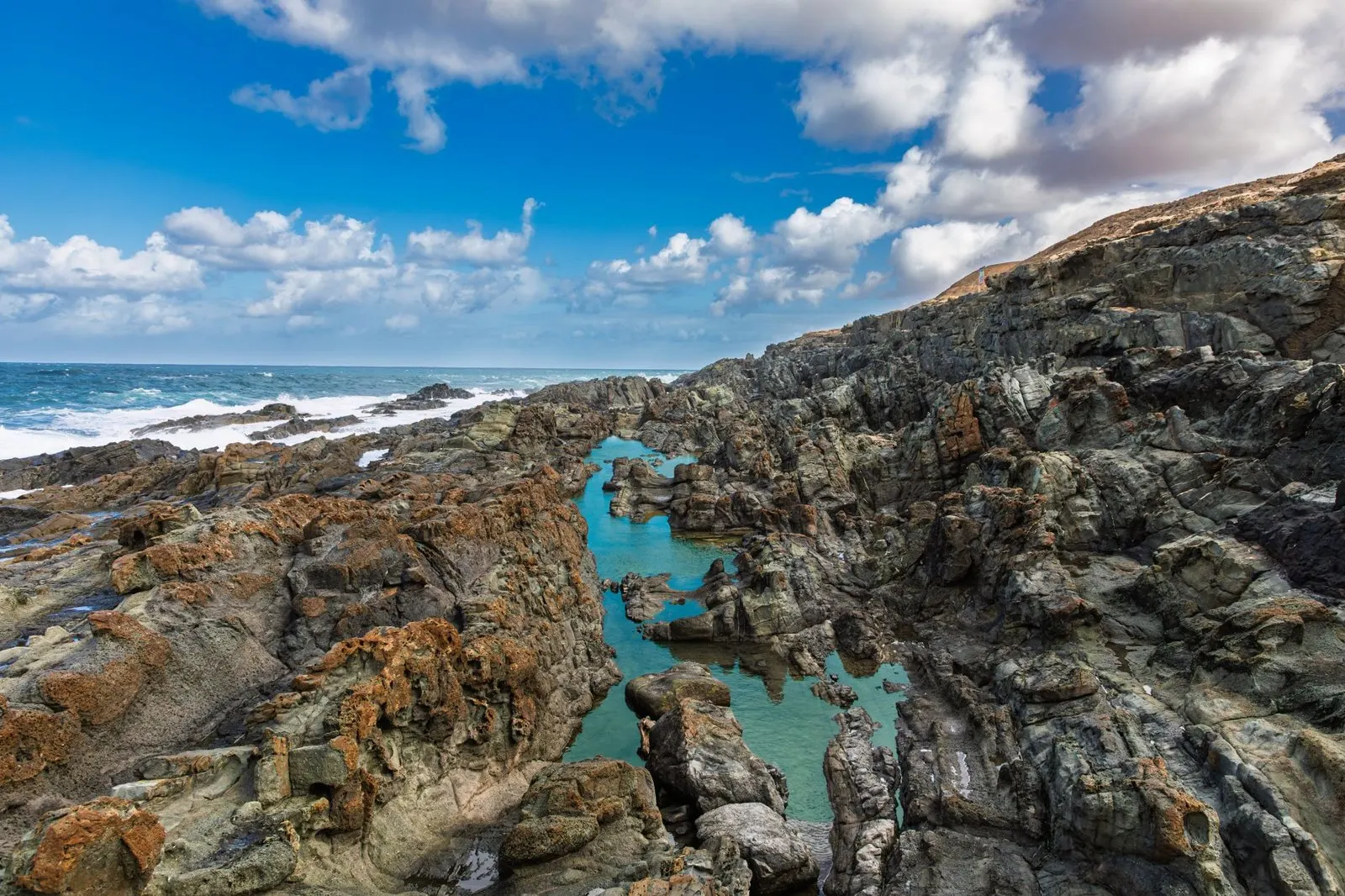
When a lava flow reaches the sea it cools into whimsical shapes: arms, dikes and ponds that the ocean refills with every tide. Some remain exactly as the volcano left them; others have been reinforced with low walls and ladders to make them comfortable. The result, either way, is the same small miracle: Atlantic Ocean water, still as a swimming pool, fish included.
Why the north? Because that is the coast where the flows built low lava platforms, and also the one that takes the dominant swell: the natural pool is precisely how that rough coast lets itself be swum. The south, with its tame sandy coves, never needed them.
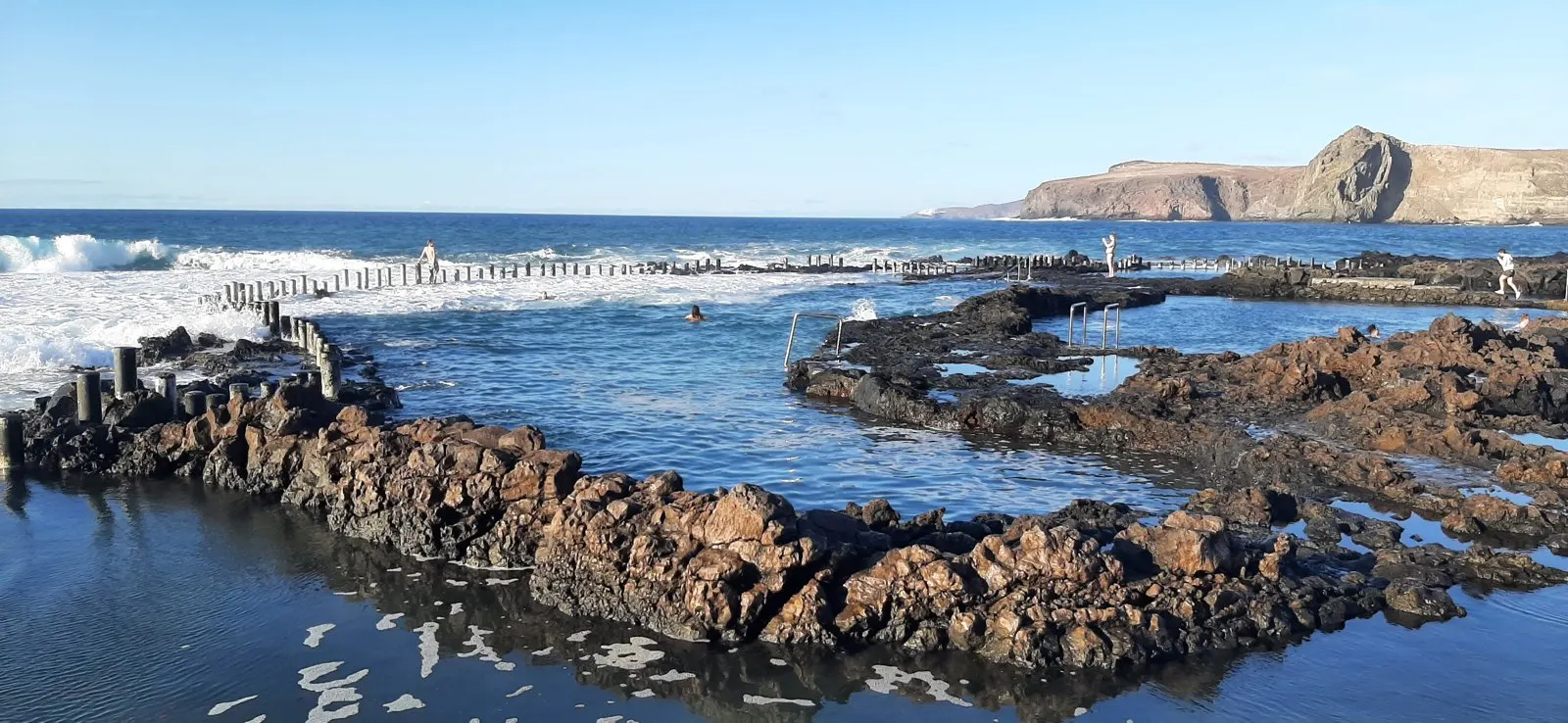
Las Salinas de Agaete: the sea breaks outside, the pond stays still.
First things first: how to swim without scares
This section comes before the list because it matters more. The pools are safe precisely when the sea allows it, and the north Atlantic has days of everything:
Watch the sea for ten minutes before getting in. If waves keep jumping the outer wall, it is not that pond’s day: water that comes in hard goes out hard. The tide rules: at very low tide some ponds turn shallow with rocks at the surface; with a strongly rising tide, the waves gain reach. The sweet spot is usually high tide starting to fall, with a calm groundswell. Water shoes or scraped feet: the bottom is lava and there are sea urchins; ten-euro reef shoes make every entry comfortable. And the final rule of rough coasts: never with your back to the sea on the outer platforms, and children inside the pond, not on the rims.
The ponds are open coastline: no lifeguard, no flag, no opening hours. With a northerly or north-westerly groundswell, the lava platforms are dangerous even when the day looks sunny and friendly. If in doubt, ask the local swimmers: if they are not getting in, neither should you.
The ones worth it, west to east
1. Las Salinas de Agaete (Puerto de las Nieves)
The most famous, deservedly: three connected ponds carved into the lava beside the Agaete pier, with ladders, real depth and Mount Teide floating on the horizon on clear days. They are the most comfortable introduction to the concept, and the ones that pair best with a full plan: the fishing village of Puerto de las Nieves is five minutes on foot, its fresh-fish terraces waiting for you after the swim.
2. El Charco de San Lorenzo (Moya)
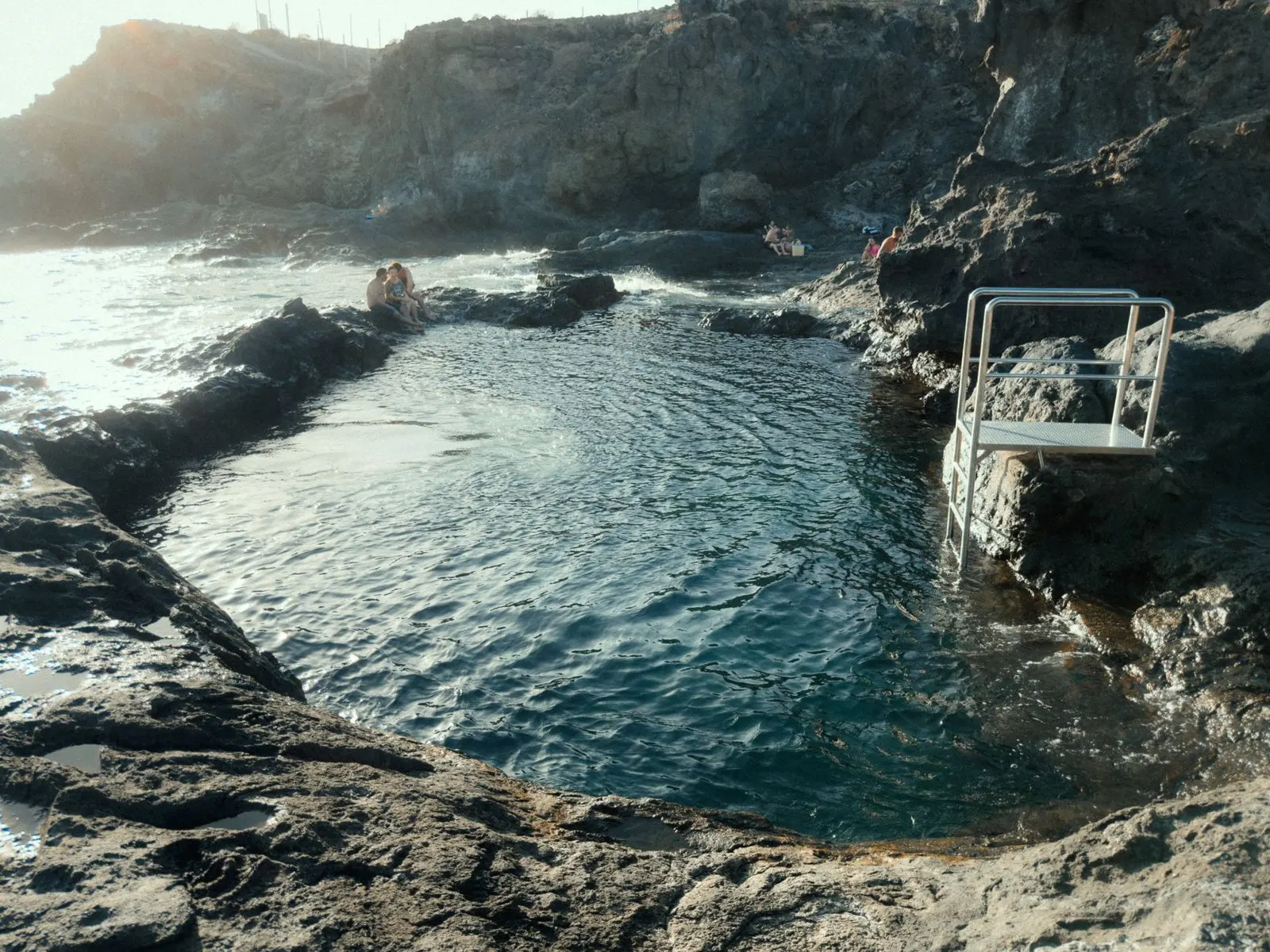
Moya’s municipal pool by another name: a wide pond with a reinforced wall and ladders at the foot of the northern cliffs. Fewer tourists, more local families, and that village-pool atmosphere that is half the charm. A good second stop when Agaete fills up.
3. Los Charcones de Bañaderos and El Puertillo (Arucas)
Two neighbours a stroll apart on the Arucas coast. El Puertillo is the comfortable option, with its little sandy cove alongside; Los Charcones, the platform of natural ponds around the corner. Together they make the perfect halfway stop on the GC-2, and Arucas with its black stone church sits on the way, justifying the detour on its own.
4. Roque Prieto (Santa María de Guía)
A rectangular sheet of water won from the lava platform, protected by walls, on a stretch of coast that still belongs more to banana plantations than to tourists. One of those places you enjoy in silence. With a strong groundswell it is among the first to become unusable: this is a calm-day stop.
5. El Agujero and La Furnia (Gáldar)
The Gáldar coast hides a small complex of historic ponds next to the area’s archaeological sites: El Agujero, with its walled pools set in lava, and neighbouring La Furnia, a tongue of sea slotted into a rock channel. Absolutely local atmosphere and the perfect excuse to finish with Gáldar’s old town and the Cueva Pintada museum.
6. El Bufadero de La Garita (Telde)
The most spectacular to watch, more than to swim: a pond where the sea enters through a conduit and, with the right tide and swell, blows: it spits a geyser of foam with a roar that gives it its name. There is swimming in the adjoining ponds when the sea is tame, but the visit is worth it even if you stay dry. It sits on the Telde coast, barely half an hour from the south: the most accessible pond for a short escape.
7. Charco Azul (El Risco, Agaete)
The only one on this list that is not coastal: a freshwater pond at the bottom of a north-western ravine, reached by a short walk from the hamlet of El Risco. In winter and spring, with the ravine running, it is a pocket oasis; by late summer it can be nearly dry. It is the natural stop if you come from the west on the La Aldea road, the same one as the Fuente de los Azulejos.
Ladders, a low wall and a still ocean: the Canarian pond formula.
Comfortable, deep, with ladders and a village next door
Escaping the crowds
Roque Prieto or El Agujero
100% local atmosphere among banana plantations
Natural spectacle
El Bufadero de La Garita
The foam geyser with the right tide and swell
Without crossing the island
El Bufadero (Telde)
Barely half an hour from the south on the GC-1
A walk plus fresh water
Charco Azul (El Risco)
A ravine pond at the end of a short hike
The extra that multiplies the swim: a mask
The ponds are the island’s best snorkelling classroom: still water, modest depth and real life. Damselfish, breams, gobies and hidden octopuses move between the lava, and with no waves inside the pond, children can try a snorkel for the first time without swallowing water. A basic supermarket mask changes the plan entirely; if you carry proper gear, aim for the outer ponds of Las Salinas on a calm day, where the water gains depth and clarity.
The other side of the deal: inside a pond you do not fish, you do not collect limpets and you do not touch what lives on the rock. This is the living room of the village next door, and the rule is to leave it as you found it.
A note on pond culture
For the villages of the north, the pond is not an attraction: it is the municipal pool they grew up with. Generations of Canarians learned to swim in these ponds, and in summer they remain the meeting point of the afternoon: grandmothers on folding chairs, kids jumping off the usual wall, the shared tortilla on the way out. Arriving with that mindset, more invited neighbour than passing tourist, is the difference between a swim and a memory. Say hello when you arrive, leave the speakers at home and take your rubbish with you: that is all the local etiquette asks.
The full day from the south
From Mogán or Maspalomas, the classic excursion crosses the island on the GC-2 and combines two or three ponds with the northern towns. Here is a day that works:
Pond route from the southwest
9:00
Head north on the GC-1 and GC-2. Coffee stop in Arucas if the body asks.undefined
10:30
El Puertillo or Los Charcones: first swim while the morning is quiet.undefined
12:30
On to Agaete. Las Salinas: the star swim, taken slowly.undefined
14:00
Fresh fish in Puerto de las Nieves, five minutes on foot from the ponds.undefined
16:00
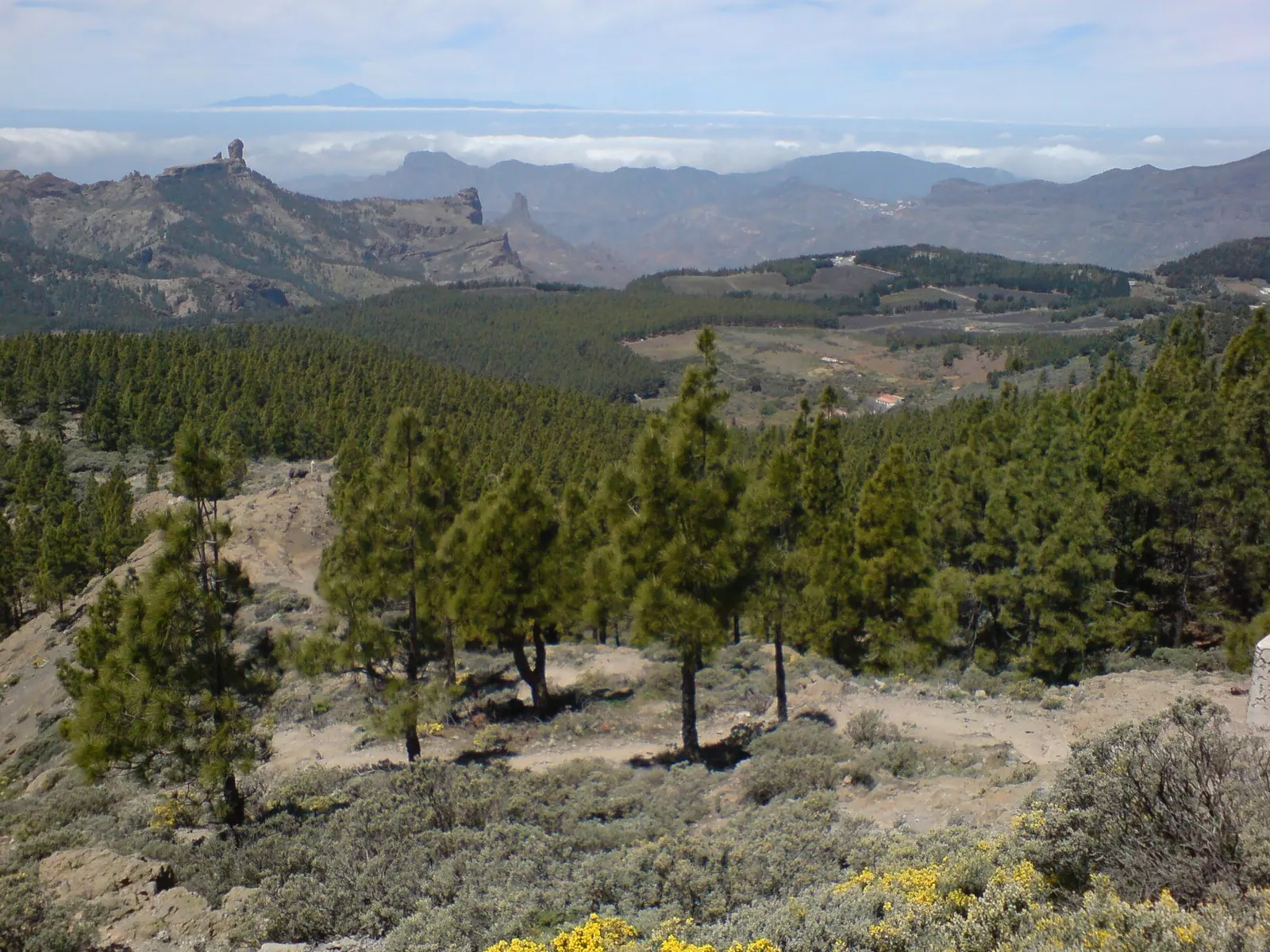
Return through the interior (via Artenara and Tejeda if you want big scenery) or on the GC-2 if you would rather be back early.undefined
18:00
Back in the south, sunset earned.undefined
No car, or no appetite for the return drive? The guided full-island routes pass several of these northern and inland corners, vehicle and guide included:
Unlike the southern beaches, the northern ponds have a season: from May to October the Atlantic usually arrives tamer and the ponds are at their best, with the water between 20 and 23 degrees through the Canarian summer. In winter swimming remains possible on calm days, but the northern groundswell rules, and there are weeks when the platforms are simply no place to be. The local rule: look at the pond first, decide second.
The lava does the work: turquoise ponds where the ocean rests.
How to read the tide (two minutes that earn the day)
No science required: any search for “tide table Las Palmas” gives the day’s high and low water, valid for the whole island within minutes. The practical reading is this: note the time of high water and plant your swim in the two or three hours after it, when the pond is full and the sea loses reach. Complete it with a glance at the swell forecast (height and direction): with more than a metre and a half from the north or northwest, swap the pond for a beach and think no more of it. Two two-minute checks, and the day is decided before you start the car.
The good and the improvable, minus the postcard
The good
Swimming in open ocean with pool-like calm: no beach gives you that
Free, no ticket offices and no sunbeds: real coastline
Every pond comes with a village and food next door: the plan builds itself
Clear water and fish: a snorkel mask multiplies the swim
The perfect excuse to meet the north, which almost nobody visits
The improvable
From the south it is a day trip: at least 45 minutes of driving each way
No services: no lifeguard, and no showers at many of them
The sea decides: whole days when swimming is simply off
Lava bottoms and sea urchins: water shoes are not optional
Common questions
Before the swim
Which is the best natural pool in Gran Canaria?
For a first time, Las Salinas de Agaete: comfortable, deep, with Puerto de las Nieves next door for lunch. To escape the crowds, Roque Prieto or El Agujero. For spectacle, the Bufadero de La Garita on a day with just the right swell.
Are there natural pools in the south or in Mogán?
Not like the northern ones: the Mogán coast is tame sandy coves, which are their own reward. The ponds are the perfect reason to cross the island for a day; the rest of the week, the easy swimming is already at home.
Are they free? Do they have opening hours?
Yes and no: they are open coastline, no ticket office, no timetable and, in general, no lifeguard. The trade-off is that safety is on you: calm sea and common sense.
When is the tide best?
As a general rule, high tide starting to fall with a calm sea: depth inside and less wave reach outside. At very low tide many ponds turn shallow; with a groundswell running, not even at the right tide.
Are they good for children?
The reinforced ones with walls and ladders (Las Salinas, San Lorenzo, El Puertillo) are among the best swims for kids on the island on a calm day: no waves and little current. The condition is the usual one: calm sea, and children inside the pond, not on the outer rims.
What should I bring?
Water shoes, a snorkel mask, water, sunscreen and a layer for the northern breeze. And your swimsuit already on: there are no changing rooms.
What exactly is a bufadero?
A pond connected to the sea through a conduit under the rock: when the wave enters at the right tide, air and water blast out through the hole as a spout. The one at La Garita is the most famous on the island, and watching it blow, roar included, is a show in itself.
Can you go by public transport?
The main ones (Agaete, El Puertillo) are served by Global bus lines along the north coast, with connections from the south that stretch the trip considerably. In practice: hire car or guided excursion.
In short
The natural pools are the Gran Canaria that never makes the southern brochure: calm ocean held in lava, villages with fresh fish, and a north coast that saves its best for whoever crosses the island. The good-day formula is simple: calm sea, tide thought through, water shoes in the bag and Las Salinas de Agaete as the main course. And the bad-day formula is even simpler: if the sea is blowing, watch from dry rock and come back another day.
For the rest of the trip: the best beaches of Gran Canaria cover the other half of island swimming, and the Mogán guide sets up your base of operations in the southwest.
The critical eye behind every recommendation. A Canarian local and self-confessed foodie who knows every corner of Mogán. His mission: for every visitor to experience Mogán like a local.
Local Tip
From the heart of Mogán
“With fish, instead of ordering from the menu ask what came in today. The harbour still lands a catch and the answer changes daily. A vague reply tells you what you need to know.”
How to get there and where to park, why the water is so calm and the sand so golden, the seafront walk to Puerto Rico, when to go to dodge the crowds, and which southern beaches to weigh it against.