Camping in Gran Canaria: Authorised Zones, the Cabildo Permit and How to Apply
The island’s eight authorised camping zones, how to obtain the compulsory Cabildo permit, how far in advance, and why you cannot camp on the beaches.
Cristopher OlivaLocal Mogán Explorer
Share
You can camp in Gran Canaria, but only in eight specific places and always with a permit obtained in advance from the Cabildo. It is not a formality: without authorisation you cannot pitch a tent, and that is the part many people discover once they are already up the mountain. Here are the zones, how to get the permit, and what to do if you were hoping to sleep on a beach.
The essentials
Authorised zones
Eight on the whole island
Permit
Compulsory, from the Cabildo de Gran Canaria
Where to apply
Online or in person
Minimum notice
Three days before
Applications open
The first day of the previous month
On beaches
Camping is not permitted
The eight authorised zones
All are inland and in the summit range, none on the coast. That is the first thing to accept: camping in Gran Canaria is a mountain activity, not a beach one.
Camping zones authorised by the Cabildo
Tejeda
Llanos de la PezThe best known, high in the summit rangeRoute
Presa de las NiñasBeside the reservoir, in high demandRoute
Llanos del SaladoSummit, near the Caldera de los MartelesRoute
Altos del PozoHigh ground in the municipalityRoute
San Bartolomé de Tirajana
Morro de SantiagoThe closest option to the south coastRoute
Agaete
Llanos de la MimbreIn the Tamadaba Natural ParkRoute
Coordinates from OpenStreetMap. Each button opens directions in Google Maps.
The coordinates are approximate, for orientation only: when the permit is granted, the Cabildo specifies the exact perimeter within which you may camp, and stepping outside it is no longer authorised.
Desliza para ver la tabla completa →
Zone
Municipality
Setting
Who it suits
Llanos de la Pez
Tejeda
Summit pine forest, close to 1,500 m
The classic, with road access and good views
Presa de las Niñas
Tejeda
Beside a reservoir, pine forest
Families and anyone who wants water nearby
Corral de los Juncos
Tejeda
Summit
Anyone wanting fewer people than at La Pez
Bailico
Tejeda
Pine forest
Small groups
Llanos del Salado
San Mateo
Summit, by the Caldera de los Marteles
Walkers
Altos del Pozo
San Mateo
High ground
The alternative when the rest are full
Morro de Santiago
S. B. de Tirajana
Southern midlands
The most accessible from the south coast
Llanos de la Mimbre
Agaete
Tamadaba Natural Park
The most spectacular pine forest on the island
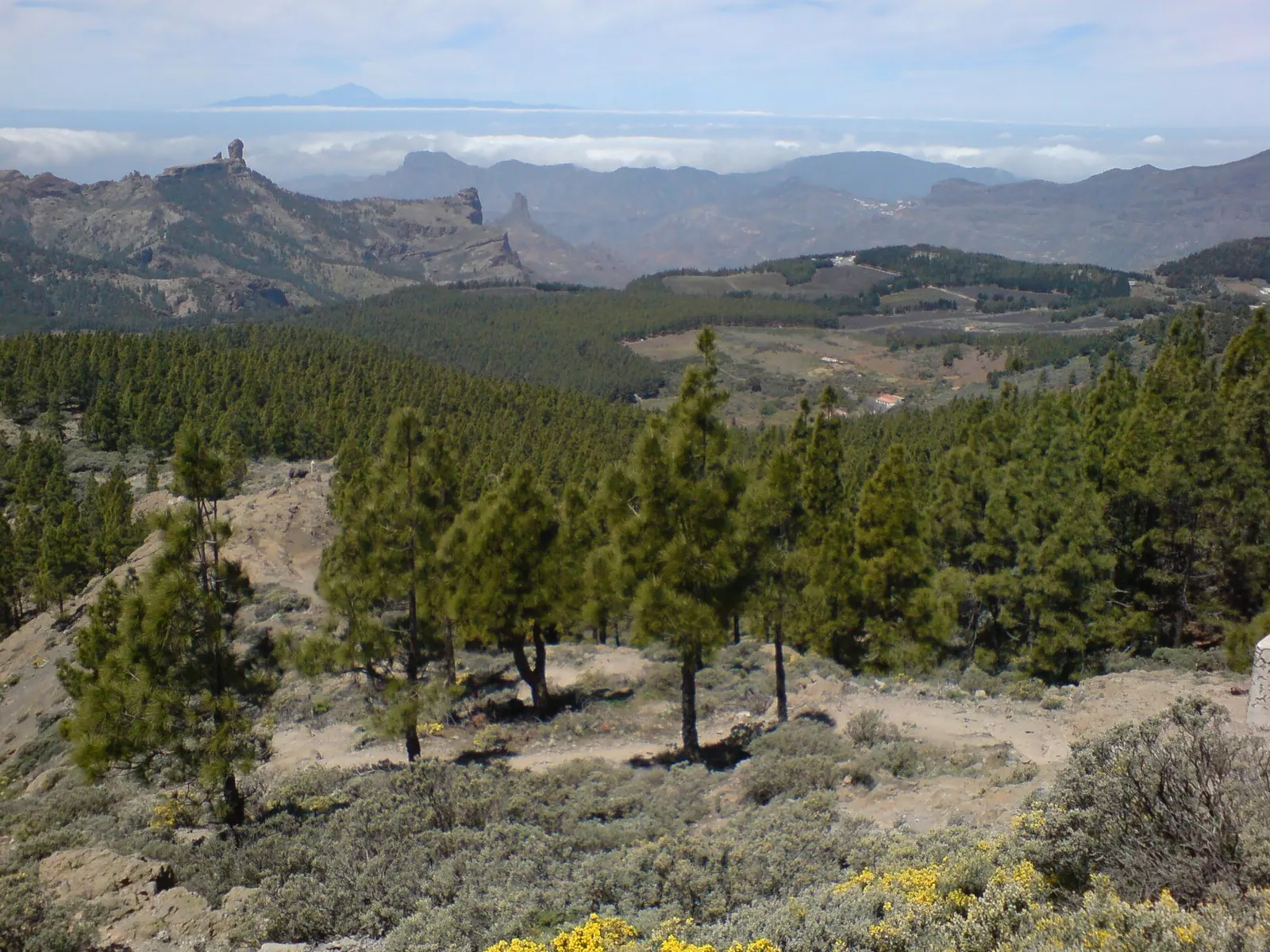
The pine forest at Llanos de la Pez, with Roque Nublo outlined behind.
How to get the permit
It is free and handled by the Cabildo de Gran Canaria. There are two routes: the online portal, which is the easier one, or in person at the Cabildo offices.
The process, step by step
First
Pick a zone and datesPlaces are limited and allocated in order of application.
From the 1st
Of the previous monthThat is when applications open for the following month.
At least 3 days before
Of the camping dateApply with less notice and it will not be processed in time.
The form
Dates and number of peopleFilled in with the group’s details.
Confirmation
Arrives by emailWithout that email, you do not have a permit.
Two pieces of advice that follow from how the system works. First: weekends and bank holidays sell out, particularly at Llanos de la Pez and Presa de las Niñas, so if your dates are fixed, apply on the first of the previous month. Second: keep the confirmation email on your phone, because it is the document proving you are there legally.
The permit is for a perimeter, not a broad area. It authorises you to camp inside the marked enclosure, not in its surroundings. It is a distinction that causes problems: people arrive, find the enclosure full or unappealing, and set up two hundred metres away, where the permit no longer covers them.
Why you cannot camp on the beaches
It is one of the most common searches on this topic and it deserves a direct answer: you cannot camp on Gran Canaria’s beaches. Not on the developed ones, not on the wild ones, not in a tent and not sleeping in the car in the car park.
The reasons stack up. The maritime-terrestrial public domain has its own national legislation, which does not provide for camping. Many of the wild beaches are inside protected natural spaces with specific designations. And municipal bylaws prohibit sleeping on public roads and in car parks.
It is true that you see people doing it, particularly on the hard-to-reach beaches of the west. It is also true that there is enforcement and there are fines. What does not exist is a legal way to do it.
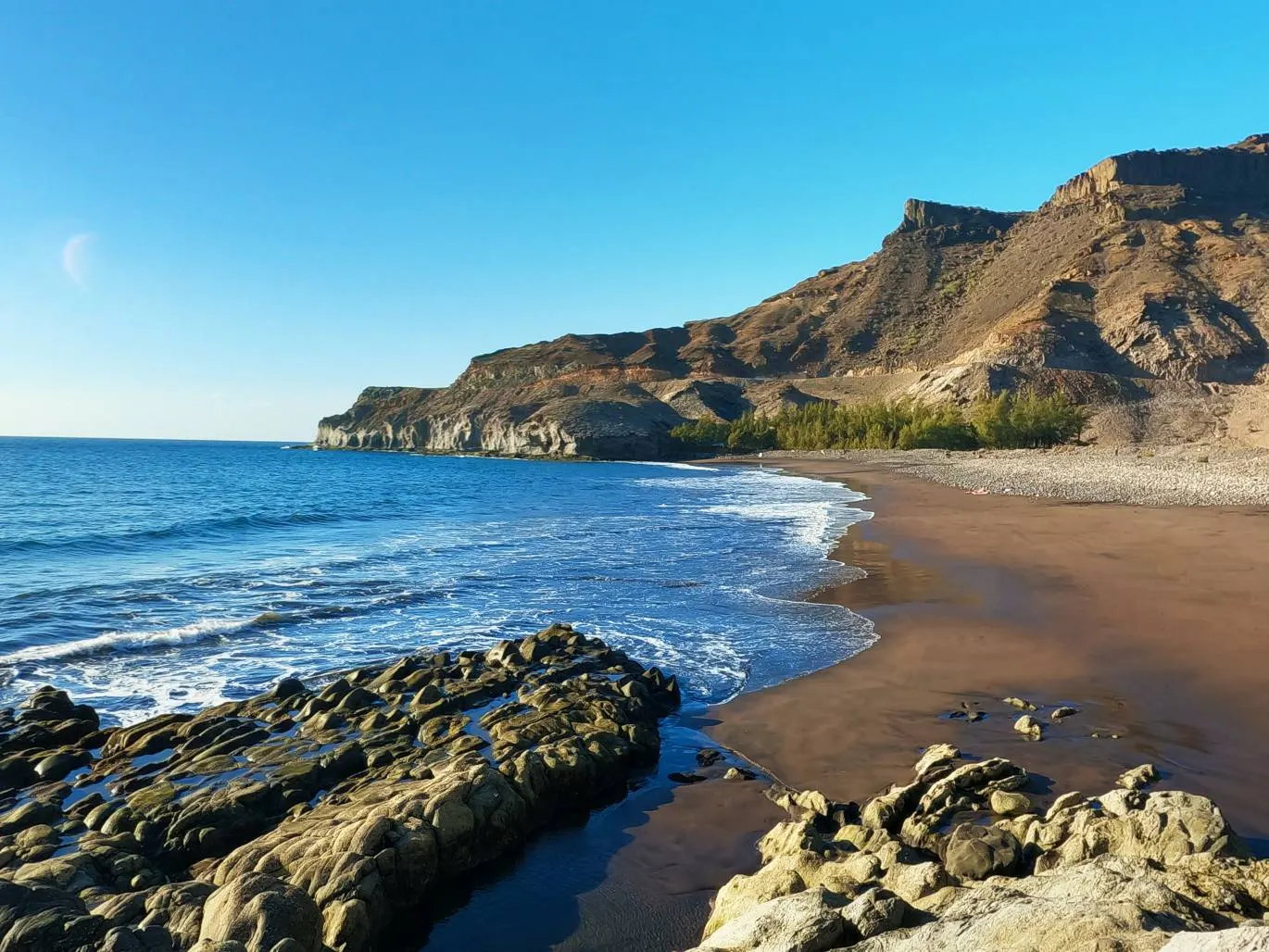
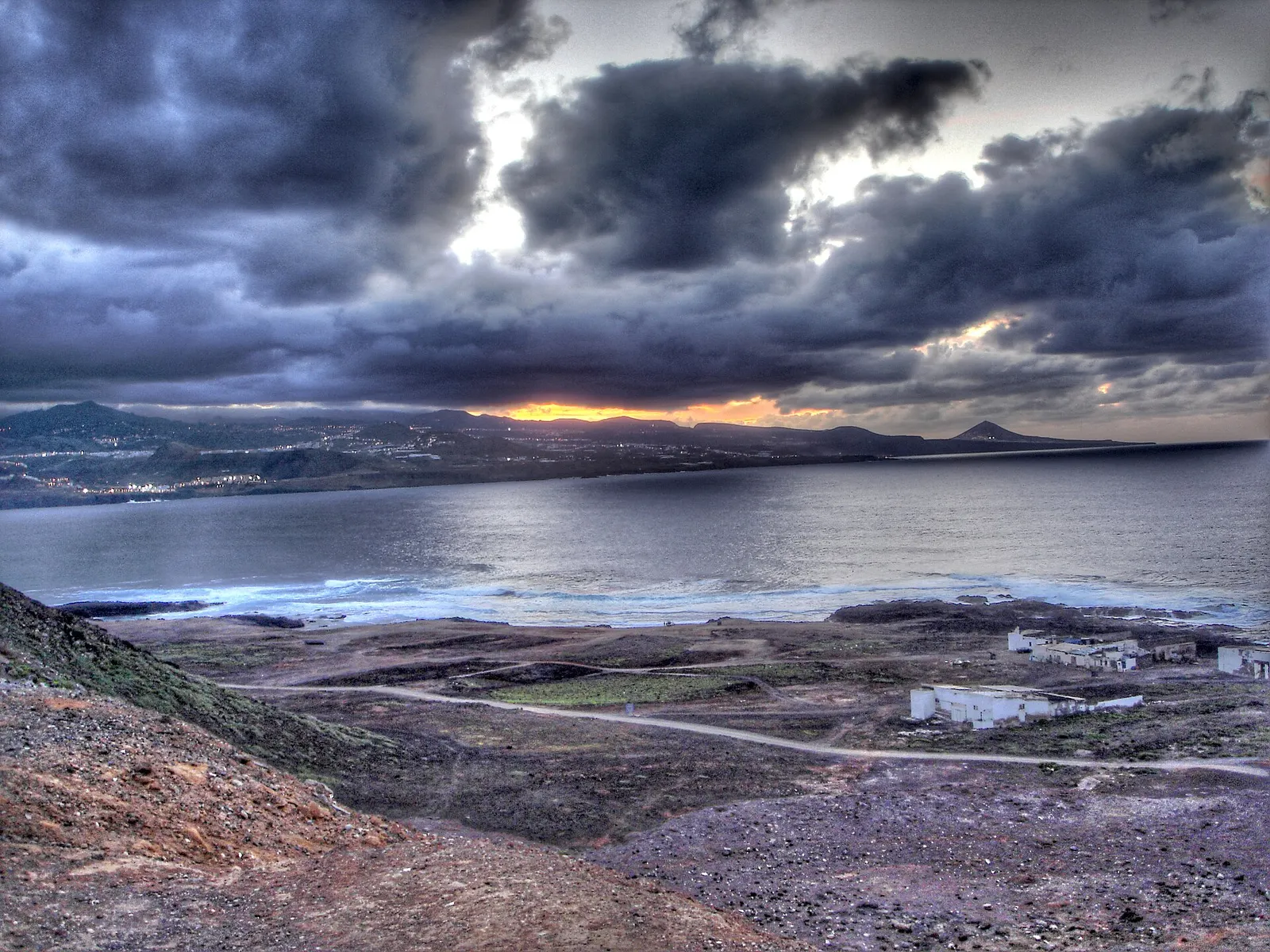
The wild beaches of the west are the ones that most attract would-be campers. It is not permitted.
Campervans and sleeping in vehicles
The other frequent question, and the answer has nuance. Driving and parking a campervan is legal, as with any vehicle. What changes the framework is sleeping in it, and there municipal bylaws come into play.
The practical rule applied by people who tour the island by campervan: parking within the footprint of the vehicle, without putting out tables, chairs, awnings or levelling legs, is generally treated as parking. The moment anything is deployed outside the vehicle, it becomes camping, which requires a permit.
There are dedicated campervan areas on the island, and they are the risk-free option. In beach car parks, by contrast, overnight stays are expressly prohibited in several municipalities.
When to camp and what to expect
The summit of Gran Canaria bears no resemblance to the coast, and anyone camping without knowing that gets an unpleasant surprise.
Desliza para ver la tabla completa →
Season
Daytime in the summit
At night
What to expect
December to February
Cool, 10-15°
Can drop below 0°
Frequent frosts, occasional snow
March to May
Pleasant, 15-20°
Cool, 5-10°
The best window, with the island green
June to September
Warm, 20-28°
Cool, 10-15°
Fire risk, frequent restrictions
October and November
Pleasant
Cool
A good window, with fewer people
Worth repeating because it is what catches people out: at 1,500 metres in January it freezes at night. This is the same island where at that hour people are eating outside in shirtsleeves on the coast, forty minutes below. A mountain sleeping bag, not a summer one.
Fire risk. Between June and September, and during any heat or wind alert, the Cabildo restricts or suspends camping and prohibits fires across the whole forest. Check the alert status before setting off: suspensions are announced at short notice and are not negotiable.
What to bring
A sleeping bag rated for low temperatures, genuinely
A mat: the summit ground is cold
Enough water, as not every zone has a tap
Warm clothing even if you have come from the beach
A gas stove, because open fires are prohibited
What is prohibited
Any fire outside designated barbecue areas
Camping without a permit or outside the perimeter
Leaving any waste behind, organic included
Camping on beaches and in protected spaces
Sleeping in beach car parks in several municipalities
The gear that genuinely matters
Camping on a subtropical island sounds like light packing and it is the opposite: the summit of Gran Canaria demands mountain gear, not beach gear. It is the mistake that has caused the most bad nights.
Desliza para ver la tabla completa →
Item
What to bring
Why
Sleeping bag
Comfort rating of 0° or lower
It freezes at 1,500 m in winter
Mat
Thick foam or inflatable
The summit ground stays cold all night
Tent
With a flysheet and good pegging
The summit wind is constant and gusty
Cooking
Gas stove
Fires are prohibited outside designated barbecues
Water
All you will need
Not every zone has drinking water
Head torch
With spare batteries
There is no lighting and it gets dark quickly
Clothing
Layers and a windproof
Fifteen degrees between day and night
One detail about the wind that surprises people used to inland mainland conditions: at the Canarian summit it blows almost constantly, and at night cold air drains down from the high ground. A poorly anchored tent ends up folded. Bring decent pegs and look for shelter from the vegetation without getting into it.
Forest rules, taken seriously here
Gran Canaria has lived through severe wildfires and it shows in how strictly the rules are applied in the pine forest. This is not bureaucracy: it is a small island with a forest that takes decades to recover.
On organic waste, where people relax most: peel and food scraps do not disappear, they attract wildlife and alter its behaviour. In a small protected space that has real consequences. Everything that goes up comes back down.
Alternatives if you cannot get a place
The zones fill up and the permit may not come through. These are the real options, not consolation prizes.
Desliza para ver la tabla completa →
Option
What it is
Advantage
Cabildo hostels
Facilities in the natural environment
A roof, services and no dependence on the weather
Recreation areas
Day-use areas with tables and barbecues
Free to use, no permit needed for daytime
Private campsites
Commercial facilities
Full services and a guaranteed booking
Rural houses
Accommodation inland
The comfortable way to sleep in the summit range
The recreation areas deserve a note, because they get confused with camping zones. They are daytime spaces with tables, benches and sometimes designated barbecues. You can use them without a permit for the day, but they do not authorise overnight stays. They solve a lunch in the pine forest, not a night.
Combining camping with hiking
The underlying reason to camp on this island is that the summit range is an extraordinary place and most visitors never set foot in it. Some of the best trails in the archipelago start from the camping zones.
From Llanos de la Pez you reach the Roque Nublo area, the island’s symbol and a short, rewarding walk. From Tamadaba, the most spectacular pine forest in Gran Canaria and viewpoints over the sea with nothing comparable on the coast. And from Presa de las Niñas you link into the central trail network.
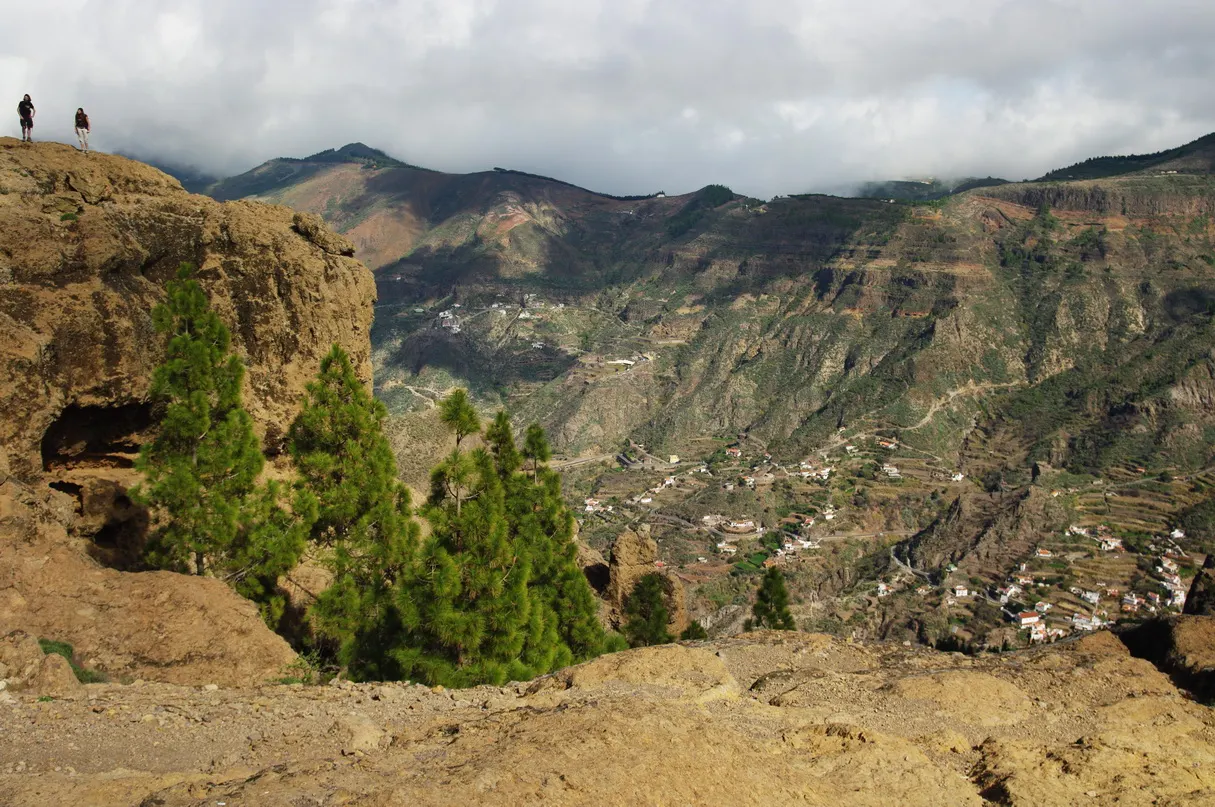
The summit landscape, an hour and a half from the southern beaches.
If camping is not for you but you want to see the summit, the alternative is to drive up for the day. From the south it is around an hour and twenty, and the contrast between a beach at twenty-six degrees and a summit at 1,800 metres is one of the things that best sums up this island.
Common questions
Do you need a permit to camp in Gran Canaria?
Yes, always. It is compulsory for all designated zones and granted by the Cabildo de Gran Canaria. Without the email confirmation you do not have authorisation.
How much does the permit cost?
The Cabildo permit for the camping zones is free. What it costs is planning ahead, because places are limited.
How far in advance do you have to apply?
You can apply from the first day of the previous month and, at minimum, three days before the date. Applications are resolved in order of receipt until places run out.
Where can you camp in Gran Canaria?
In eight zones: Bailico, Corral de los Juncos, Presa de las Niñas and Llanos de la Pez in Tejeda; Llanos del Salado and Altos del Pozo in Vega de San Mateo; Morro de Santiago in San Bartolomé de Tirajana; and Llanos de la Mimbre in the Tamadaba Natural Park, Agaete.
Can you camp on the beach?
No. It is not permitted on any beach on the island, neither in a tent nor sleeping in a car. The maritime-terrestrial public domain has its own legislation and many wild beaches are also inside protected spaces.
Can I sleep in my campervan?
Parking is legal; sleeping in it depends on the municipal bylaw. The practical distinction is that if you deploy tables, chairs, an awning or levelling legs, it stops being parking and becomes camping, which needs a permit. There are dedicated campervan areas.
Is it cold in the summit range?
Considerably colder than people expect. At 1,500 metres in winter the night can drop below freezing and frosts are frequent. Bring a mountain sleeping bag even if you have come from the beach.
Can you light a fire?
Only in expressly designated barbecues and when there is no alert. Between June and September, and during any risk episode, fires are prohibited across the whole forest and camping may be suspended.
What if I cannot get a place?
The Cabildo hostels are the closest equivalent, and there are private campsites and rural houses. Recreation areas can be used in the daytime without a permit, but they do not authorise overnight stays.
In short
Camping in Gran Canaria is perfectly possible and well worth it, but it works to clear rules: eight zones, all in the summit range, a compulsory and free permit from the Cabildo, and an application at least three days ahead from the first of the previous month.
The two things that cause the most trouble are believing you can sleep on a beach, which you cannot, and underestimating the cold in the summit range, which freezes in winter. With those two settled, it is one of the best ways to see the island that almost no visitor reaches.
And if your dates are not negotiable, apply on the first of the previous month. Weekends at Llanos de la Pez and Presa de las Niñas sell out, and there is no waiting list.
Image credits
Pepelopex · CC BY-SA 2.5 · vía Wikimedia Commons · Frank Vincentz · CC BY-SA 3.0 · vía Wikimedia Commons · Bgabel · CC BY-SA 3.0 · vía Wikimedia Commons
A tireless explorer of every corner of Mogán. A lover of good coffee and an expert at finding the best fresh fish of the day. His motto: “In Mogán there's always something new to discover”.
Local Tip
From the heart of Mogán
“The further you move back from the seafront, the better you eat and the less you pay. Two or three streets inland changes both the menu and the bill. That is where locals eat.”
The best natural pools and lava ponds of Gran Canaria, from Agaete to La Garita: what they are like, when to swim safely, and how to build the full day from the south.