Dog-Friendly Beaches in Gran Canaria: Which Are Authorised and What the Rules Are
The island’s authorised dog beaches, where they are, which rules apply in each season, and what the fines cost if you pick the wrong stretch of sand.
Cristopher OlivaLocal Mogán Explorer
Gran Canaria has plenty of beaches and very few where your dog can legally set foot. The difference between getting it right and getting it wrong runs from three hundred to six hundred euros, so this guide starts with the authorised list and moves on to what almost nobody explains: which rules change by month, and what the alternatives are the rest of the time.
The essentials
Official dog beaches
Very few on the whole island
Where they are
All in the north and the capital
In the southern resorts
None authorised
Fines
From 300 to 600 euros
High season
May to September the ban is near-total
Who decides
Each town council’s bylaw
The authorised dog beaches
Start with what matters. These are the beaches where your dog can swim without a problem, and one detail is worth noticing: they are all in the north or the capital. In the southern resorts, where most visitors stay, there is not a single authorised one.
Authorised dog beaches in Gran Canaria
Authorised
Playa de BocabarrancoGáldar, on the north coastRoute
Coordinates from OpenStreetMap. Each button opens directions in Google Maps.
Desliza para ver la tabla completa →
Beach
Municipality
What it is like
Worth knowing
Bocabarranco
Gáldar
Pebble and dark sand, open sea
The island’s best-known dog beach
El Puertillo
Arucas
Pebble area beside the natural pools
The pools themselves have their own rules
Tres Peos
Las Palmas
Small, in the La Isleta area
The handiest if you are staying in the capital
El Confital
Las Palmas
Rocky, protected setting
Tolerated out of season, not authorised year-round
Check the council bylaw before you go. Dog beach rules change more often than people expect: new areas open, others close seasonally and hours get adjusted. This list was current when the guide was written, but the authority that counts is always the relevant council’s own website. A two-minute phone call saves a three-hundred-euro fine.
The four, one by one
Bocabarranco, in Gáldar
The best known as a dog beach and the one most people have in mind when they search for this. It sits on the north coast in the municipality of Gáldar, a beach of pebble and dark sand open to the Atlantic.
What to know before going: the north has considerably more swell than the south. This is not a swimming pool, it is open sea, so consider whether your dog swims well and keep them out if the water is up. The compensation is plenty of space and it is rarely crowded.
El Puertillo, in Arucas
Right beside the natural pools at El Puertillo, one of the loveliest spots on the north of the island. The dog area is the pebble section, not the pools: the natural pools have their own rules and generally do not admit animals.
It makes a good full-day combination, because the area has parking, some food and the pools for the rest of the family while the dog is in its own section.
Tres Peos, in Las Palmas
The smallest of the three and the most practical if you are staying in the capital. It is in the La Isleta area and is the realistic option for anyone spending a few days in Las Palmas without wanting a day trip.
Being small, it fills up sooner than the others, especially at weekends in good weather. Go midweek or first thing if you can.
El Confital, the special case
El Confital is not exactly an authorised dog beach: it tolerates dogs out of season in its rocky section, which is a different thing. It is a protected setting, valued by surfers and by people from the capital, and permitted use changes through the year.
Because it is tolerance rather than full authorisation, it is the one most worth checking before you go. In the swimming season, do not count on it.
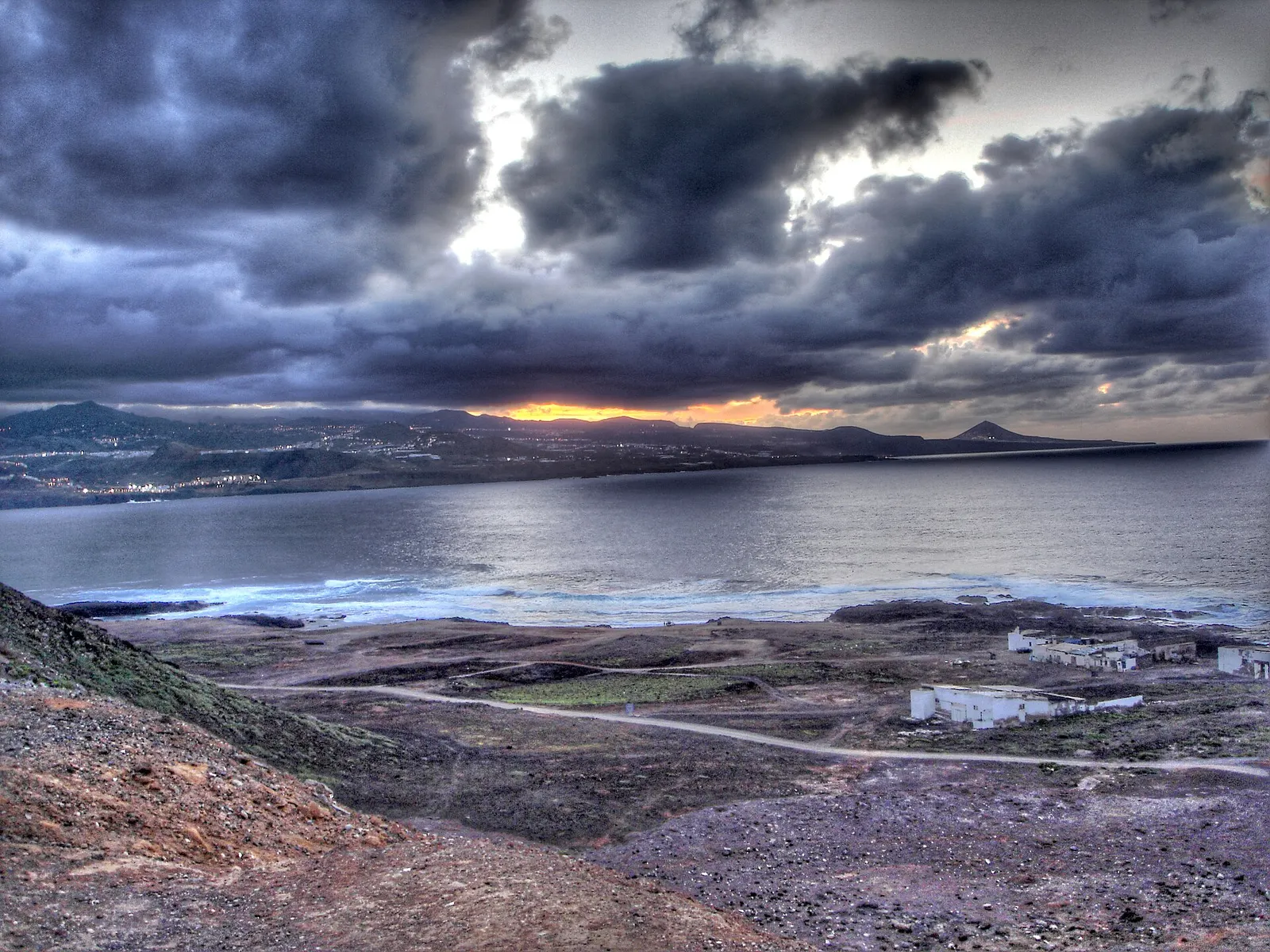
El Confital, at the end of La Isleta, with the city behind.
Why they are all in the north
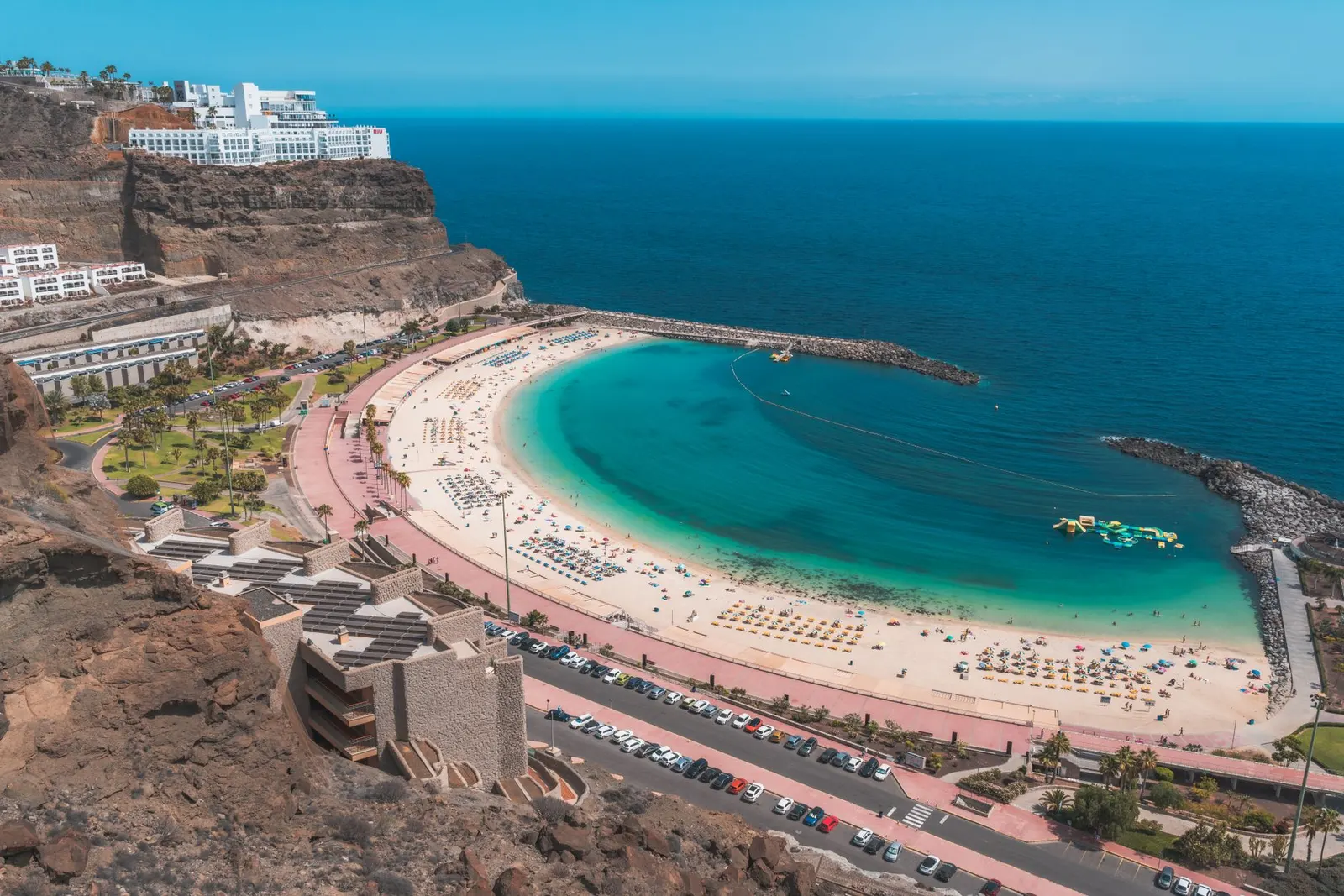
It is not a coincidence and it deserves explaining, because it helps set expectations. The southern beaches are the engine of the island’s tourism economy and are subject to far stricter rules: flags, lifeguards, sunbed concessions and very high occupancy much of the year. In that context, designating a dog area is complicated.
The northern beaches have a different profile. They are pebble, with more swell, less tourist occupancy and a more local use. They are precisely the beaches that compete least with the sun-and-sand business, which is why they are the ones that could be given over to this.
The practical consequence is harsh but worth stating: if you are staying in Maspalomas, Puerto Rico or Mogán and travelling with a dog, the nearest dog beach is an hour and a half away by car. That is not a stroll, it is a day trip.
Crossing the island from south to north takes about an hour and a half by road.
The rules you need to know
Even on an authorised beach there are rules that apply just the same, and breaking them is sanctioned.
What is expected of you
Picking up after your dog, always and without exception
A lead outside the designated swimming area
A muzzle if your dog is a legally restricted breed
Documentation and vaccination record up to date
Constant supervision: the responsibility is yours
What is generally prohibited
Letting the animal loose outside the marked area
Entering unauthorised beaches, even empty ones
Letting the dog into protected natural pools
Going into dune areas or protected natural spaces
Disturbing wildlife, especially in nesting areas
On fines: the usual range is three hundred to six hundred euros, and in practice they are issued. In high season the urban beaches are patrolled and the ban is enforced.
The season changes everything
This is the nuance that prevents the most disappointment. From May to September the ban on urban beaches is effectively total, even at hours when there is some tolerance the rest of the year. It is the swimming season, there are more people and more enforcement.
How the year changes
May to September
Near-total banOnly the authorised dog beaches. On urban ones, not even at dawn.
October to April
Somewhat more toleranceSome councils allow access outside swimming hours.
All year
The authorised onesBocabarranco, El Puertillo and Tres Peos keep their status.
The classic visitor mistake is reasoning that at eight in the morning on a February day the beach is empty and nobody is bothered. That may well be true and it can still be prohibited, because the bylaw does not distinguish by how busy it is.
What to do if you are staying in the south
If you have come to the south with your dog, the beach is not going to be the plan. The honest thing is to say so and offer what does work.
Desliza para ver la tabla completa →
Alternative
Where
Why it works
Walking the ravines
Inland Mogán and Tejeda
No access restrictions, little shade but open ground
Seafront promenades
Arguineguín to Anfi, Meloneras
You can walk on a lead away from the sand
Summit recreation areas
Tejeda, San Mateo, Tamadaba
Open space and cooler temperatures
A day trip north
Bocabarranco or El Puertillo
An hour and a half, but the only swimming option
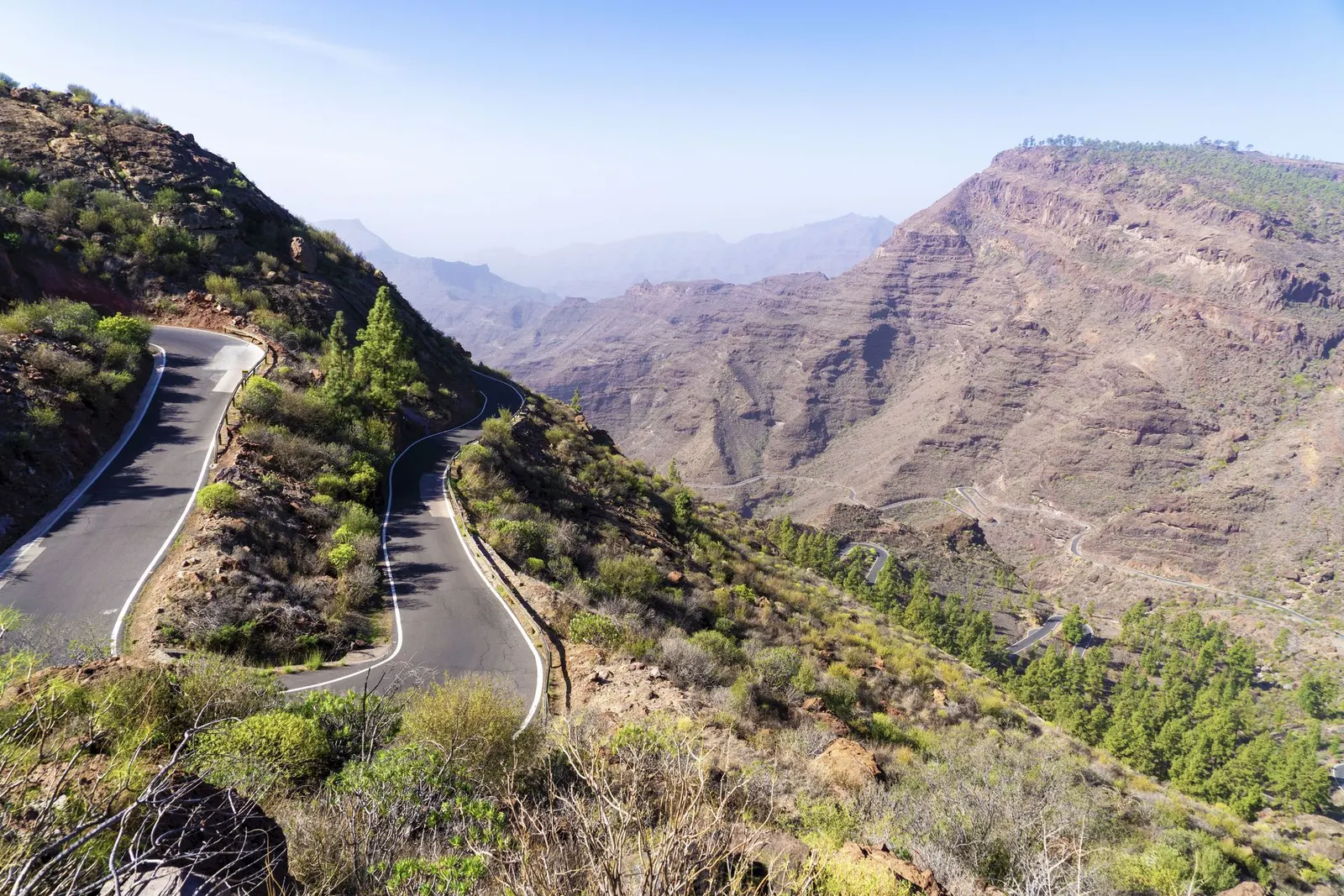
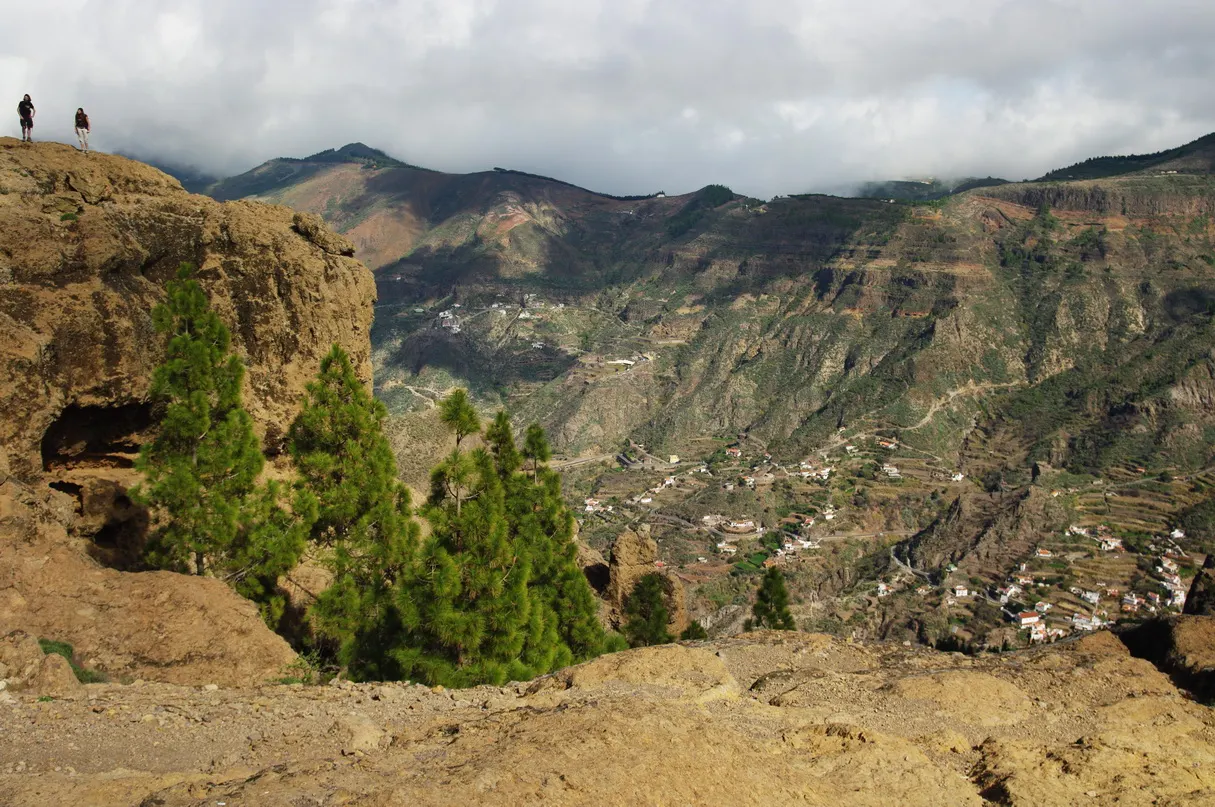
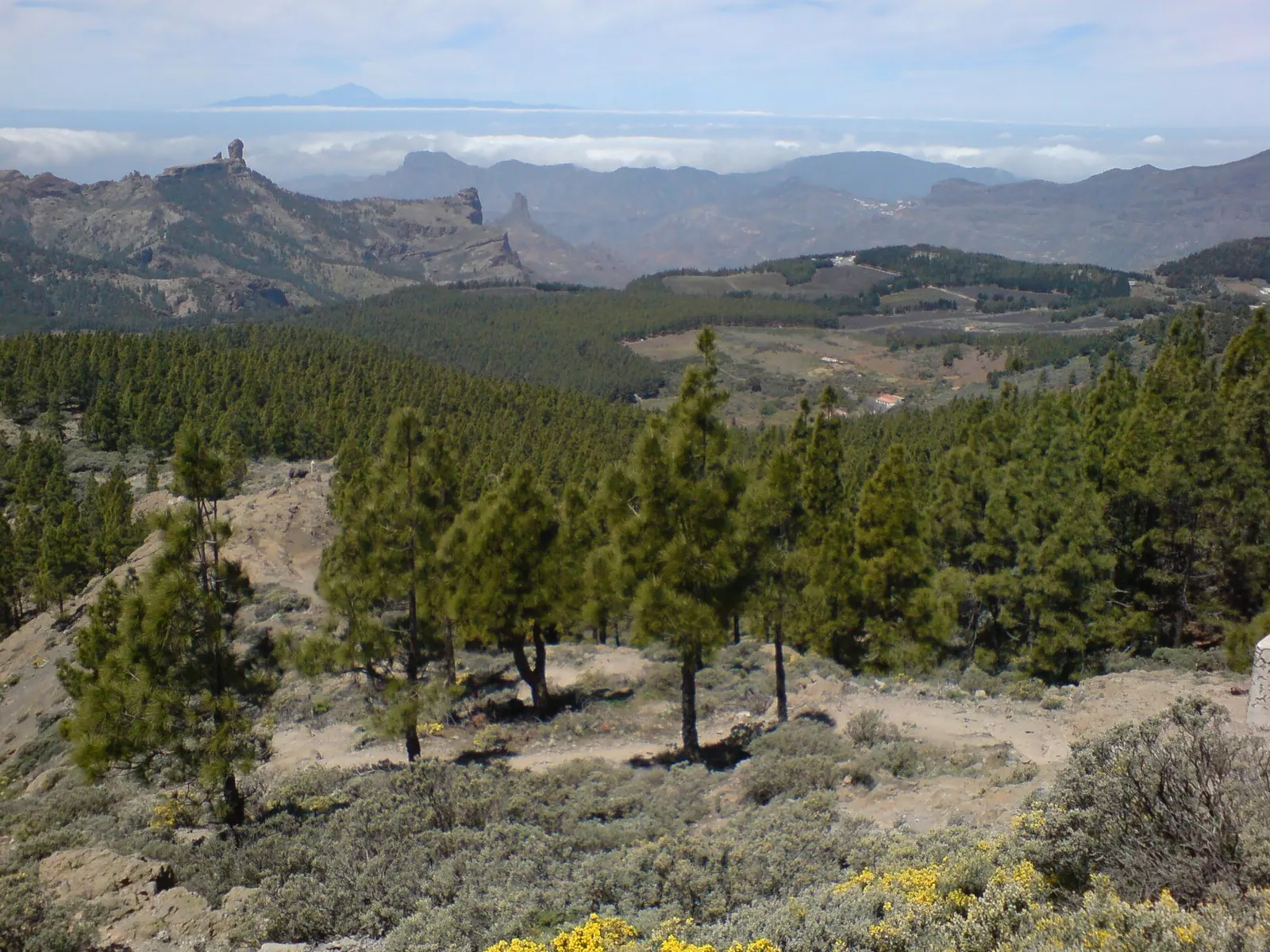
The summit and its trails: the real alternative for walking a dog if you are in the south.
A note about heat that gets overlooked: the sand and tarmac on this island reach temperatures that burn paw pads between eleven and five for much of the year. Even in a permitted area, walking at those hours is a bad idea. The field test is simple: if you cannot hold the back of your hand on the ground for five seconds, your dog cannot walk on it either.
Travelling to the island with a dog
Three practical things worth sorting before you arrive.
Getting to the island. The ferry lines connecting the Canaries with mainland Spain and between islands accept animals, on terms that vary by company and size. Airlines have their own rules and limited quotas per flight, so book the animal’s place when you buy the ticket rather than afterwards.
Accommodation. This is the point that causes most problems. In the south there are complexes that accept animals and many that do not, and the information on booking sites is not always current. Confirm it in writing with the property before paying.
Getting around the island. The buses have their own conditions and generally only accept small animals in a carrier. With a medium or large dog, plan on hiring a car.
What to bring
Essential
Plenty of fresh water, more than you think
A collapsible bowl
Portable shade: there are no trees on these beaches
More poo bags than you need
A towel to dry them before getting in the car
Worth bringing
Dog-specific sun cream for pale noses or skin
Dog boots if the pebble is very coarse
A brush, because volcanic sand clumps
A toy that floats, given the swell
The vaccination record, just in case
On salt water, a detail many people miss: drinking sea water causes diarrhoea and, in quantity, serious problems. A dog playing in the water swallows more than it looks. Offer fresh water often, precisely so they do not go looking for the salty kind.
Vets and emergencies
The information nobody looks for until they need it, so it is worth locating on arrival.
There are veterinary clinics across the island, most densely in Las Palmas and the southern resort area. What is not everywhere is a 24-hour emergency service: the centres with overnight cover are concentrated in the capital and in Vecindario, so if you are staying in the south-west, plan on a drive.
One practical tip: as soon as you arrive, find the nearest clinic to your accommodation and save it in your phone with its number. It takes two minutes and it avoids improvising at the worst moment.
For food and supplies, the island’s large supermarkets have a pet section and there are specialist shops in the southern shopping centres. If your dog eats a specific brand, bring it: availability is more limited than on the mainland.
Common questions
Which beaches in Gran Canaria allow dogs?
The authorised ones are Bocabarranco in Gáldar, El Puertillo in Arucas and Tres Peos in Las Palmas. El Confital, also in the capital, tolerates dogs out of season in its rocky section. Confirm with the council before going, because rules change.
Is there a dog beach in the south?
There is no authorised one in the southern resort area. If you are staying in Maspalomas, Puerto Rico or Mogán, the nearest is around an hour and a half away by car.
What is the fine for taking a dog to an unauthorised beach?
The usual range is 300 to 600 euros, and in high season the beaches are patrolled and it is enforced.
Can I take my dog to the beach out of season?
It depends on the municipality. Some allow limited access outside swimming hours between October and April, but from May to September the ban on urban beaches is effectively total. The local bylaw is what counts.
Can dogs go to Las Canteras?
Not as a dog beach. Las Canteras is an urban beach with strict rules. The alternative in the capital is Tres Peos, and El Confital out of season.
What about the natural pools?
Natural pools have their own rules and are usually in protected settings, so generally no. El Puertillo sits beside natural pools but the dog area is the pebble section, not the pools.
What if my accommodation in the south does not accept dogs?
Confirm it in writing before booking, not after. It is the most frequent problem for people travelling to the island with an animal and the hardest to solve once you are here.
In short
Gran Canaria is not a comfortable destination for travelling with a dog if your plan is the beach. There are very few authorised dog beaches, they are all in the north and the capital, and there is not one in the southern resort area. Between May and September the ban on urban beaches is effectively total and the fines are issued.
That said, the island works very well for walking: the ravines, the summit trails and the seafront promenades are open ground, and in winter the climate is ideal for it. If you are coming with a dog, the plan that works is walking and inland, with a day trip north if you want them to swim.
And the warning anyone living here would repeat: always check the council bylaw before you set foot on the sand. The rules change from season to season, and getting it wrong is expensive.
Image credits
Gino Maccanti · CC BY 2.0 · vía Wikimedia Commons · Marian Florinel Condruz · Pexels · Bgabel · CC BY-SA 3.0 · vía Wikimedia Commons
A tireless explorer of every corner of Mogán. A lover of good coffee and an expert at finding the best fresh fish of the day. His motto: “In Mogán there's always something new to discover”.
Local Tip
From the heart of Mogán
“The further you move back from the seafront, the better you eat and the less you pay. Two or three streets inland changes both the menu and the bill. That is where locals eat.”
All 95 beaches in Gran Canaria on an interactive map, grouped by municipality and by type, with the best ones picked by who you are travelling with and what you want.