Nudist Beaches in Gran Canaria: Where They Are and How to Reach Each One
The island’s nudist beaches with their exact locations, how to get to each, what facilities they have, and which ones demand a serious walk.
Cristopher OlivaLocal Mogán Explorer
Gran Canaria has a long and well-established naturist tradition, with beaches ranging from the most accessible in the southern resorts to coves that require five kilometres of mountain path. This guide puts them on the map, explains how to reach each one, and says plainly which have facilities and which have absolutely nothing.
The essentials
Most accessible
The nudist zone at Maspalomas
Most remote
Güigüí, five kilometres of trail away
In the north
Guayedra, in Agaete
With facilities
Only Maspalomas
Legal position
Naturism is not prohibited in Spain
Season
All year: the sea never drops below 20°
Where they are
First things first: they are spread across the whole island and the distances between them are considerable. Each point has a directions button:
Nudist beaches in Gran Canaria
South, easy access
Maspalomas nudist zoneIn the dunes, towards the lighthouseRoute
Coordinates from OpenStreetMap. Each button opens directions in Google Maps.
Desliza para ver la tabla completa →
Beach
Municipality
Access
Facilities
Feel
Maspalomas
San Bartolomé de Tirajana
On foot from the lighthouse or car park
Full, in the clothed section
Busiest and most varied
Montaña Arena
San Bartolomé de Tirajana
Coastal path, about 15 minutes
None
Quiet, used mostly by locals
Guayedra
Agaete
Track and short walk, car gets close
None
Very quiet, natural setting
Güigüí
La Aldea de San Nicolás
5 km mountain trail, or by boat
None
Complete isolation
Maspalomas, the accessible one
This is the island’s naturist reference point and the only one with full facilities nearby. The nudist zone sits in the dune field, about twenty minutes on foot from the Maspalomas lighthouse, and it is signposted.
What makes it exceptional is the setting: the Maspalomas dunes are a nature reserve and the landscape looks like nothing else on the island. What that also means is that it is a protected space with its own rules about where you can and cannot walk.
It is also the most varied in atmosphere. The general naturist area and a distinctly LGBT+ area share this stretch of sand, the latter an international reference point for decades. Both are signposted and neither is hard to find.
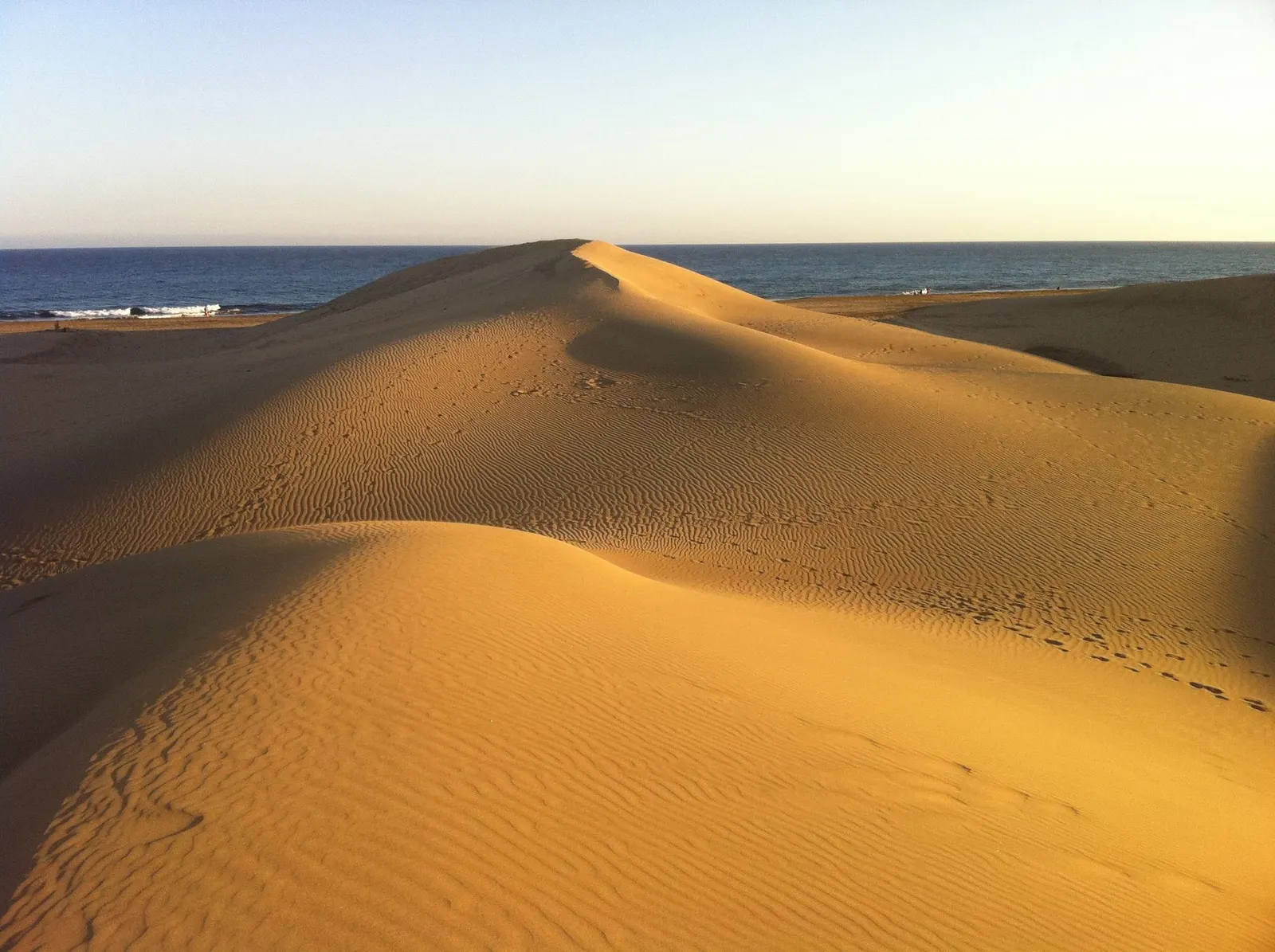
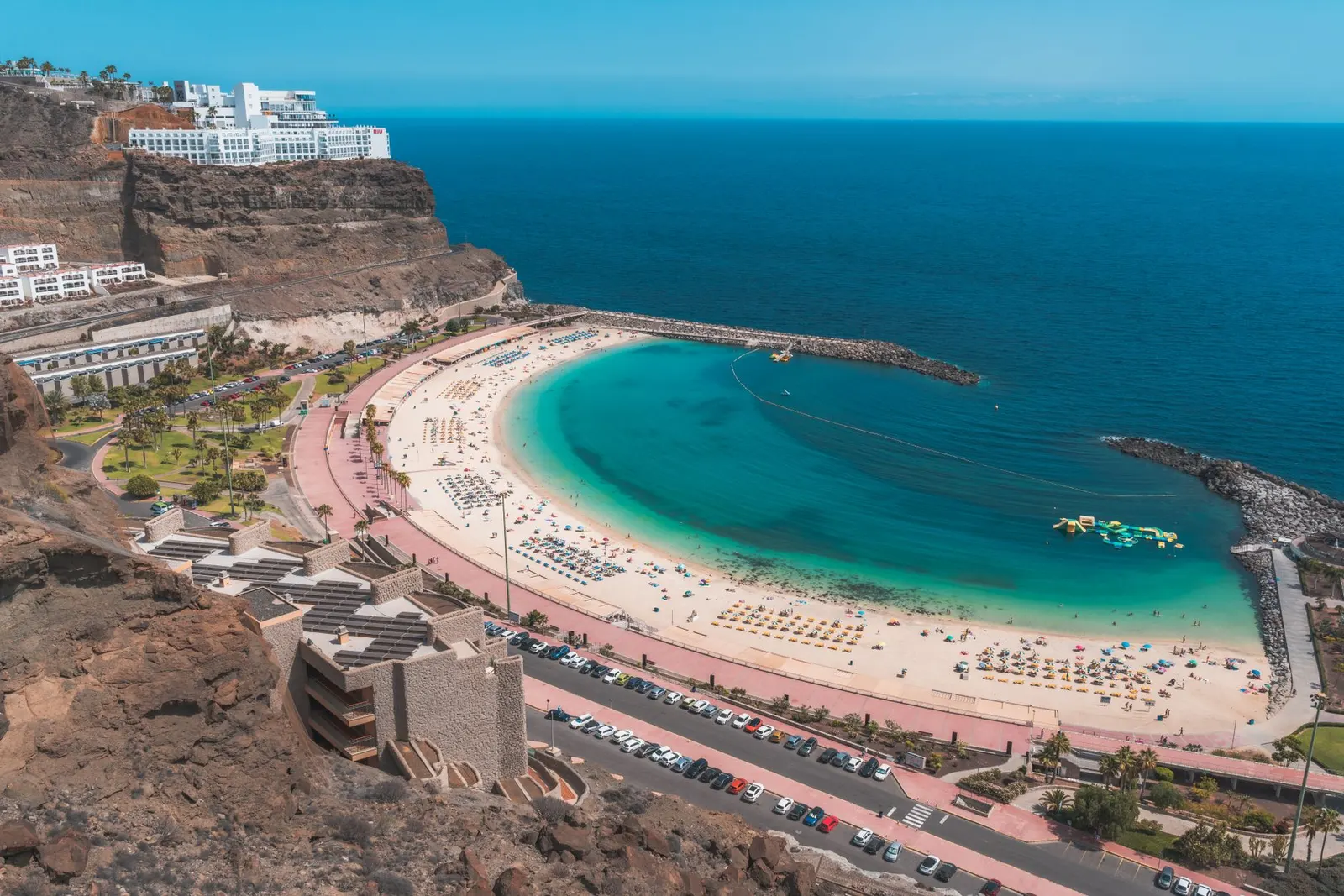
The Maspalomas dunes, a nature reserve and the setting for the island’s best-known naturist area.
On walking across the dunes: they are a fragile, protected ecosystem. There are boardwalks and marked paths, and leaving them damages the dune and is a sanctionable offence. The walk from the lighthouse follows the shoreline and the marked routes, not a straight line across.
Montaña Arena, the local choice
Between Pasito Blanco and Maspalomas, in the same municipality, and the one islanders use most. It is reached by a coastal path of about fifteen minutes from the nearest parking, a dirt track that follows the shore.
It is sandy and considerably more sheltered than Maspalomas. The trade-off is unambiguous and worth stating: there are no facilities at all. No beach bar, no showers, no toilets, no lifeguard, no shade. Whatever you need, you carry in.
That relative isolation is exactly what makes it appealing. It is quiet, no excursion coaches stop there, and the people who go are there for the day rather than passing through.
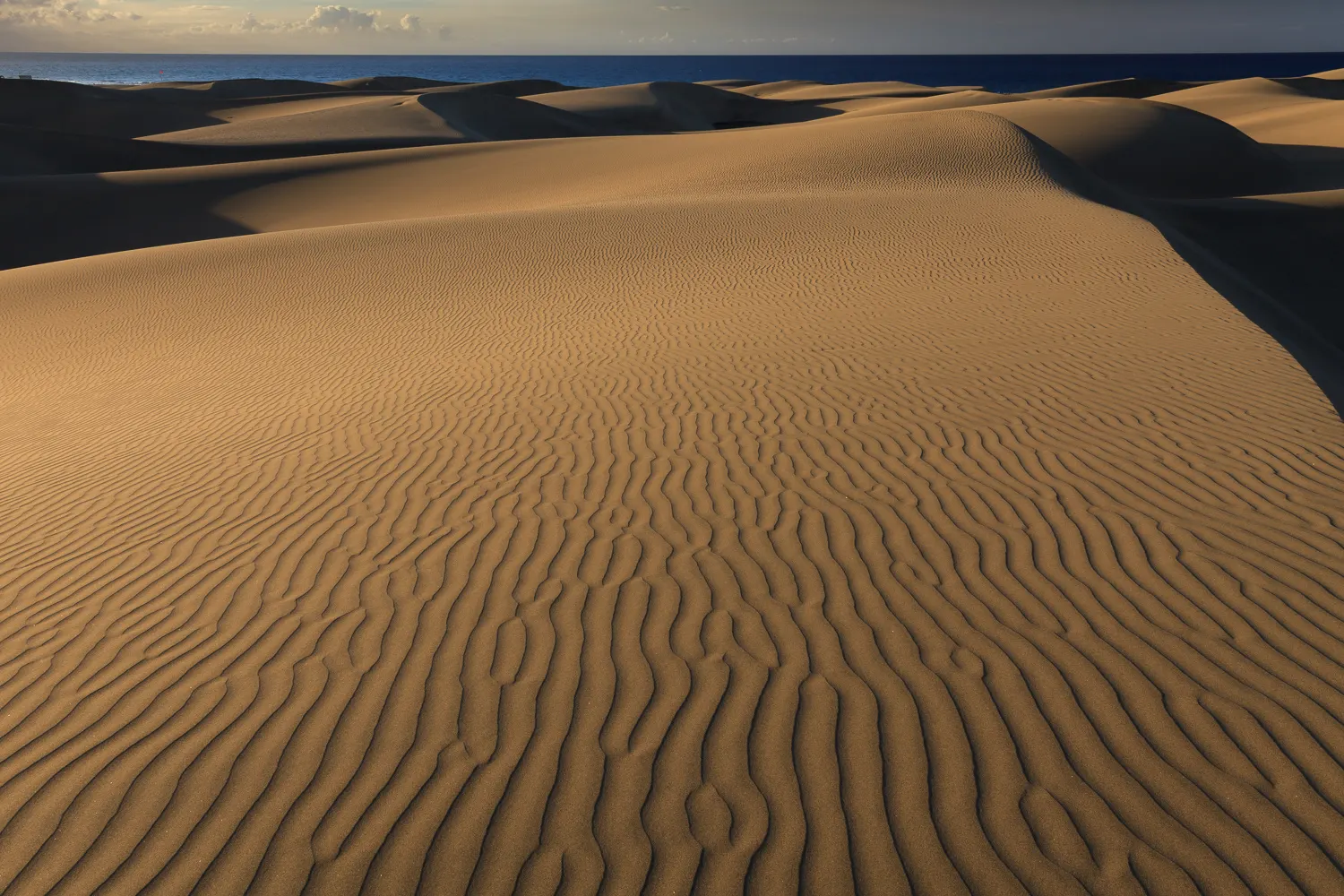
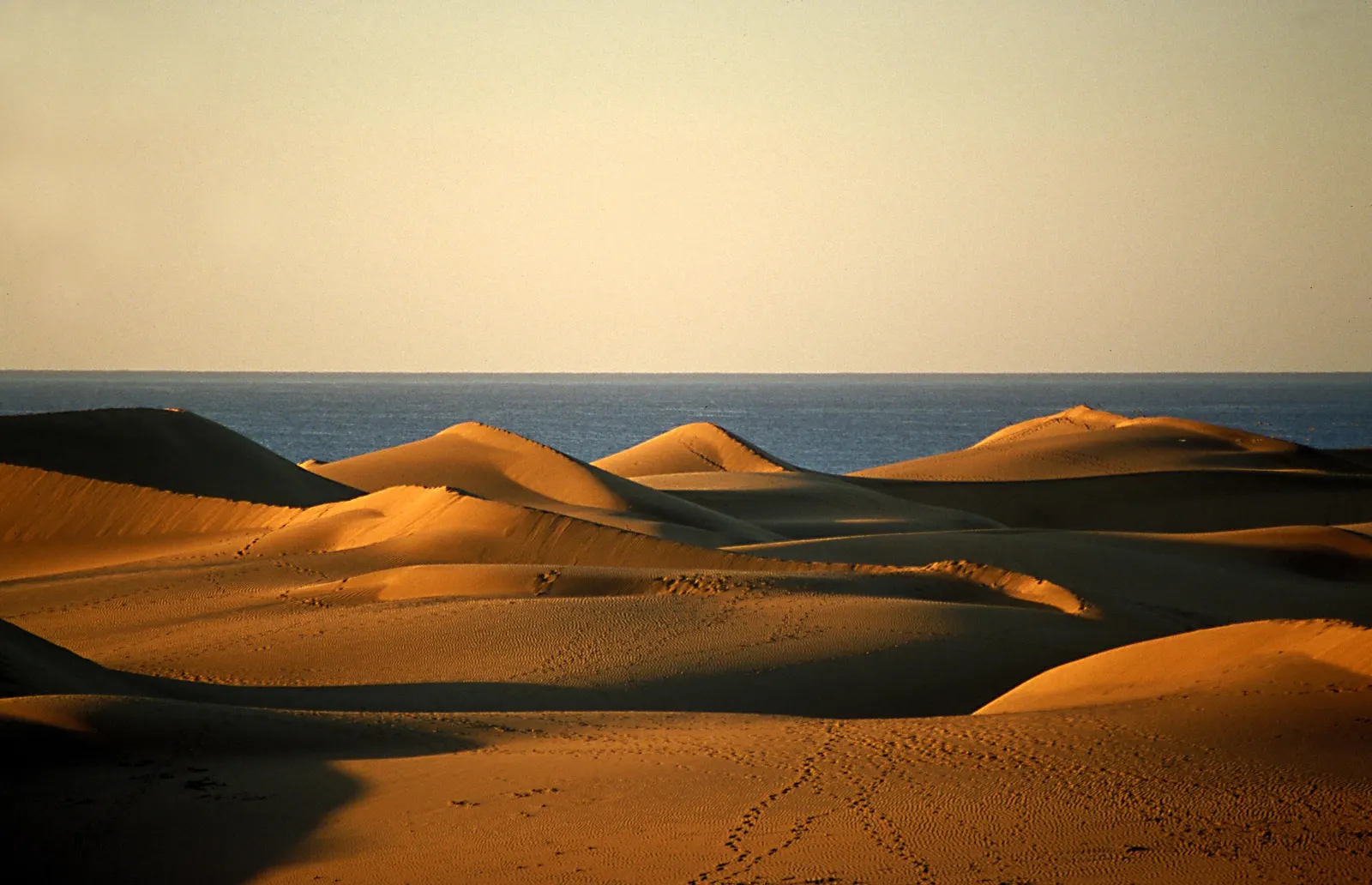
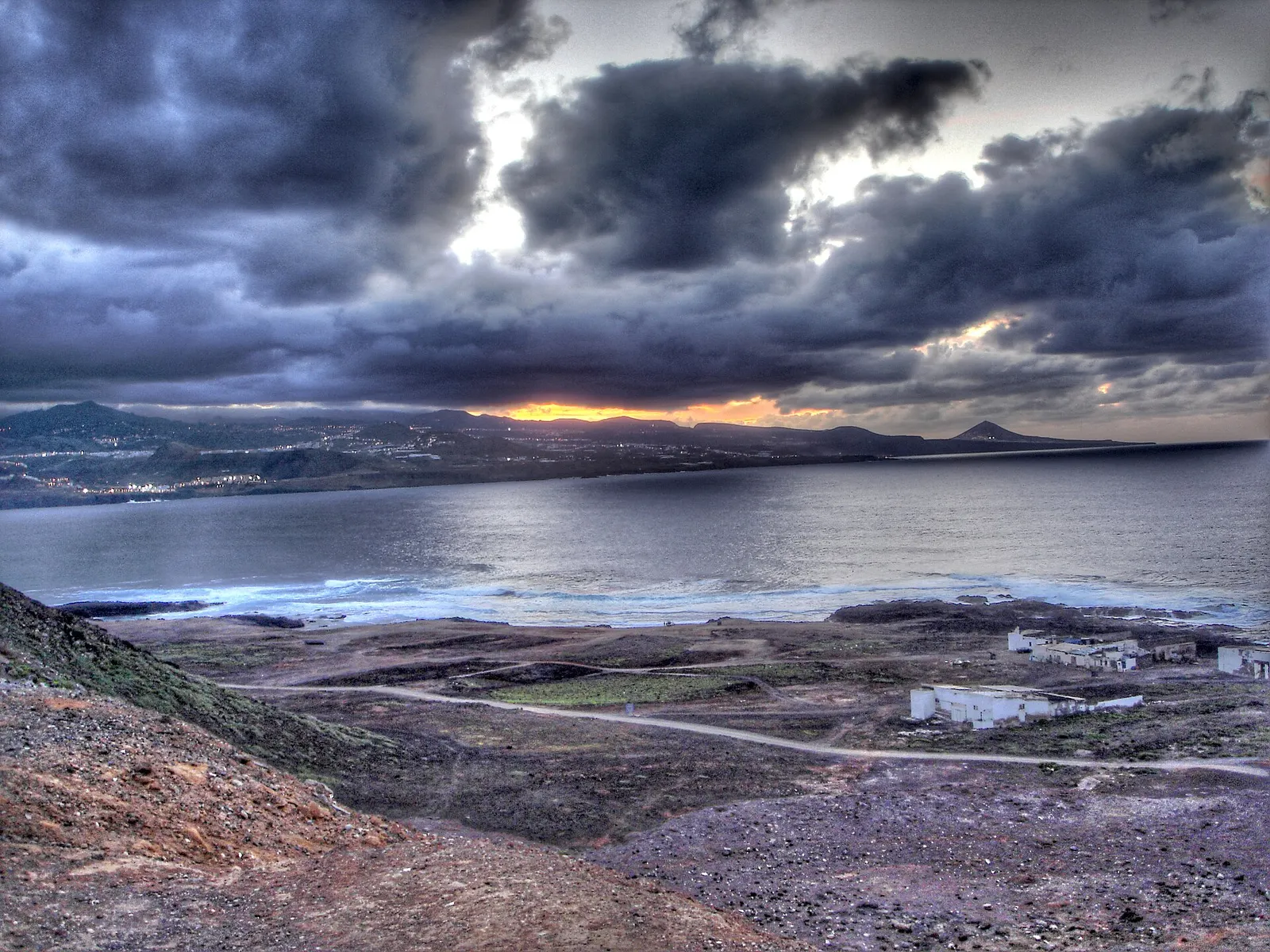
The dune field at dusk, when the beaches on this stretch empty out.
Guayedra, in the north
A complete change of scene. Guayedra is in Agaete on the north coast, a pebble and dark-sand beach set in a ravine. The north gets more swell and the water feels cooler than in the south, so it is a different kind of swim.
Access is by track and path, and you can drive fairly close, though the last stretch is on foot. No facilities here either.
It is the option if you are staying in the north or working through the Agaete and Tamadaba route, because it fits naturally into that day. From the south it is more than an hour and a half by car, so it does not work as a swimming trip.
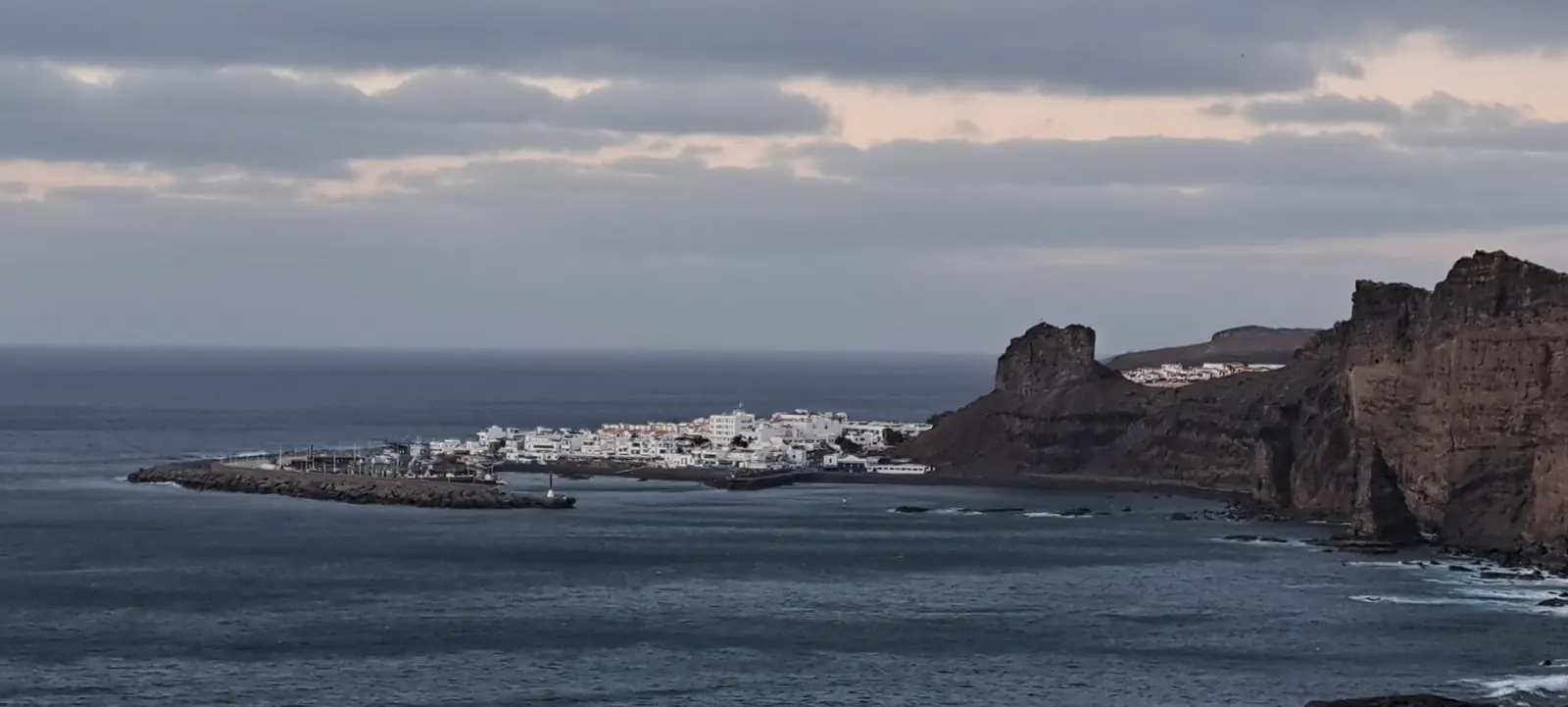
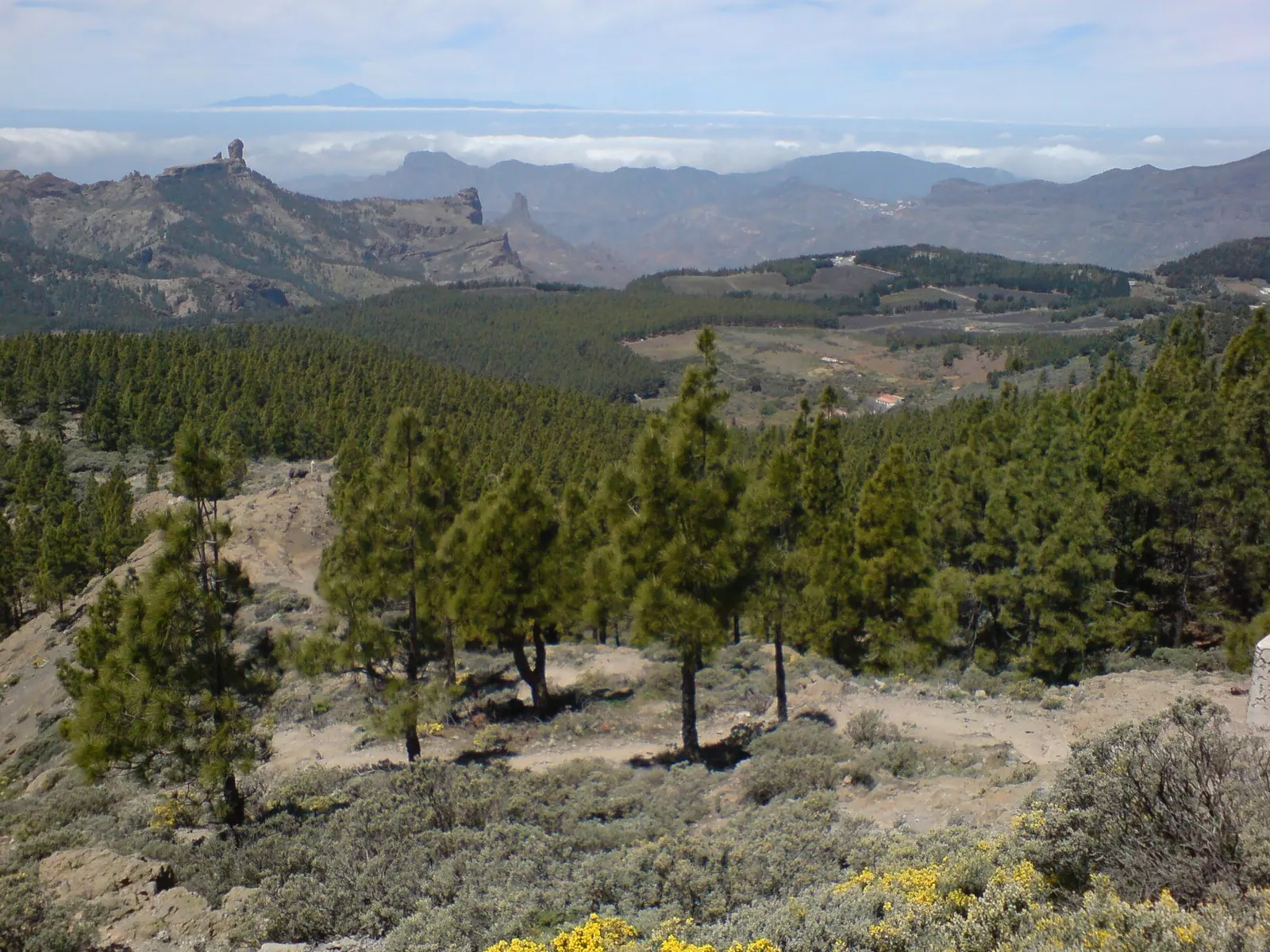
The coast at Guayedra, in Agaete, with the northern cliffs behind.
Güigüí, the one you have to earn
The most famous beach on the island among people who walk, and the hardest to reach. It sits in the municipality of La Aldea de San Nicolás on the west coast, on a stretch with no road at all.
There are two ways in and neither is comfortable:
Desliza para ver la tabla completa →
Route
What it involves
Who for
Trail from Tasartico
About 5 km of mountain with serious gradient
Experienced walkers in good shape
By boat
Seasonal service from the coast
Anyone who wants to see it without the walk
The trail from Tasartico crosses the mountain and it is not a stroll: there is considerable climbing in both directions and you have to plan for the return. Without enough water, proper footwear and an early start it is a bad idea, particularly between May and September.
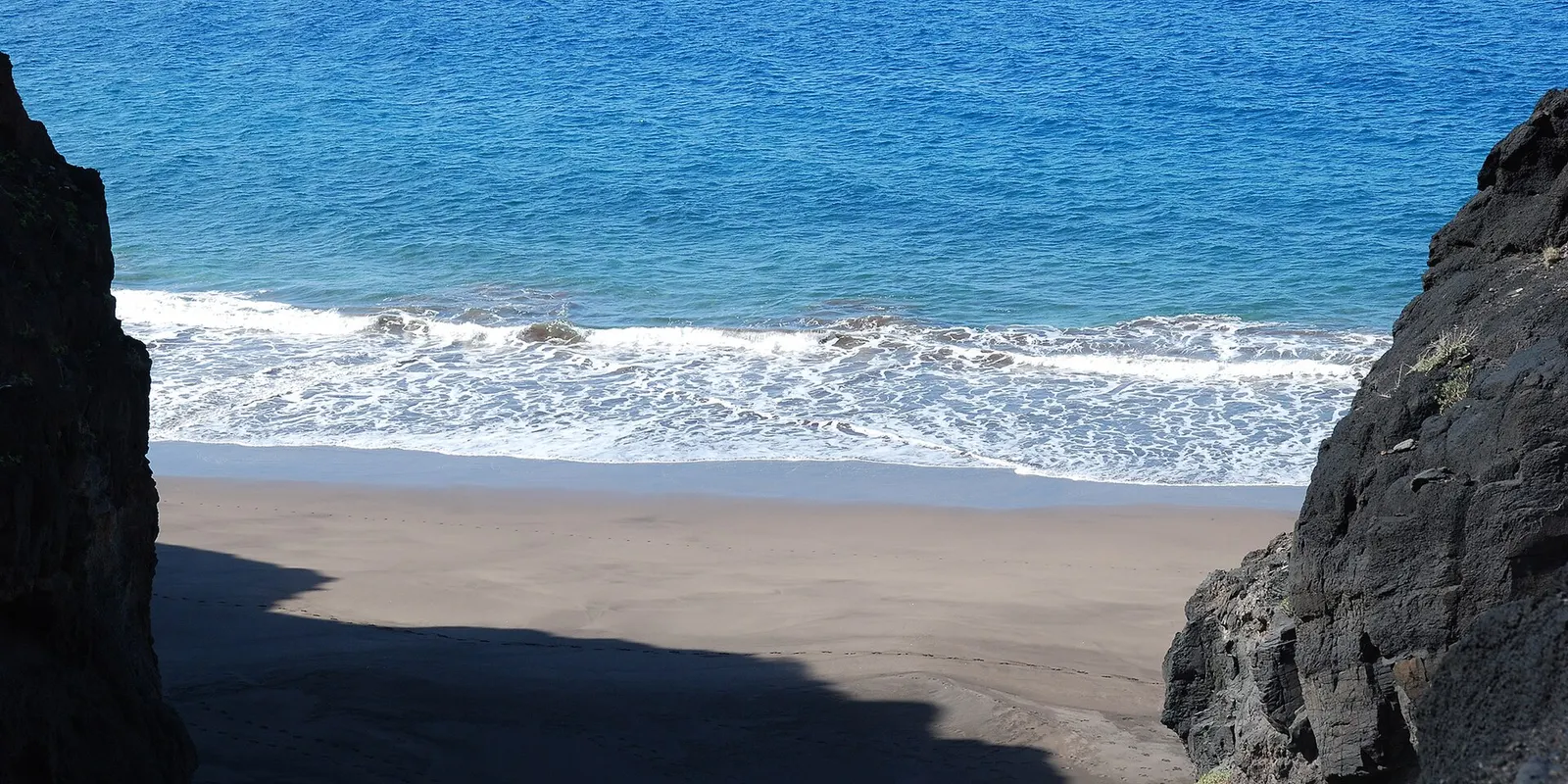
The reward is one of the most striking beaches in the Canaries: dark sand, very clean water and an isolation that barely exists anywhere else. There is nothing there, literally: no drinking water, no shade, no reliable phone signal.
Güigüí: dark sand, clear water and cliffs on both sides.
Other coves where naturism is common
Beyond the four with clear recognition, there are stretches of coast where naturism is practised without any formal signage. The distinction matters, so it is worth being precise.
On hard-to-reach beaches with no facilities and few visitors, naturist use has settled in by custom. No sign authorises it and no bylaw forbids it; it is simply what the people who get that far do. Typically these are coves on the west and north coasts reached by footpath.
The advice in those cases is the obvious one and the least followed: look before you decide. If there are clothed families when you arrive, then not on that day and not in that cove. The arrangement works precisely because nobody imposes their preference.
Etiquette for a first visit
If this is your first time on a naturist beach, the honest summary is that it is far less dramatic than it sounds beforehand. A few points that make it easier.
Nobody is looking at you. That is the first thing people notice and the one that removes most of the apprehension. On a naturist beach the novelty wears off in about ninety seconds and it becomes an ordinary beach with people reading, swimming and talking.
There is no obligation. On the recognised naturist beaches you will find people clothed, topless and fully undressed, all at once. Nobody is going to comment either way. Take your time if you want it.
The towel rule is universal. Sitting on your own towel is standard practice everywhere and it is about hygiene, not modesty. It is the one convention that is genuinely enforced by social pressure.
Cover up to leave. The boundary between the naturist stretch and the rest is understood locally even where it is not signposted, and crossing it undressed is what generates complaints. Put something on before you head back to the car park or the promenade.
Going with family
A question that comes up more than people expect, and one where the answer differs from what many assume. Naturist beaches in Spain are used by families, and children on them are entirely normal.
What matters practically is choosing the right one. Maspalomas is the only one of the four that works with children, because it is the only one with facilities, shallow entry and lifeguard cover on the wider beach. Montaña Arena, Guayedra and Güigüí have nothing at all, and Güigüí involves ten kilometres of mountain walking.
The sun caveat applies double with children: skin that has never been exposed burns very fast at this latitude, and small children cannot judge it for themselves.
Getting there and parking
Access is the most underestimated part of this plan, mainly because three of the four are a long way from anywhere you might be staying.
Desliza para ver la tabla completa →
Beach
Parking
Final stretch
Warning
Maspalomas
Large, around the lighthouse
About 20 minutes on foot
Fills by mid-morning in season
Montaña Arena
Informal, beside the track
15-minute coastal path
Leave nothing visible in the car
Guayedra
Dirt track, close to the beach
Short walk
The track deteriorates after rain
Güigüí
In Tasartico village
5 km of mountain trail
Count the return: 10 km in total
Two specific warnings. On the isolated, unsupervised parking areas: do not leave valuables in sight, which is the standard advice and still necessary. And on Güigüí: many people calculate the walk one way only. It is five kilometres of mountain in each direction, and the return is done with more heat and less energy.
When to go
Crowds and comfort change considerably through the year, and not in the way most people expect.
The year on the naturist beaches
December to March
The best windowFewer people, comfortable walking temperatures and the sea still at 20°.
April and May
Very goodThe island at its greenest, easy trails and quiet beaches.
June to August
The hardestSerious heat on the trails and relentless sun. Go very early.
September to November
Warmest waterSea at 23-24° and low numbers. Probably the best balance of all.
Against intuition, summer is the worst season for the three that require a walk. The Güigüí trail in August, with no shade and at midday, is genuinely dangerous. And at Montaña Arena the absence of shade matters far more than it seems when planning from home.
The legal position and how it works in practice
Naturism is not prohibited in Spain, so there is no underlying illegality. What does exist are municipal bylaws regulating nudity away from beaches, and in practice the rule is simple: on the nudist beach, naturally; off it, dressed.
What is expected
Absolute respect for other people’s privacy
A towel underneath, always, on hygiene grounds
Getting dressed to leave the nudist area
Taking your rubbish out, especially where there are no bins
Naturalness: it is a beach, not a spectacle
What is not tolerated
Photographing or filming other people
Explicit sexual behaviour in public
Approaching or propositioning other bathers
Flying drones over the beach
Turning the visit into a sightseeing trip
The rule about photographs deserves emphasis because it causes the most conflict. Photographing someone without their consent is a serious legal matter, and on a nudist beach more so. If you want a picture of the landscape, take one with nobody in it.
What to bring
Three of the four have nothing at all, so preparation matters more than usual.
The basics, in order of importance
Water
More than you thinkNo fountains and no bars at any of them except Maspalomas.
Shade
A parasol or light shelterNone of these beaches has natural shade.
Sun protection
High factor, reappliedFull body exposure changes the calculation entirely.
Footwear
Closed shoes for the trailsPebble and dirt track destroy a flip-flop.
A rubbish bag
To take everything outThere are no bins. What goes in comes out.
Sun on skin that is not used to it. This is the most useful warning in the guide: the parts of the body normally covered have no adaptation to sunlight and burn remarkably fast. At 27° north, with the UV index this island has, half an hour without protection is enough. High factor, reapplied every two hours, and shade between one and four.
The sea, all year round
An advantage of this island that applies here as much as anywhere: the sea does not drop below 20 degrees in any month and reaches 24 in August and September. The swimming season never closes, and on the naturist beaches that matters even more, because winter is when they are quietest.
The regional nuance: the southern beaches are more sheltered and the water stiller; Guayedra in the north has more swell and feels cooler. Güigüí, on the open west coast, can have a serious groundswell.
Four with clear recognition: the Maspalomas nudist zone, Montaña Arena, Guayedra in Agaete and Güigüí in La Aldea. There are also hard-to-reach coves where naturism is customary without formal signage.
Which is the easiest to reach?
The Maspalomas nudist zone, about twenty minutes on foot from the lighthouse, and the only one with facilities nearby. Montaña Arena needs a fifteen-minute coastal path and has none.
Is nudism legal in Gran Canaria?
Naturism is not prohibited in Spain. What municipal bylaws regulate is nudity away from beaches. The practical rule is straightforward: on the nudist beach, naturally; off it, dressed.
How do you get to Güigüí?
By a trail of about five kilometres from Tasartico, with serious gradient and no shade, or by boat depending on the season. The walk requires good fitness, an early start and plenty of water.
Do they have facilities?
Only the Maspalomas zone, by virtue of being part of the wider beach. Montaña Arena, Guayedra and Güigüí have no water, toilets, lifeguard or shade.
Can you take photographs?
Of the landscape yes, provided no people appear. Photographing or filming other bathers without consent is a serious legal matter and the rule that causes most conflict.
When is the best time?
Any: the water never drops below 20 degrees. Winter is when they are quietest, and from May to September you need to be careful with the sun and with the heat on the trails.
In short
Gran Canaria works well as a naturist destination and covers very different preferences. If you want comfort and facilities, the Maspalomas zone. If you want quiet without giving up reasonable access, Montaña Arena. If you are in the north, Guayedra. And if you want genuine isolation and are willing to walk five kilometres of mountain, Güigüí.
The rule that applies to the last three is the same: there is nothing there. No water, no shade, no lifeguard. Whatever you need comes in with you, and the rubbish goes out with you too.
And the advice your skin will thank you for: the sun on this island, on parts of the body that are not used to it, burns in half an hour. It is what ruins the day most often.
Image credits
Svein-Magne Tunli – tunliweb.no · BY-SA 4.0 · vía Openverse · Javier Branas · BY 3.0 · vía Openverse · Desde un tajinaste · BY 4.0 · vía Openverse · Kriki · CC BY 3.0 · vía Wikimedia Commons
A tireless explorer of every corner of Mogán. A lover of good coffee and an expert at finding the best fresh fish of the day. His motto: “In Mogán there's always something new to discover”.
Local Tip
From the heart of Mogán
“Wear sun cream even when there is a breeze, and even in January. The Atlantic wind is deceptive: the radiation stays high and every winter people burn without noticing.”
All 95 beaches in Gran Canaria on an interactive map, grouped by municipality and by type, with the best ones picked by who you are travelling with and what you want.