Puerto de Mogán: Best Things to Do, Weather and Where to Stay
Month-by-month weather, which part of town to stay in, whether it is too quiet for your kind of holiday, the Friday market and how it compares to Puerto Rico. Written from Mogán.
Martín PazCanarian Resident · Foodie
Reviewed
Share
Puerto de Mogán sits at the far south-west tip of Gran Canaria, and it is the resort people book after seeing one photograph of its canals. This guide answers what UK travellers actually ask before booking: what the weather is really like, where to stay, and whether the town is too quiet for the holiday you have in mind.
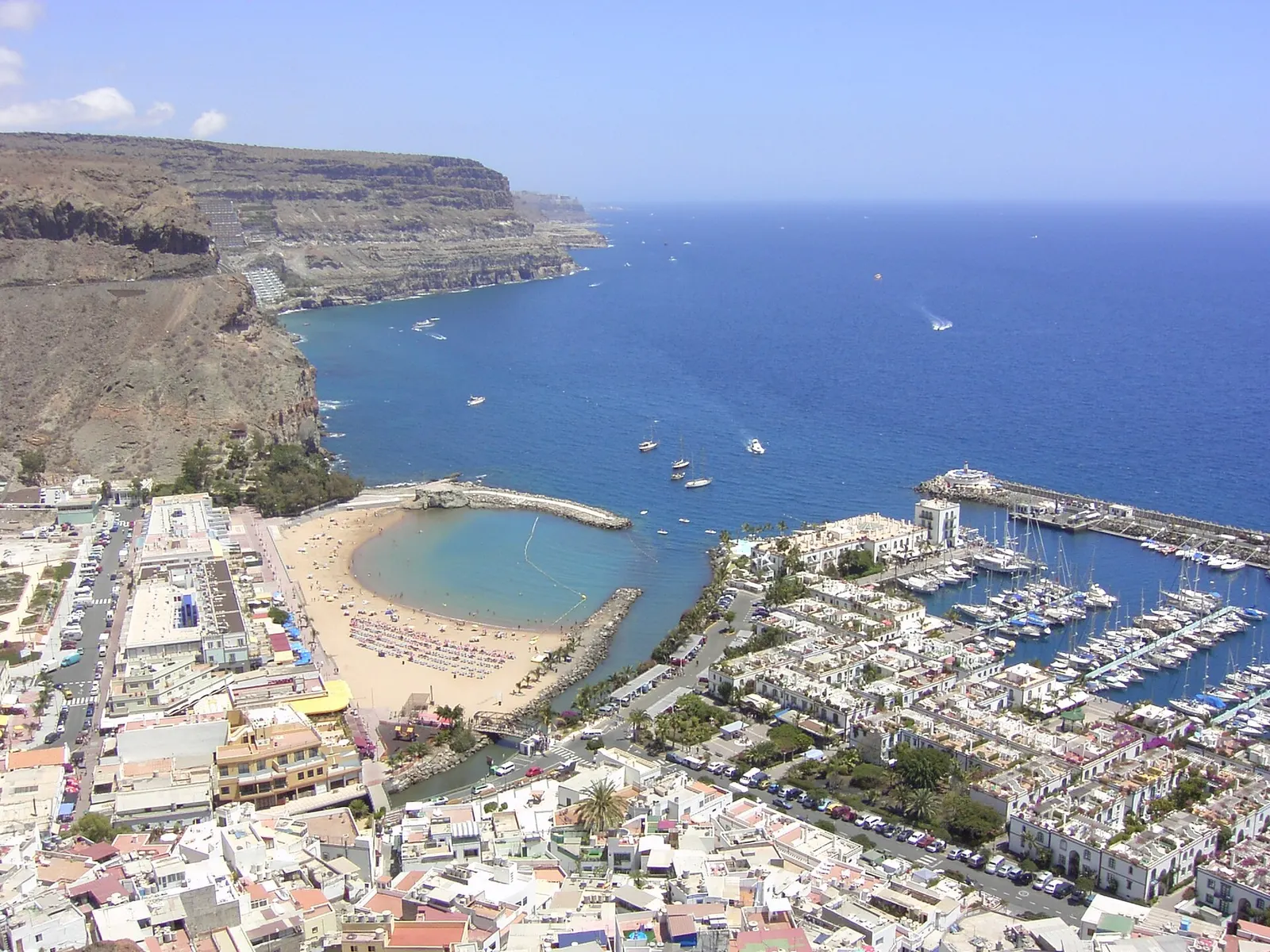
Puerto de Mogán from the air, with its harbour and beach.
A walk through the old town, the canals and the harbour. Video by Living Walks.
Puerto de Mogán at a glance
Where
Far south-west of Gran Canaria
From the airport
About 60 km
From Playa del Inglés
About 35 km
Market day
Friday morning
Best for
Couples, families, quiet weeks
Not for
Nightlife and big resorts
Puerto de Mogán weather, month by month
This is the first thing most people check, and the honest answer is that the south-west of Gran Canaria has some of the steadiest temperatures in Europe. The mountains inland shelter the town from the trade winds that hit the north of the island, so it is noticeably calmer and sunnier here than in Las Palmas.
These are real climate normals, not brochure figures:
Temperature month by month
Average daily high and low. Hover any month for detail.
20.3°
16.3°Jan
20.7°
15.9°Feb
21.8°
16.7°Mar
22.4°
17.2°Apr
23°
18°May
25.2°
19.6°Jun
26.4°
20.8°Jul
27.7°
22.1°Aug
27.4°
22.2°Sep
26°
21.4°Oct
23.5°
19.4°Nov
21.2°
17.1°Dec
highlow
Warmest: August 27.7°Coolest: January 20.3°
Climate normals 1991–2020, Open-Meteo (EC-Earth3P-HR model) for 27.82°N, 15.76°W.
What that means in practice: there is no bad month. December and January still reach the low twenties in the daytime, which is why the resort fills with northern European visitors through the winter. From June to October the sea is at its warmest. The busiest weeks are in European winter, not summer, which is the opposite of most Mediterranean resorts.
One local warning: the calima, a dust haze blown over from the Sahara, can appear at any time of year. It cuts visibility and pushes up the heat for a few days. It is not frequent, but it is worth knowing it exists before you blame the forecast.
Where to stay in Puerto de Mogán
The town is small, and the part you book changes the holiday far more than the star rating does. There are three distinct areas, and they suit very different trips.
Desliza para ver la tabla completa →
Area
What it is like
Best for
Trade-off
Harbour and canals
Apartments on the water, steps from every restaurant
Atmosphere and short walks
Priciest, and promenade terraces stay lively late
Upper town
Quieter streets, five to ten minutes downhill
Value and calm
The walk back up after a long day
Coastal resorts
Larger complexes with pools and sea views
Facilities and families
A short drive or bus to the old town
A practical note that does not appear in booking descriptions: the promenade is the social centre of the town and it stays busy well into the evening. If you are a light sleeper, ask for a room facing inward rather than over the water. It costs nothing to request and it makes a real difference.
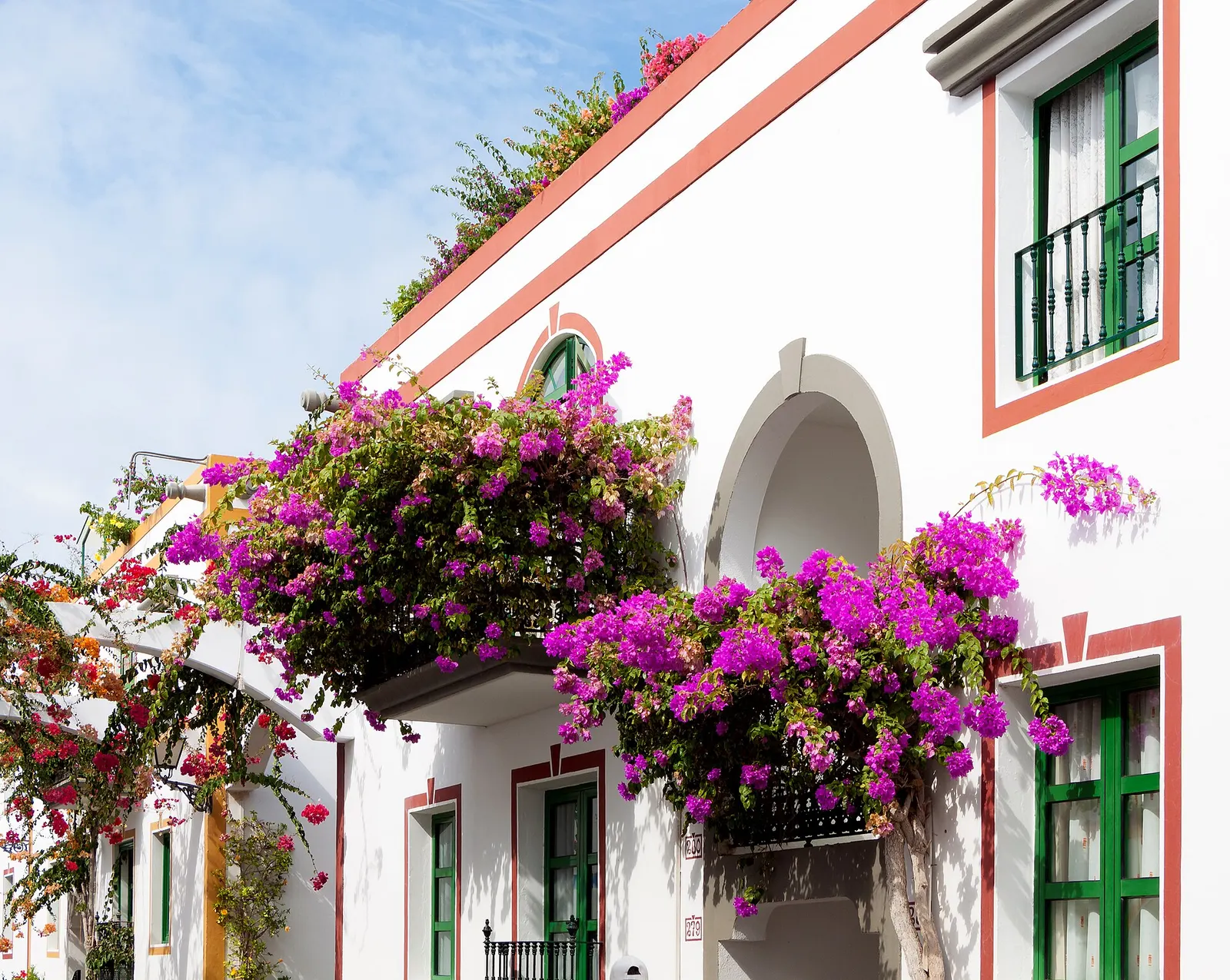
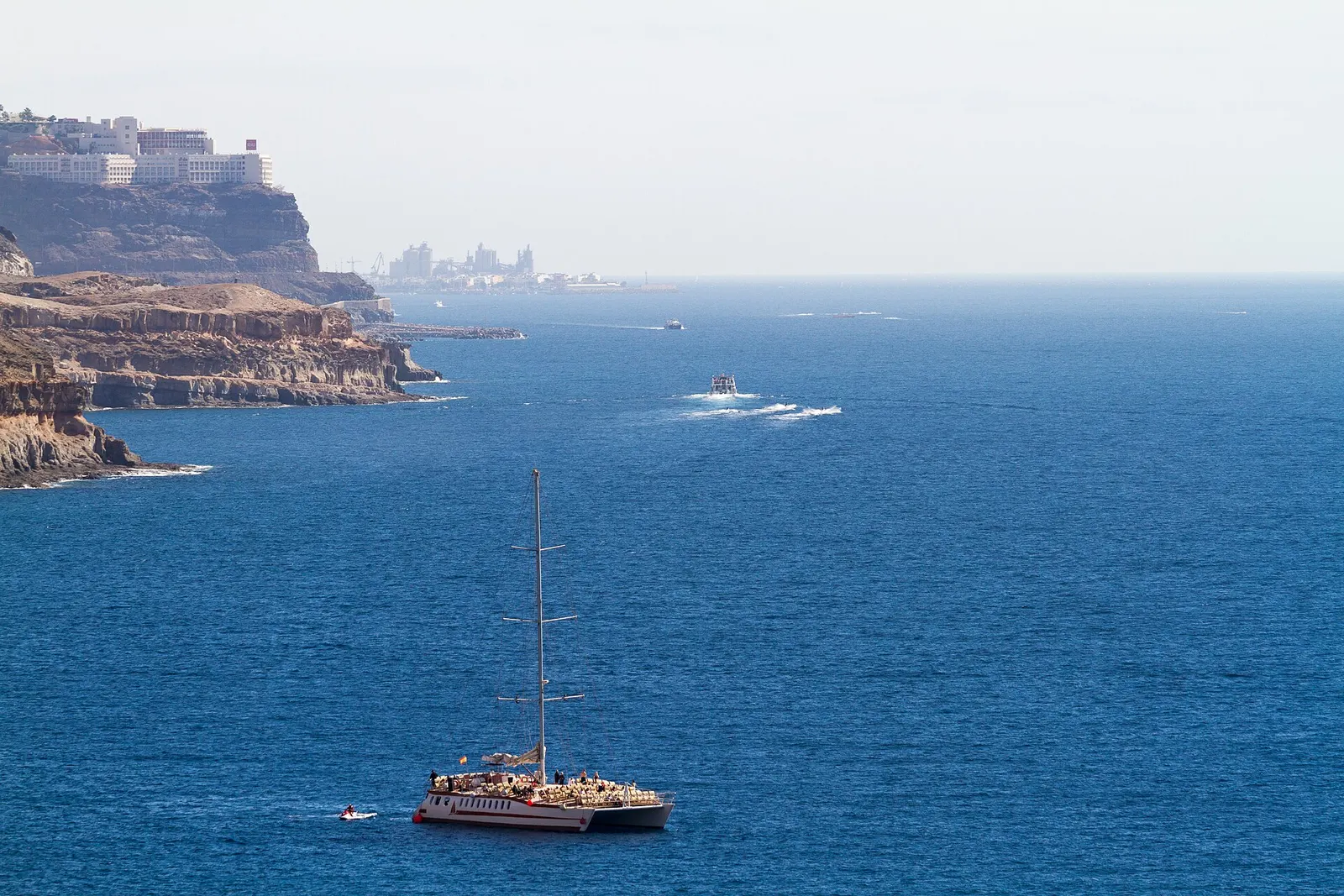
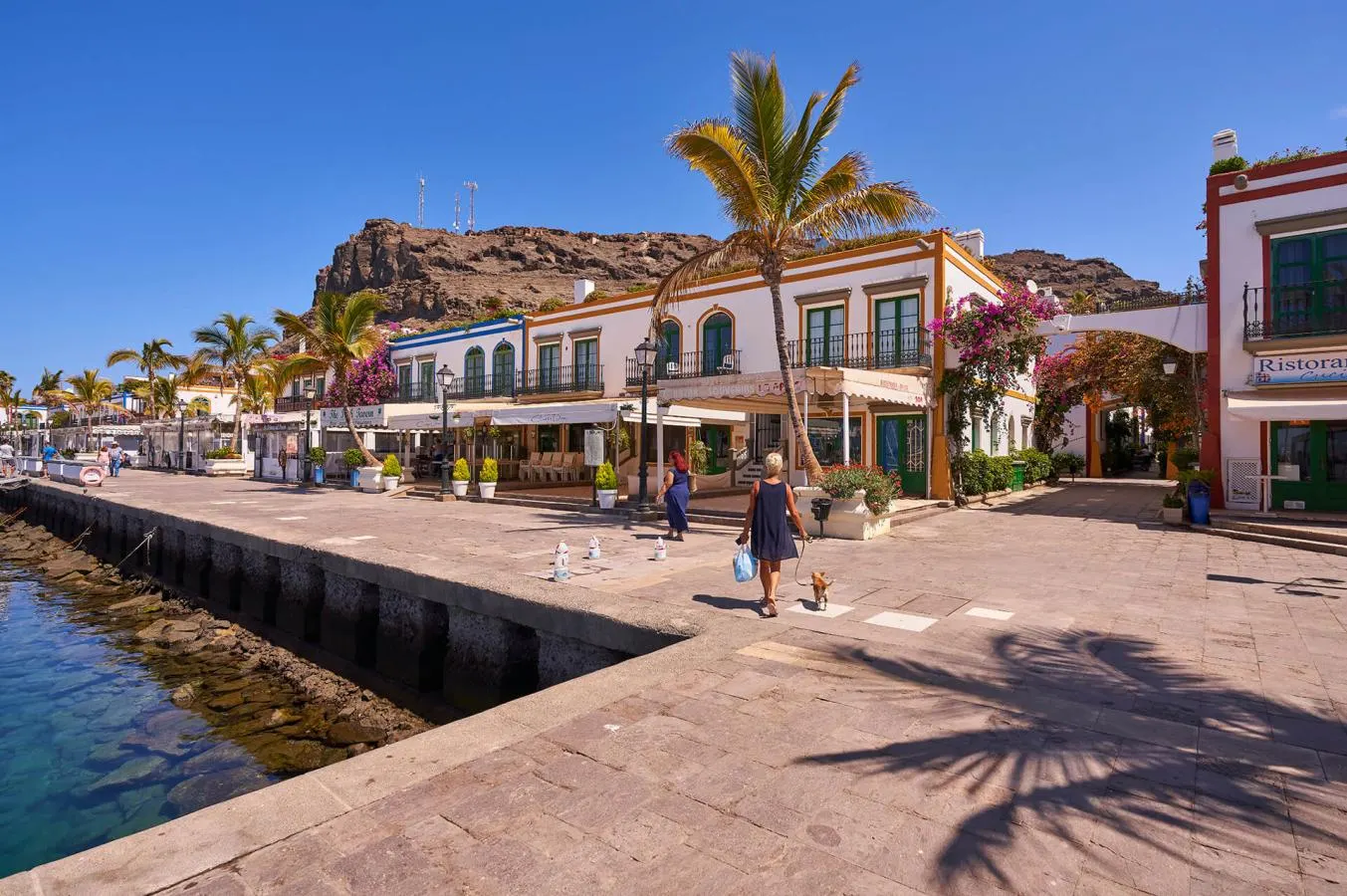
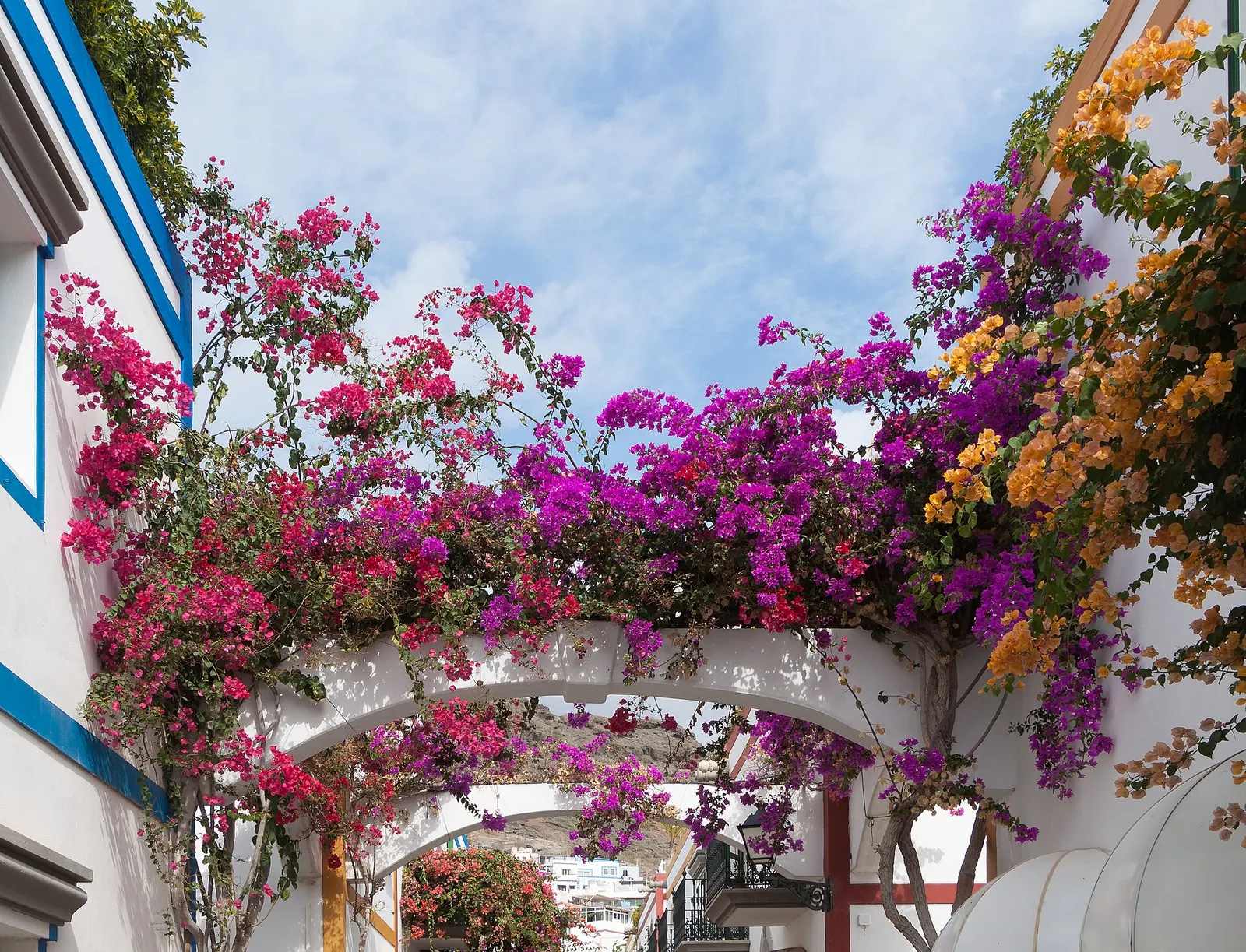
Bougainvillea over a whitewashed façade.A sailing boat off the Mogán coast.The promenade at Puerto de Mogán with its palm trees.
Is Puerto de Mogán too quiet?
It is the question that comes up most often, so here is a straight answer: yes, if you want nightlife. Puerto de Mogán is not Playa del Inglés and it never tries to be. Evenings here are long dinners on the promenade, a drink by the marina and an early night.
That is precisely why most people love it and precisely why a minority find it dull. There is no strip, no clubs, and most places wind down by midnight. What there is instead is a town you can walk end to end without traffic, with the sound of halyards on masts rather than music.
Book it if…
You are travelling as a couple or with young children
You want to walk everywhere without a car
You like long dinners with a harbour view
You are coming for winter sun rather than a party
You plan to explore the west of the island
Look elsewhere if…
You want bars open past midnight
You want a long stretch of golden sand
You want shopping beyond the Friday market
You are travelling with teenagers who will get restless
You expect an undiscovered fishing village
The 10 best things to do in Puerto de Mogán
You can walk Puerto de Mogán in a morning, but there is a big difference between drifting through it and knowing what you are looking at. These are the ten places and moments that make the visit, roughly in the order that makes sense on the ground:
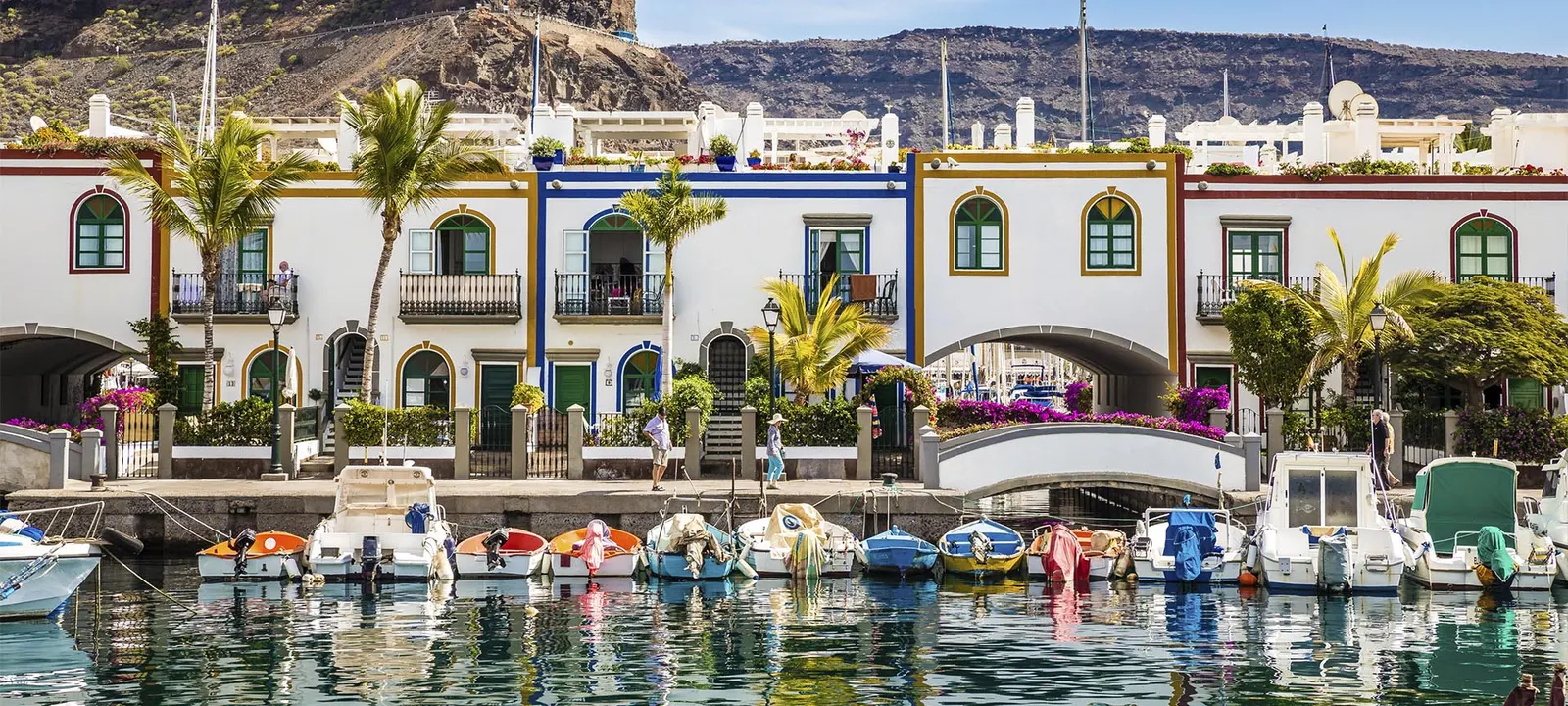
1. The canals and their bridges: the Little Venice
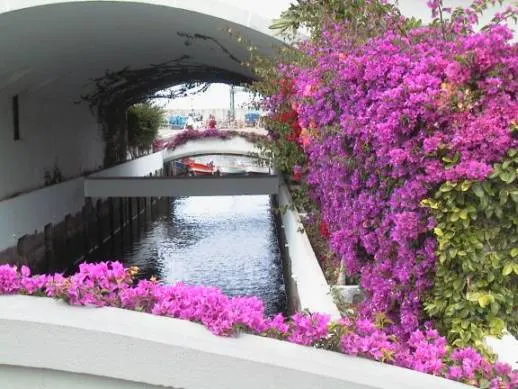
The nickname comes from here: seawater canals linking the marina to the fishermen’s quarter, crossed by small pedestrian bridges. They are less extensive than the photos suggest (this is not Venice, it is a Canarian village with two very photogenic canals) which is exactly why you should cross them slowly and early, when the water is still and the reflections are intact.
2. The inner lanes and their bougainvillea
The mistake most visitors make is sticking to the main axis. The bougainvillea that appears in every photograph is two or three turns inland, in the residential lanes where people hang washing and water their pots. That is where the town stops feeling like a stage set.
Bougainvillea over the whitewash in the inner lanes.
3. The fishing quay at first light
Yachts and small fishing boats share the same water here, and that mix is what stops the place feeling like a museum. Come down early and you may still see the fleet at work and fish being landed; some restaurants here work with fresh fish, so it is worth asking what the catch of the day is. It is the most interesting half hour of the day and almost nobody is around for it.
Puerto de Mogán from the air, with its harbour and beach.
4. The marina
The leisure half of the harbour: pontoons full of yachts and excursion catamarans, terraces facing the moorings, and a Mediterranean-port atmosphere that is rare in the Canaries. This is where you have the drink with a view, and where nearly every boat trip in point 8 departs from.
5. Playa de Mogán
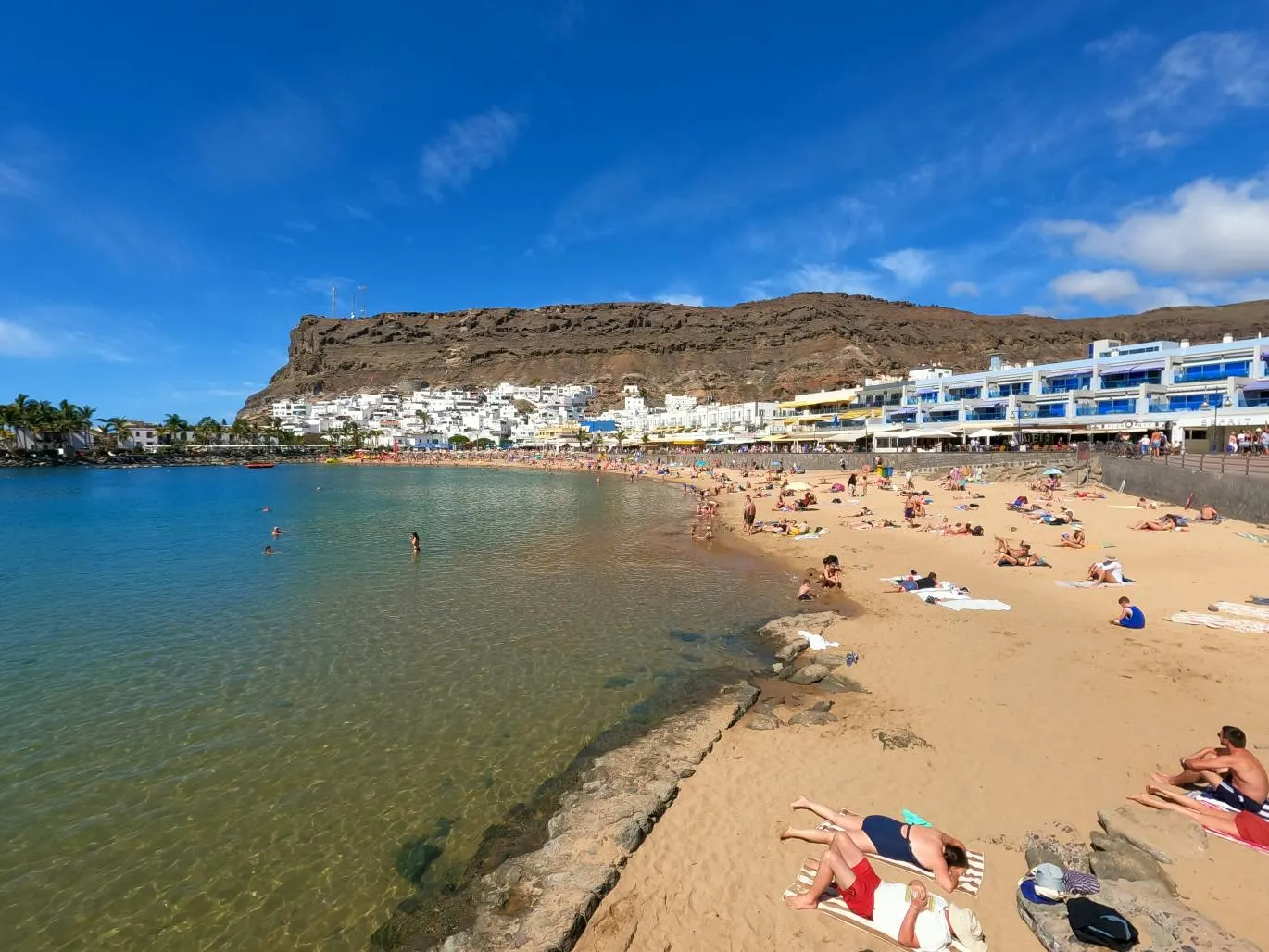
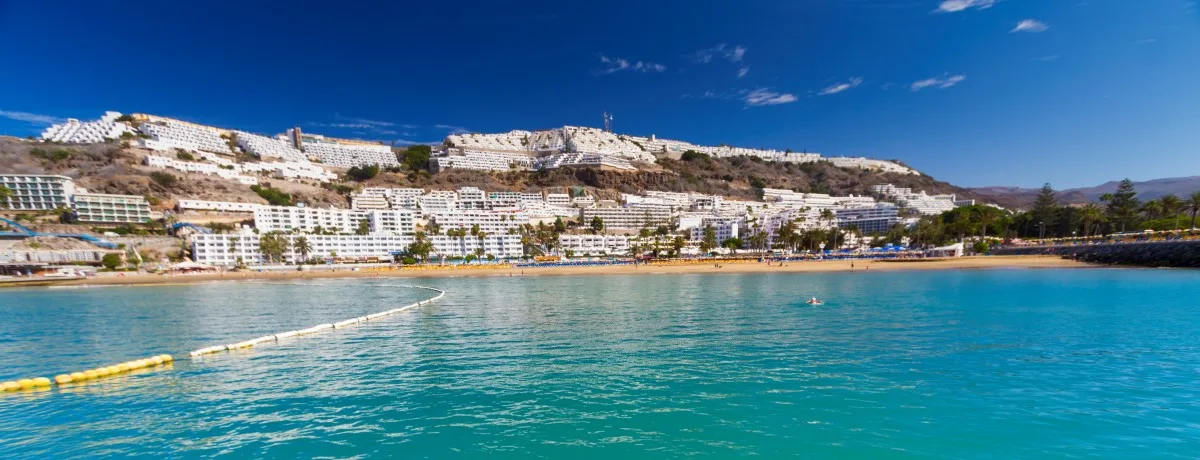
Small (about 290 m), pale-sanded and well sheltered by the harbour wall, so it is unusually calm. It is not the most dramatic beach on the island, but it is one of the safest nearby for small children: the surf is usually very light, there is little current and the slope into the water is gentle. If you want something bigger, Amadores is ten minutes away by car.
Playa de Mogán, sheltered by the harbour wall.
6. Cañada de los Gatos: the 1,300-year-old neighbour
A minute from the beach, at the mouth of the ravine, sits a pre-Hispanic settlement with the floor plans of ancient Canarian houses and funerary structures: the Cañada de los Gatos archaeological site. Almost nobody stepping off the boats knows it is there, and it is the quickest way to understand that this “little fishing village” was inhabited centuries before the Spanish conquest. It is listed as a Bien de Interés Cultural and is part of Gran Canaria’s network of archaeological sites. It opens Tuesday to Sunday (10am to 5pm in winter, 6pm in summer; closed Mondays) and general admission is €4. Check the official times before you go.
7. The Friday market
If you can pick your day, pick Friday: the market transforms the whole town for the morning. It has its own section further down, including what is worth your time and what is not.
8. Get out on the water: dolphins from the harbour
The Mogán coast is one of the best in Gran Canaria for seeing wild dolphins, with sightings most days of the year. Boat trips, diving, fishing and even a tourist submarine leave from this harbour; neighbouring Puerto Rico has the largest choice of whale-watching. They combine well with the Friday market.
The town has its own viewpoint, and almost nobody climbs it: you go up on foot through the steep lanes of the old town, the former fishermen’s quarter on the hillside, by a stairway of some 250-260 steps (much of the climb is shaded). At the top a panorama opens straight over the beach, the fishing harbour and the marina from above: one of the best photographs of the lot and, at sunset, hard to beat. Allow ten to fifteen minutes at a normal pace, in comfortable shoes.
If you would rather not climb, the road towards La Aldea also has several pull-offs with views over the bay: the “by car” panorama, easier but less intimate.
10. Up the ravine: Mogán village
The natural excursion from the harbour: nine kilometres up the ravine sits Mogán village, the municipality’s old agricultural core, with a different climate, a different light and a different speed. Harbour plus village is the most complete day you can build without leaving the municipality, see things to do for how to combine them.
When to go during the day
If you are staying in town this matters less, but if you are visiting for the day it changes everything. Puerto de Mogán is a fixed stop on the south coast excursion circuit, and that concentrates the crowds into a narrow window. This is the pattern we tend to see in season:
How the town fills up through the day
8am
Harbour at restThe catch is landed, cafés open. Almost no visitors.
11am
Coaches arriveExcursions start coming in from Playa del Inglés and Puerto Rico.
1pm
PeakTerraces full, canals busy, harbour car park at capacity.
4:30pm
It emptiesThe coaches head back to the hotels.
7pm
The best hourWarm light on the whitewash, quiet terraces, the harbour to yourself.
The Friday market
The market takes over the harbour area on Friday mornings and it is comfortably the busiest day of the week. Expect a mix of local craft stalls and general market goods, so go with realistic expectations: it is a pleasant walk and a good atmosphere rather than a traditional Canarian craft fair.
Arrive before ten if you want to see it properly, when the stalls are set up but the coaches have not yet arrived. If markets are not your thing, simply choose another day. If you are going specifically on a Friday, we have a complete guide to the Puerto de Mogán market, with times, map and what to buy.
The promenade has the terraces with the best views and, predictably, the highest prices and the menus most clearly aimed at passing visitors. They are not bad, but it helps to know there is an alternative a few metres away.
On the seafront you often pay a premium for the location. Do not assume a terrace with a view is the best kitchen: it is worth comparing the inner streets too, two or three turns inland, where local people generally eat.
With fish, one trick that works everywhere here: instead of ordering from the menu, ask what came in today. The harbour still lands a catch and the answer changes daily. A vague reply tells you what you need to know.
Breakfast is the other thing worth planning. Most promenade terraces open late and serve a version aimed squarely at visitors. The cafés in the upper town open earlier, cost roughly half and are where you will hear Spanish being spoken. If you want the local order, ask for a cortado leche y leche: espresso with condensed milk and a little fresh milk, and the drink the island genuinely runs on.
One last practicality: many kitchens close between roughly four and seven. If you come back from a boat trip hungry at five, you will find terraces open for drinks and very few of them cooking. Plan a late lunch or an early snack rather than assuming you can eat at any hour.
For the rest of the municipality, you can browse local restaurants and cafés in our Mogán directory.
Puerto de Mogán or Puerto Rico?
These two get compared constantly because they are fifteen minutes apart and appear in the same brochures. They are not really competing: they suit different holidays.
Desliza para ver la tabla completa →
Puerto de Mogán
Puerto Rico
Amadores
Atmosphere
Village scale, calm
Lively, commercial
Beach club feel
Beach
Small and sheltered
Large, gentle surf
Pale sand, very protected
Nightlife
Dinner and little else
The liveliest of the three
Limited, closes early
With children
Very easy
Easy
Very easy
Shopping
Boutiques and tourist shops; big Friday market
Shopping centre
Minimal
Book it for
Scenery and quiet
An active base
A beach day
Plenty of people stay in one and visit the other. The boat between them makes that easy and turns the transfer into part of the day out.
The town itself takes half a day. What the location is genuinely good for is going out on the water: the cliffs along this stretch of coast are invisible from the road and only open up from the sea.
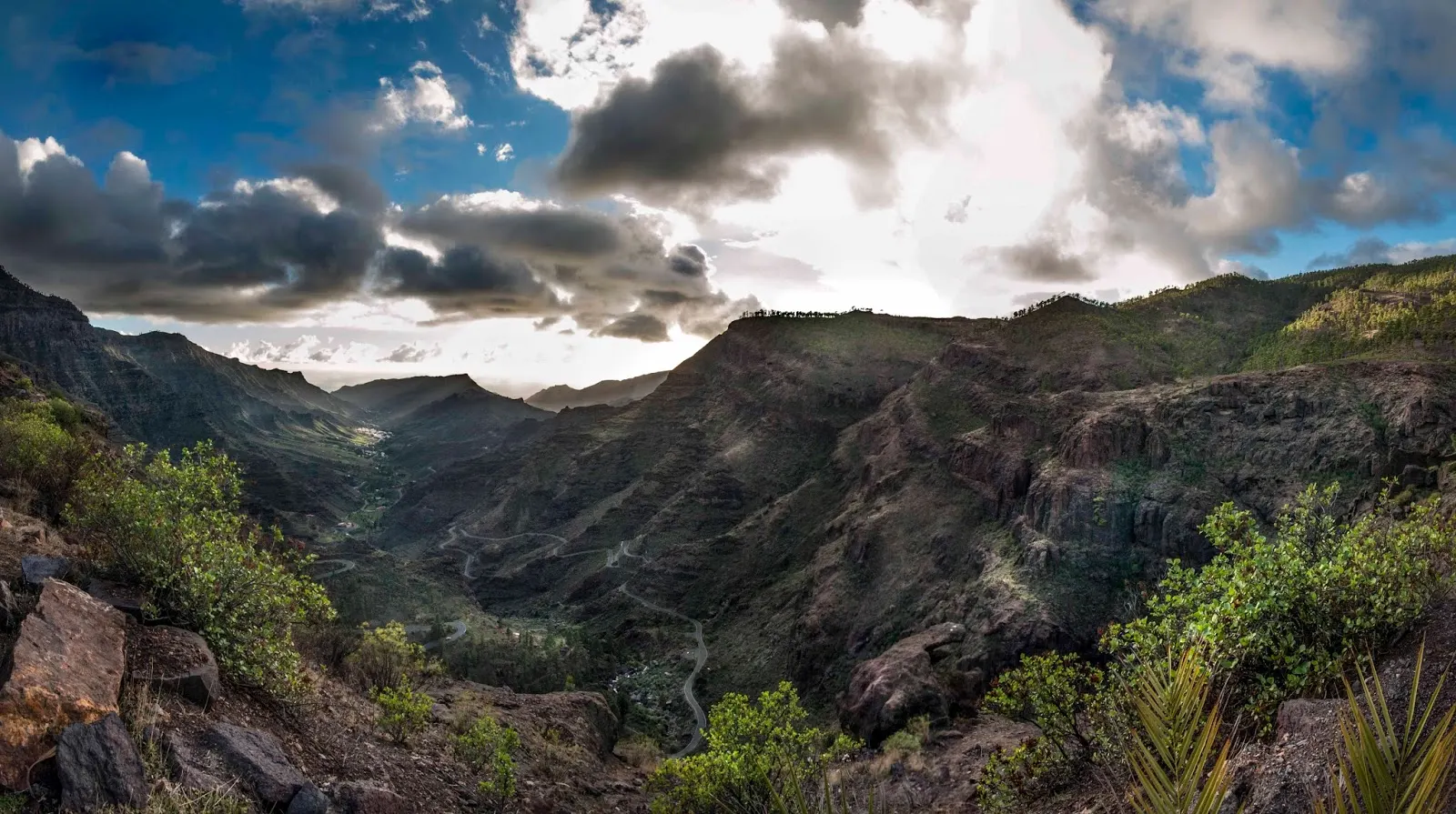
Inland is the other half of the argument, and the one most visitors miss entirely. The road climbing the barranco towards the village of Mogán and on to the mountains passes through a landscape with nothing in common with the coast: deep ravines, reservoirs, palm groves and scattered hamlets. Hire a car for a day and it becomes the part of the trip people remember.
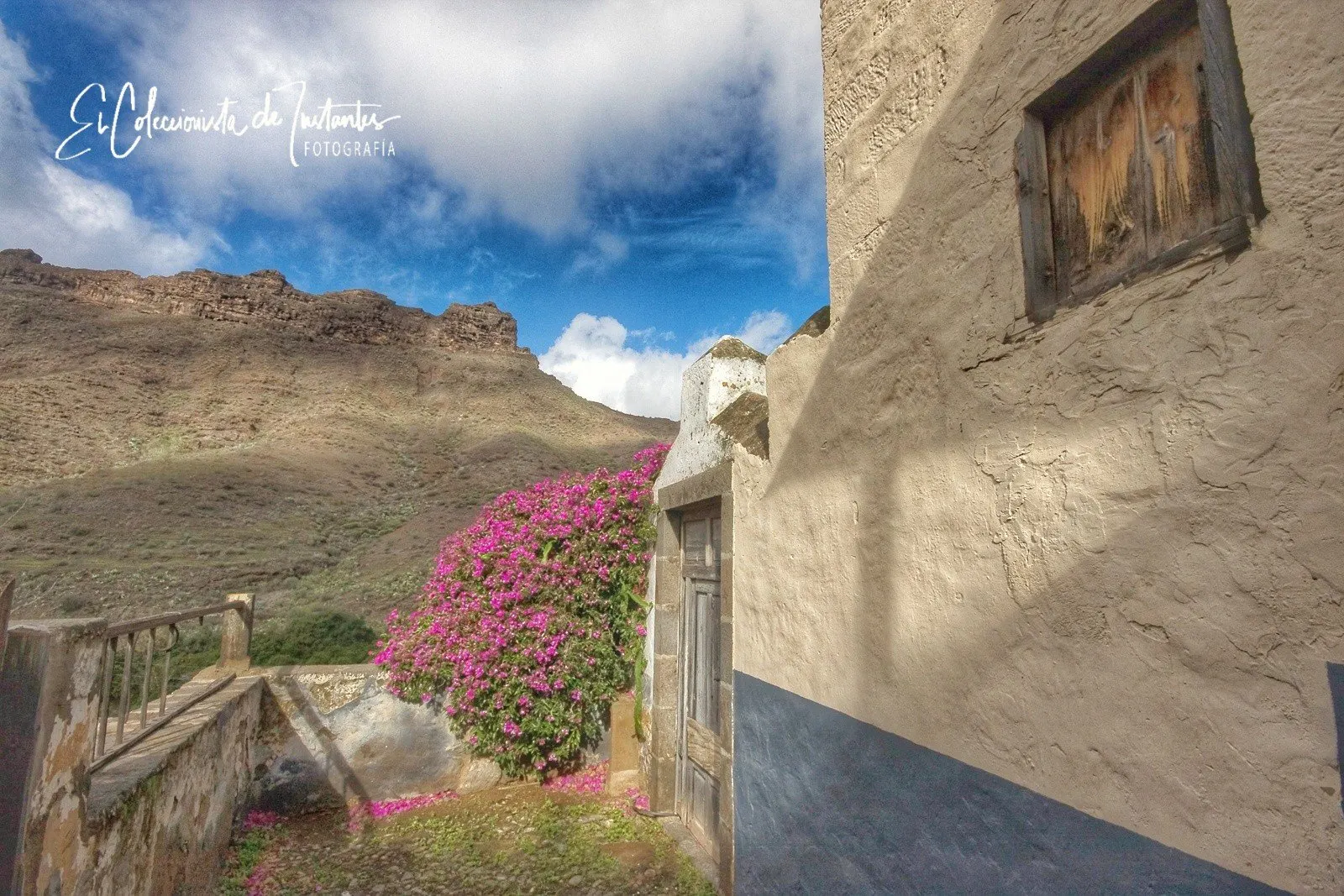
A whitewashed wall with bougainvillea in Mogán.The Mogán ravine opening inland.Playa de Mogán, sheltered by the harbour wall.
Getting around, car hire and parking
Puerto de Mogán itself needs no transport at all: the centre is pedestrian and you can cross it on foot in fifteen minutes. The question is whether you need a car for the rest of the week, and the answer depends entirely on what you came for.
If your plan is beach, harbour, dinner and repeat, skip the car. The bus network along the south coast is frequent, cheap and reliable: line 91 links the airport and Las Palmas directly with Puerto de Mogán (the terminal is called Estación Puerto de Mogán), and lines 1, 32 and 33 connect Puerto Rico, Amadores, Arguineguín and Playa del Inglés without much waiting. Taxis for short hops are inexpensive by northern European standards.
If you want to see the island properly, hire one. Everything that makes Gran Canaria interesting beyond the resorts sits inland or in the west, and public transport reaches almost none of it. Two or three days of car hire covers the mountains, the reservoirs and the western coast road comfortably.
The one genuine annoyance is parking. The harbour car park is paid and fills by late morning in high season, and the streets around the centre are tight (you may find a limited free space nearby). Arrive before eleven or after five and it is straightforward; arrive at one on a Friday and you will circle for twenty minutes. Several accommodation blocks include a space, and it is worth confirming that before you book if you are hiring a car.
Puerto de Mogán from the air: low-rise, compact and walkable.
Beaches within easy reach
Playa de Mogán is small, and after a few days most people want a change of scene. Three alternatives are close enough for a morning trip and each offers something the town beach does not.
Desliza para ver la tabla completa →
Beach
How far
What it offers
Worth knowing
Amadores
10 min by car
Pale sand, very calm water, full facilities
Artificial and busy, but the safest swimming nearby
Taurito
5 min by car
Dark volcanic sand, pool complex
Quieter than Amadores, less shelter from the wind
Veneguera
30 min, part unpaved
Wild, undeveloped, no facilities
Bring everything you need; nothing is sold there
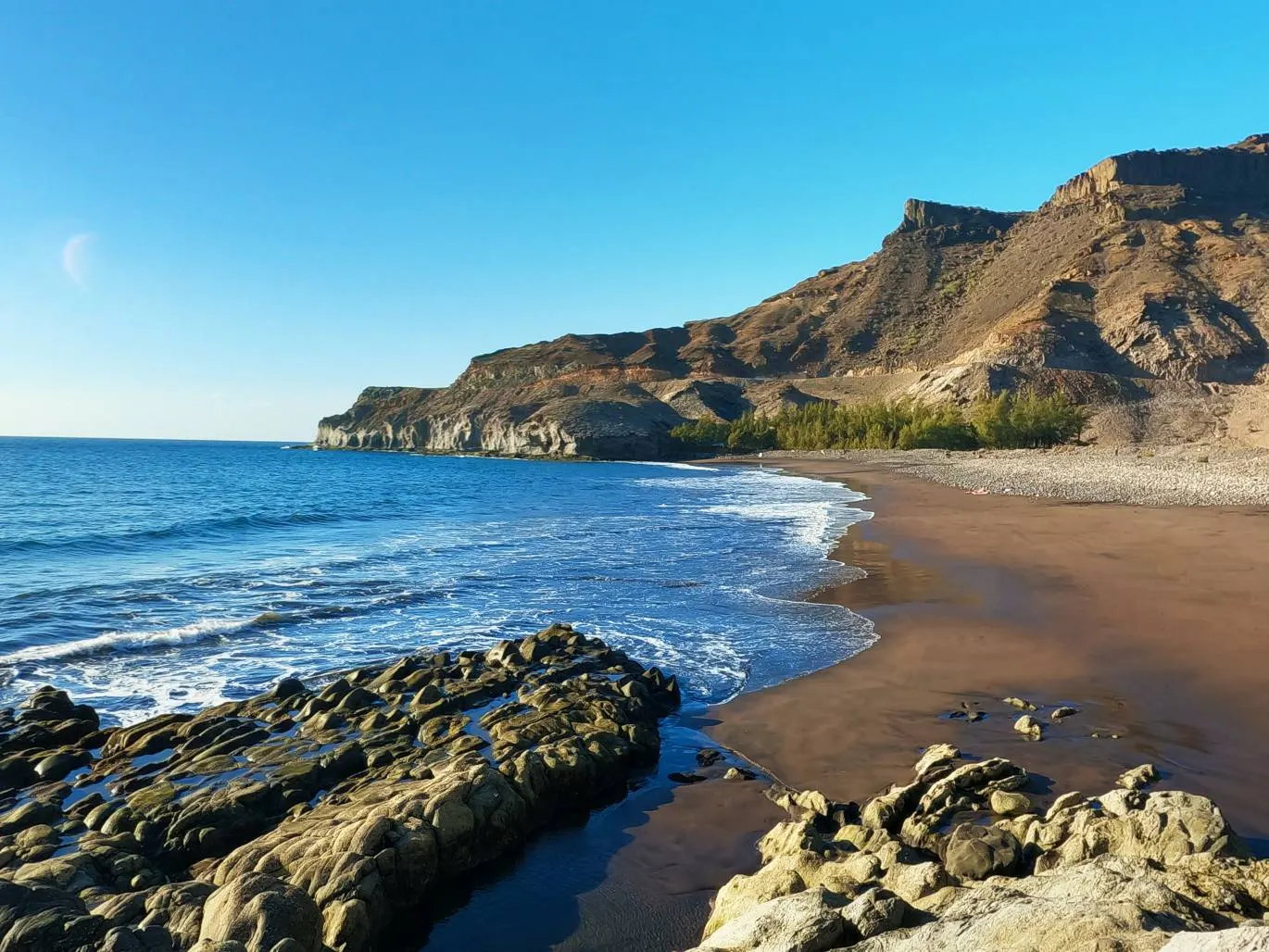
Veneguera is the one worth the effort if you want to see what this coast looked like before tourism. There is no bar, no shade and no lifeguard, and the final stretch of road is rough. That is exactly why it stays empty.
Veneguera, a pebble beach with nothing built on it.
Getting there
Puerto de Mogán is at the end of the GC-1 motorway. Most visitors arrive by transfer or hire car from the airport, which takes under an hour. Public buses connect the town with the whole south coast and with Las Palmas, and they are a sensible option precisely because parking is the weak point in high season.
The most enjoyable arrival is by boat from Puerto Rico or Arguineguín. It follows a stretch of cliffs you cannot see from the road and drops you directly in the harbour.
Common questions
Is Puerto de Mogán worth visiting?
Yes, with one condition: choose your hour. Between eleven and four it competes with the excursion coaches and loses much of its charm. Early morning or evening it is among the most attractive places on the island.
Is Puerto de Mogán known as Little Venice?
Yes. The nickname comes from the network of canals crossing the pedestrian centre, crossed by small bridges. It is a planned development from the 1970s, deliberately built low-rise and whitewashed rather than as high-rise blocks.
What is the nightlife like?
Very limited, and that is the point. Expect restaurants and quiet bars around the marina rather than clubs. If nightlife matters to you, base yourself in Playa del Inglés and visit Mogán for a day.
How long do you need in Puerto de Mogán?
Half a day covers the old town, the canals and the beach comfortably. Add a boat trip and it fills a full day. Many people stay a week and use it as a base for the west of the island.
Is it good for families?
Very. The beach is sheltered with no waves, the centre is traffic-free and distances are short. It suits young children particularly well; teenagers may find it slow.
When is the market?
Friday morning, around the harbour. It is the busiest day of the week, so arrive before ten or pick a different day.
The verdict
Puerto de Mogán is worth visiting, and worth staying in if the pace suits you. Book it for the scenery, the calm and the winter sun rather than for nightlife. Choose the upper town for value or the canals for atmosphere, and either keep Friday morning free for the market or deliberately avoid it.
If you only take one piece of advice from this guide, make it this: stay until sunset at least once. When the coaches leave and the light turns warm on the whitewashed walls, you understand immediately why this small harbour ended up on the cover of every brochure about the island.
Image credits
Gess · CC BY-SA 3.0 · vía Wikimedia Commons · H. Zell · CC BY-SA 3.0 · vía Wikimedia Commons · TimOve · CC BY 2.0 · vía Wikimedia Commons · Giuseppe Milo · CC BY 2.0 · vía Wikimedia Commons · El Coleccionista de Instantes · CC BY-SA 2.0 · vía Wikimedia Commons · Renardo la vulpo · CC BY-SA 4.0 · vía Wikimedia Commons · Bengt Nyman · CC BY 2.0 · vía Wikimedia Commons · Frank Vincentz · CC BY-SA 3.0 · vía Wikimedia Commons
The critical eye behind every recommendation. A Canarian local and self-confessed foodie who knows every corner of Mogán. His mission: for every visitor to experience Mogán like a local.
Local Tip
From the heart of Mogán
“Stay until sunset even if you only came for the day. Once the excursion coaches leave, around half past four, the town changes completely: the light turns warm on the whitewash and the terraces empty out. That hour is the one people remember.”
The seven-day forecast for Puerto de Mogán, average temperatures for every month, sea temperature, and an honest comparison with other winter-sun destinations.
The 7-day forecast for Puerto Rico, plus average temperatures for every month, sea temperature, and why this bay is reliably sunnier than the rest of the island.
The seven-day forecast for Arguineguín, monthly averages, sea temperature, and the thing that actually varies here: the wind, and which beach to switch to when it blows.