What to see in Gran Canaria in 5 days: the complete itinerary
The 5-day Gran Canaria itinerary recommended by a local: Las Palmas, Maspalomas and, above all, the Mogán coast (Puerto Rico, Anfi del Mar, Arguineguín and Puerto de Mogán).
Cristopher OlivaLocal Mogán Explorer
Share
I’ll tell you as a Gran Canarian who has done this route dozens of times with friends visiting from abroad: five days is just enough to understand why those of us who live here wouldn’t move anywhere else. Gran Canaria is a continent in miniature. In a single day you can have breakfast facing the Atlantic in Las Palmas, eat fresh fish in a southern fishing village and watch the sun set from a 1,800-metre peak surrounded by Canarian pines. This is the itinerary I personally recommend, with special weight on the municipality of Mogán, which for me is the jewel of the south-west.
This is not a plan for rushing from place to place. It’s designed so you see the essentials without stress, leaving room to get lost, which is where the real trip happens. I’ve ordered it from north to south and from coast to summit, so each day makes geographic sense and you don’t spend your life in the car.
5
days of route
+60 km
of south coast
1,949 m
Pico de las Nieves
23 ºC
yearly average
How to use this itinerary
Each day is independent: if it rains in the summit, swap it for a beach day in Mogán and you're done. The south is almost always sunny even when the north is cloudy. Book your rental car in advance, especially in high season.
The itinerary at a glance
Day 1 — Las Palmas de Gran Canaria: the historic Vegueta quarter, the Santa Ana Cathedral, the Las Canteras city beach and tapas in the capital.
Day 2 — Maspalomas: the dunes, the lighthouse and the buzz of the tourist south.
Day 3 — The Mogán coast: Puerto Rico, Amadores, Anfi del Mar and Arguineguín, with the sea as the star.
Day 4 — Puerto de Mogán: the little Venice, the Friday market and traditional Mogán village.
Day 5 — The summits: the Roque Nublo, Pico de las Nieves and the white villages of the interior.
A practical note before you pack: even if you come in summer, always bring a light layer. On the coast you can be in your swimsuit and, an hour later, feel cold at the Roque Nublo at almost 1,800 metres; the temperature change between sea level and the summit is real. Bring comfortable footwear for the trails, good sun protection (the southern sun is strong all year) and, if you travel in high season, have your rental car and hotels booked well ahead. With that sorted, the rest takes care of itself.
Before you start: getting around the island
My number one tip: rent a car. Public transport (the local buses, or guaguas) is good between Las Palmas and the south, but for the summit and the inland villages you need your own vehicle. The GC-1 motorway connects the capital with Maspalomas and Mogán in under an hour, and from there the mountain roads begin: narrow and winding, but spectacular. Drive calmly, enjoy the viewpoints and don’t rush.
On where to stay: if you’re coming to switch off, base yourself in the south-west (Puerto Rico, Amadores, Anfi or Puerto de Mogán itself). If you prefer city life, museums and nightlife, stay in Las Palmas. For a first visit, I’d choose a base in the south with one or two nights up in the capital if you want to make the most of it.
Day 1 — Las Palmas de Gran Canaria: history, city beach and tapas
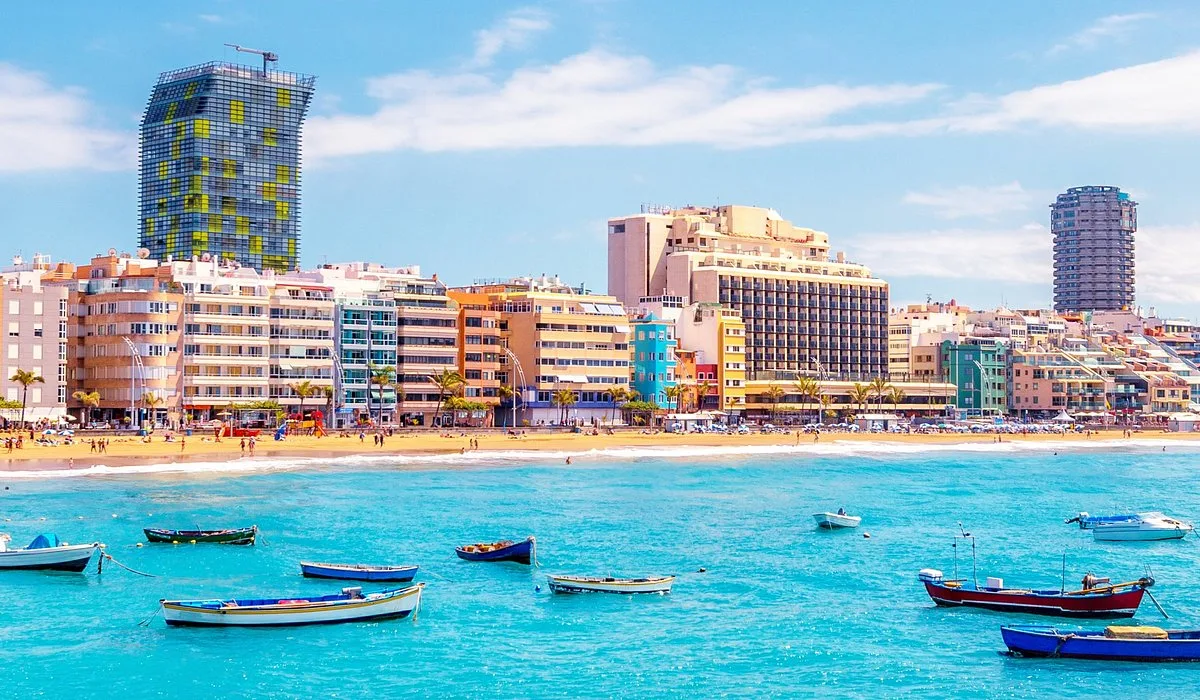
Las Palmas de Gran Canaria: the historic Vegueta quarter, Las Canteras beach and city life.
Start with the capital. The historic quarter of Vegueta is the city’s birthplace and one of the best-preserved colonial centres in the Canary Islands. Wander its cobbled streets up to the Cathedral of Santa Ana, climb its towers for a view over the rooftops, and step into the Casa de Colón, which tells the story of Christopher Columbus’s stop on the island on his way to America. On Thursday and Saturday mornings, Vegueta’s market smells of cheese, potatoes and local fruit: it’s the perfect chance to taste.
In the afternoon, switch gears and head to Las Canteras, our city beach: three kilometres of golden sand protected by a natural rock reef (La Barra) that keeps the water almost always calm. It’s perfect for a first swim and for understanding the relationship Gran Canarians have with the sea. End the day with tapas around the Triana quarter or the Mesa y López area. Order papas arrugadas with mojo, grilled cheese with palm honey and the fish of the day. Welcome to the Canaries.
Local tip
If you like surfing, at the La Cícer end of Las Canteras you can rent boards and take beginner lessons. And at dusk, that point is the best spot in the city to watch the sunset.
Day 2 — Maspalomas and Playa del Inglés: the dunes and the golden south
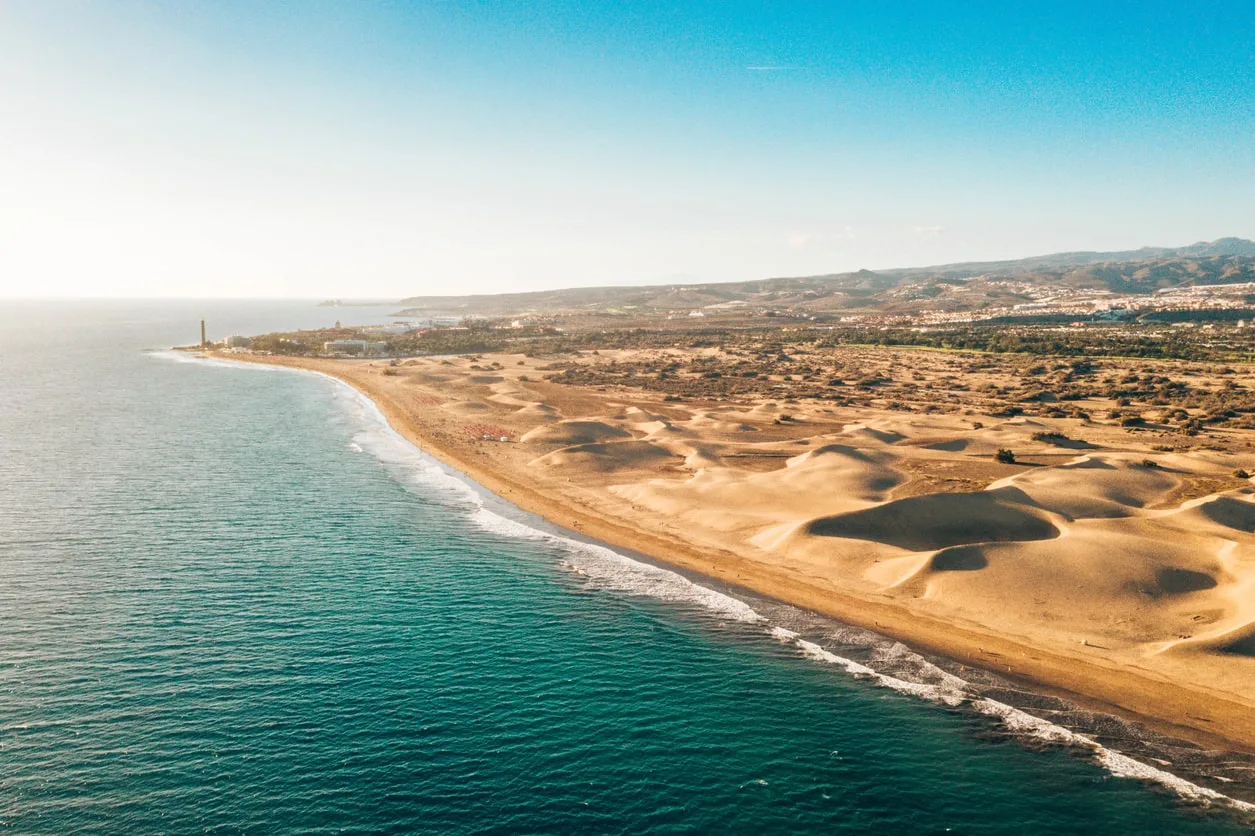
The Maspalomas Dunes: almost 400 hectares of golden sand by the sea.
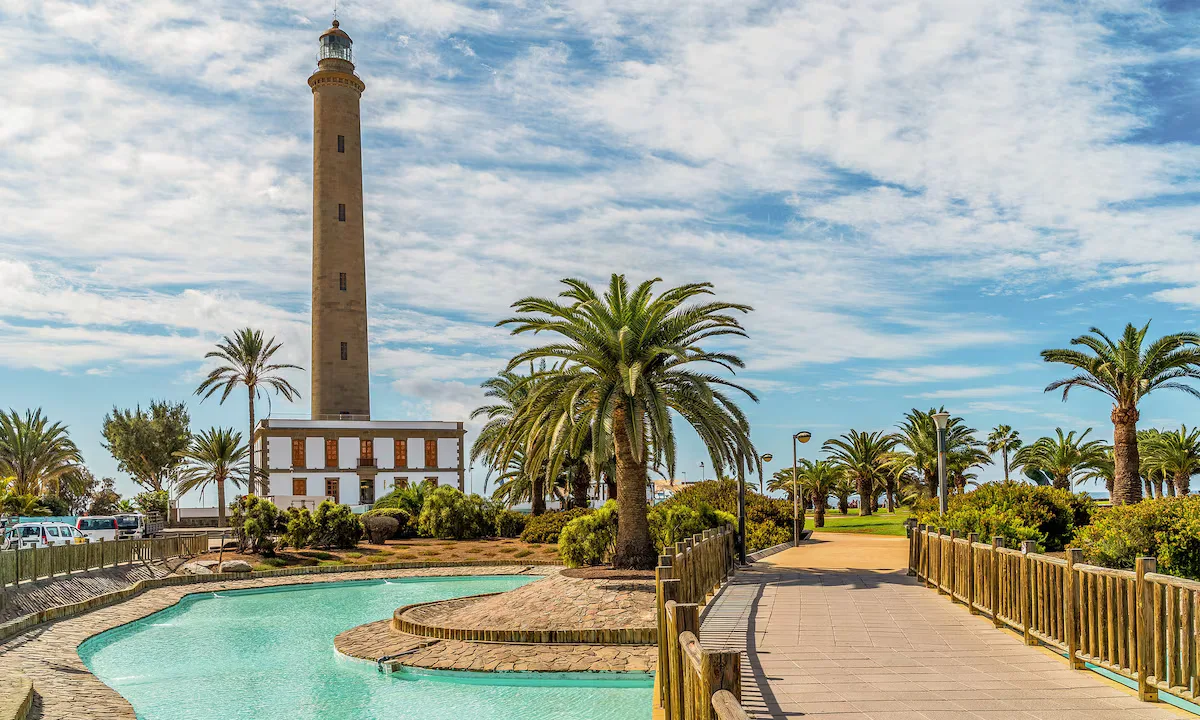
We head south. The Maspalomas Dunes are the postcard image of Gran Canaria: almost 400 hectares of golden sand forming a small desert by the sea, designated a Special Nature Reserve. Walk through them early in the morning or at dusk, when the low sun draws out the crests and the heat eases off. Finish at the Maspalomas Lighthouse, where there are great places to eat looking out over the ocean.
A different and great fun way to discover the dunes is on camelback, a tradition that comes from the islands’ historic link with Africa. Children love it, and the views of the dune field from atop the animal are second to none.
If you have time left in the afternoon, head to Playa del Inglés and the Meloneras promenade, a modern area of hotels, restaurants and shops by the sea, ideal for a car-free stroll and dinner almost with your feet in the sand.
Day 3 — The Mogán coast: Puerto Rico, Anfi del Mar and Arguineguín
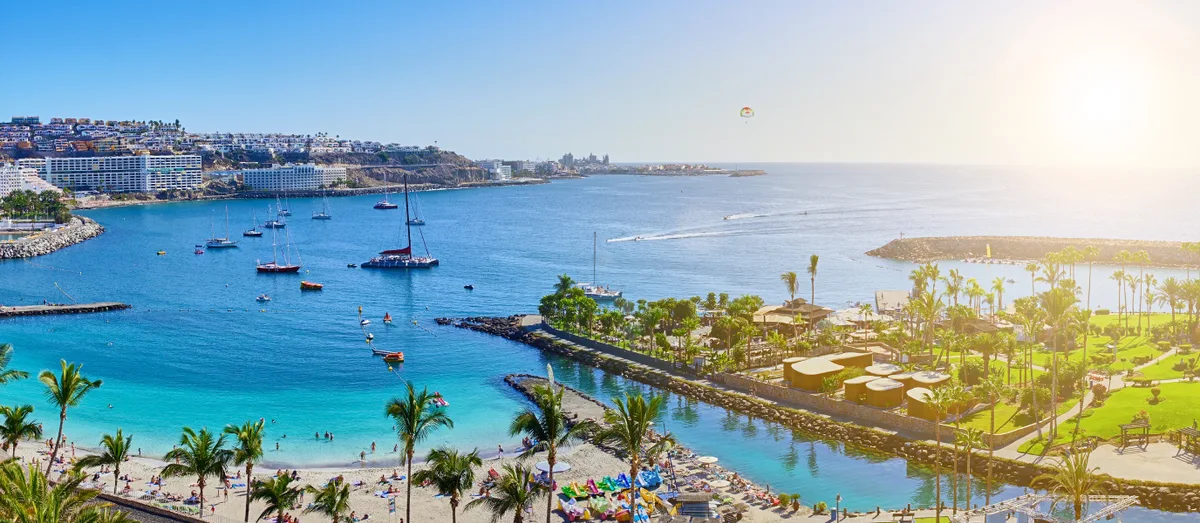
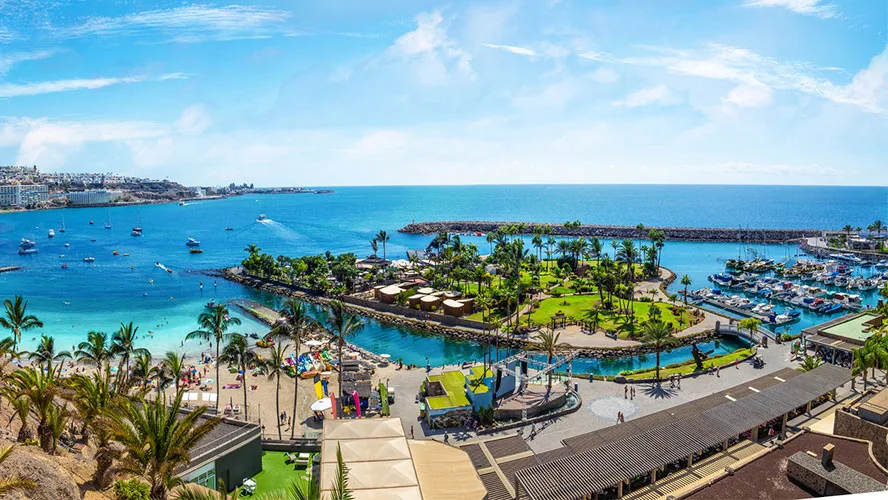
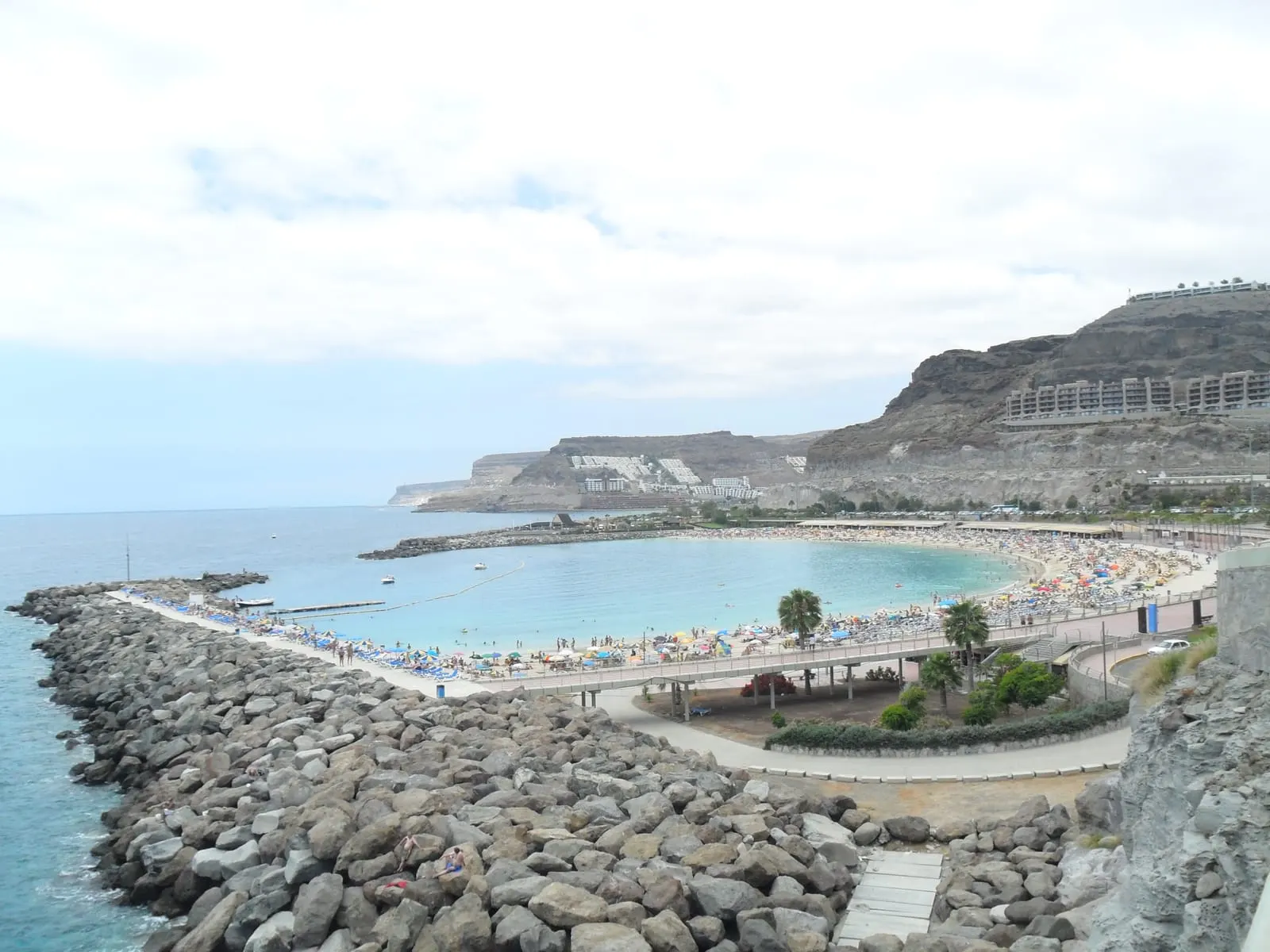
Anfi del Mar: white sand, turquoise water and the little islet linked by a walkway.
Today we dive into my favourite territory: the municipality of Mogán, the sunniest corner of Europe according to the statistics, and that’s no marketing line. The Mogán coast strings together some of the best beaches and harbours on the island, and it’s wonderful to explore both by land and by sea.
Puerto Rico and Amadores
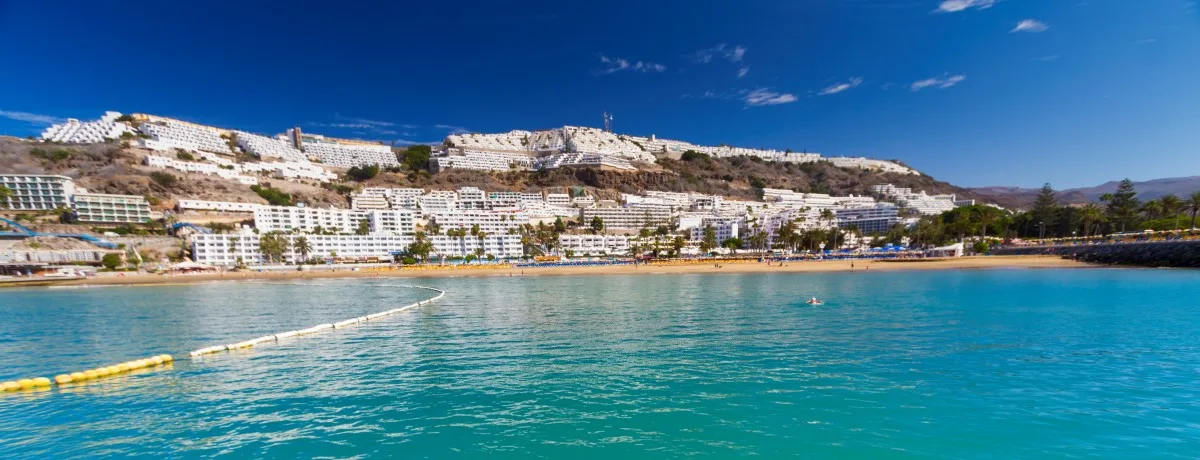
Puerto Rico, the tourist heart of the Mogán coast.
Puerto Rico is the tourist heart of the coast: a sheltered bay, a sandy beach, a marina full of life and the largest range of boat trips in all of Gran Canaria. A short walk away is Amadores, a Blue Flag beach with calm waters that are perfect for families. Catamarans set off from the harbour to watch dolphins and whales, which live in these waters all year round. It is, without exaggeration, one of the best experiences you can have on the island.
Arguineguín keeps its fishing-village soul and the best fish restaurants in the area.
Anfi del Mar is probably the most photographed beach in the south: white sand brought from the Caribbean, turquoise water and a little islet joined by a walkway. A little further east, Arguineguín keeps its fishing-village soul, with a popular Tuesday market and the best fish restaurants in the area, where Gran Canarians themselves eat. A great way to link these spots is by sea: the fast boat routes between Anfi, Arguineguín and Puerto Rico save you the traffic and treat you to coastal views you’ll never get from the car. For the more active, heading out by kayak from Arguineguín at sunrise is a pure privilege.
The water on the Mogán coast is usually a degree or two warmer and far calmer than the rest of the island, because it's sheltered from the prevailing north-east wind. If you want a proper swim any time of year, this is your spot.
Day 4 — Puerto de Mogán: the "little Venice" and the Friday market
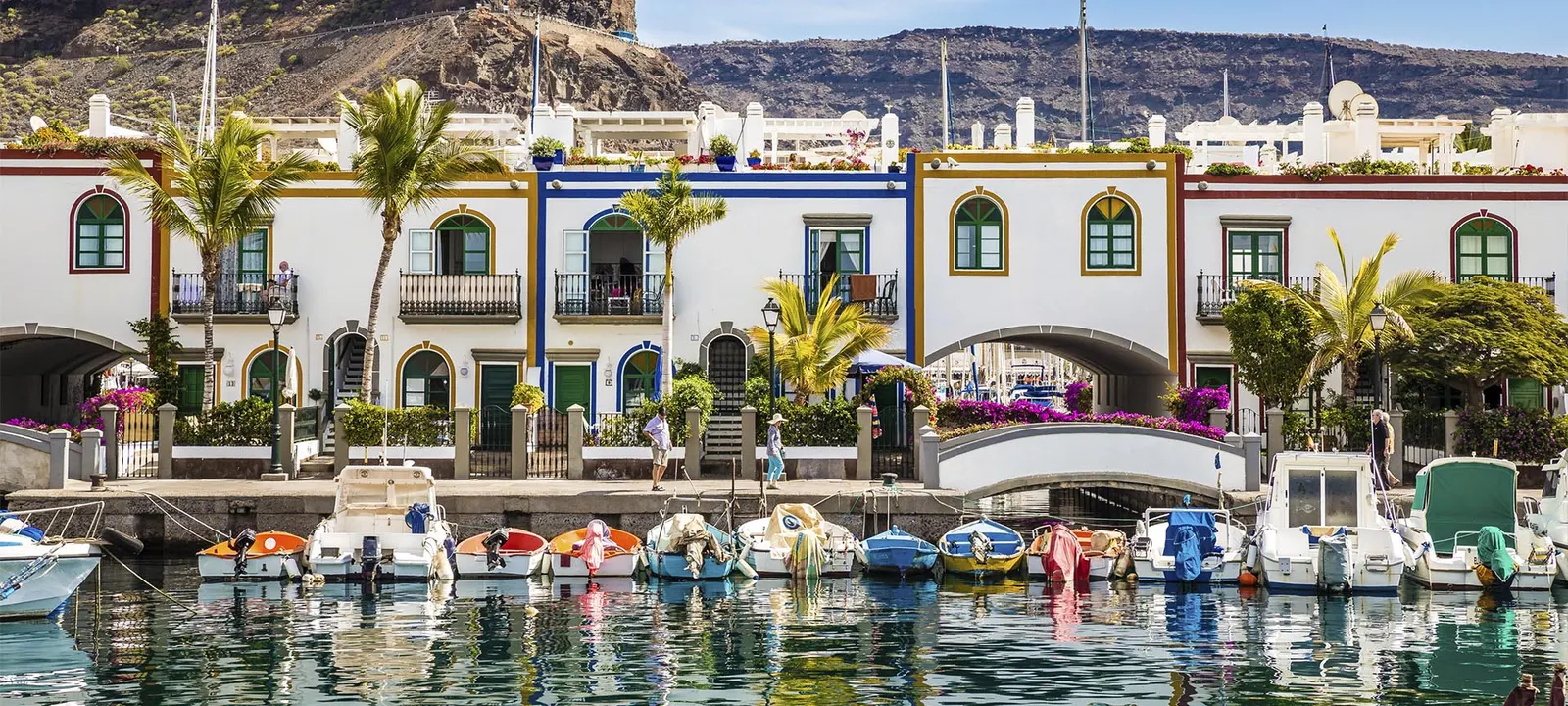
Puerto de Mogán, known as the little Venice for its canals and bridges.
If I could only show you one place in the whole municipality, it would be Puerto de Mogán. They call it the "little Venice" for its seawater canals crossed by little bridges, its low whitewashed houses draped in bougainvillea, and its pedestrian streets without a single tall building. It’s a beautiful, peaceful fishing village with a charm that need envy no more famous postcard.
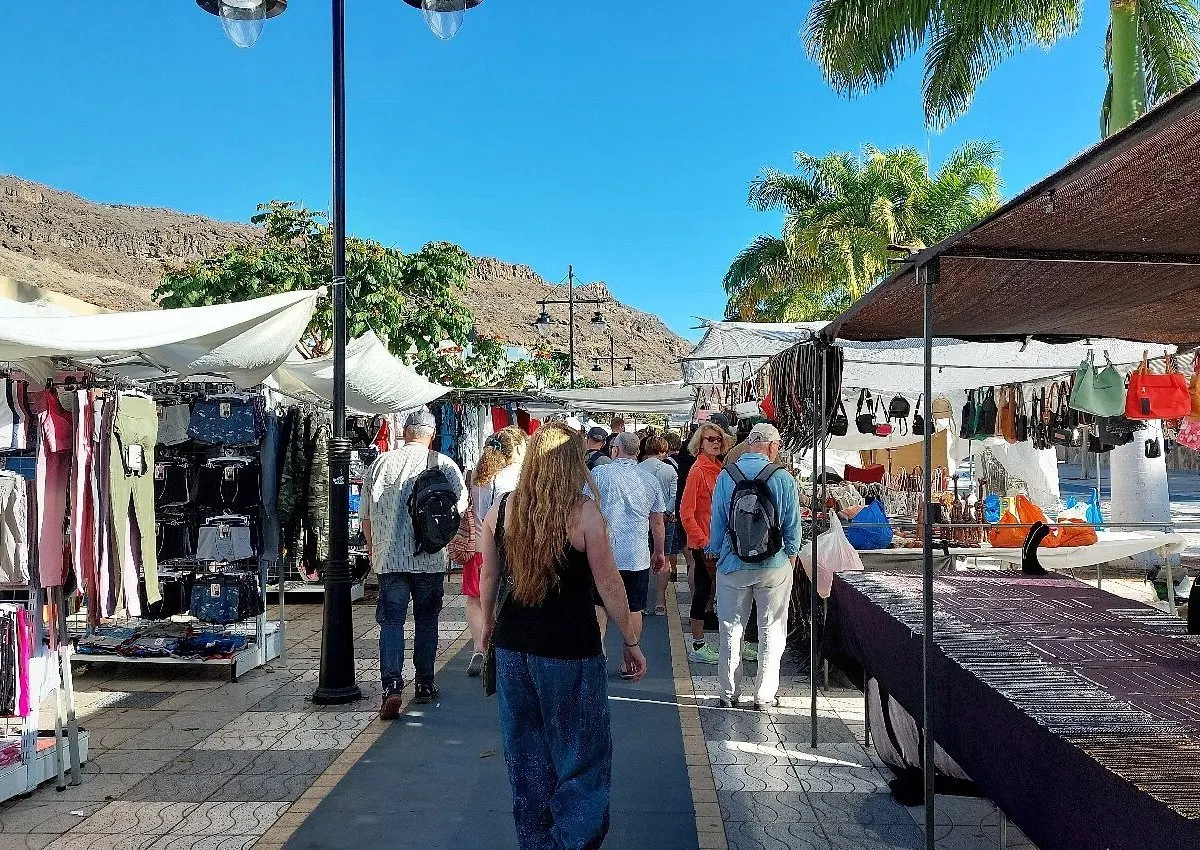
Wander aimlessly around the marina and the old fishermen’s quay, look out at the boats, and save time to eat by the water. If you can plan your trip to be here on a Friday, don’t think twice: the Puerto de Mogán market is the most famous on the island. Hundreds of stalls of crafts, clothes, fruit and local produce fill the village with atmosphere from the morning. A perfect idea is to combine it with a boat trip to arrive by sea and avoid the parking, which on that day is mission impossible.
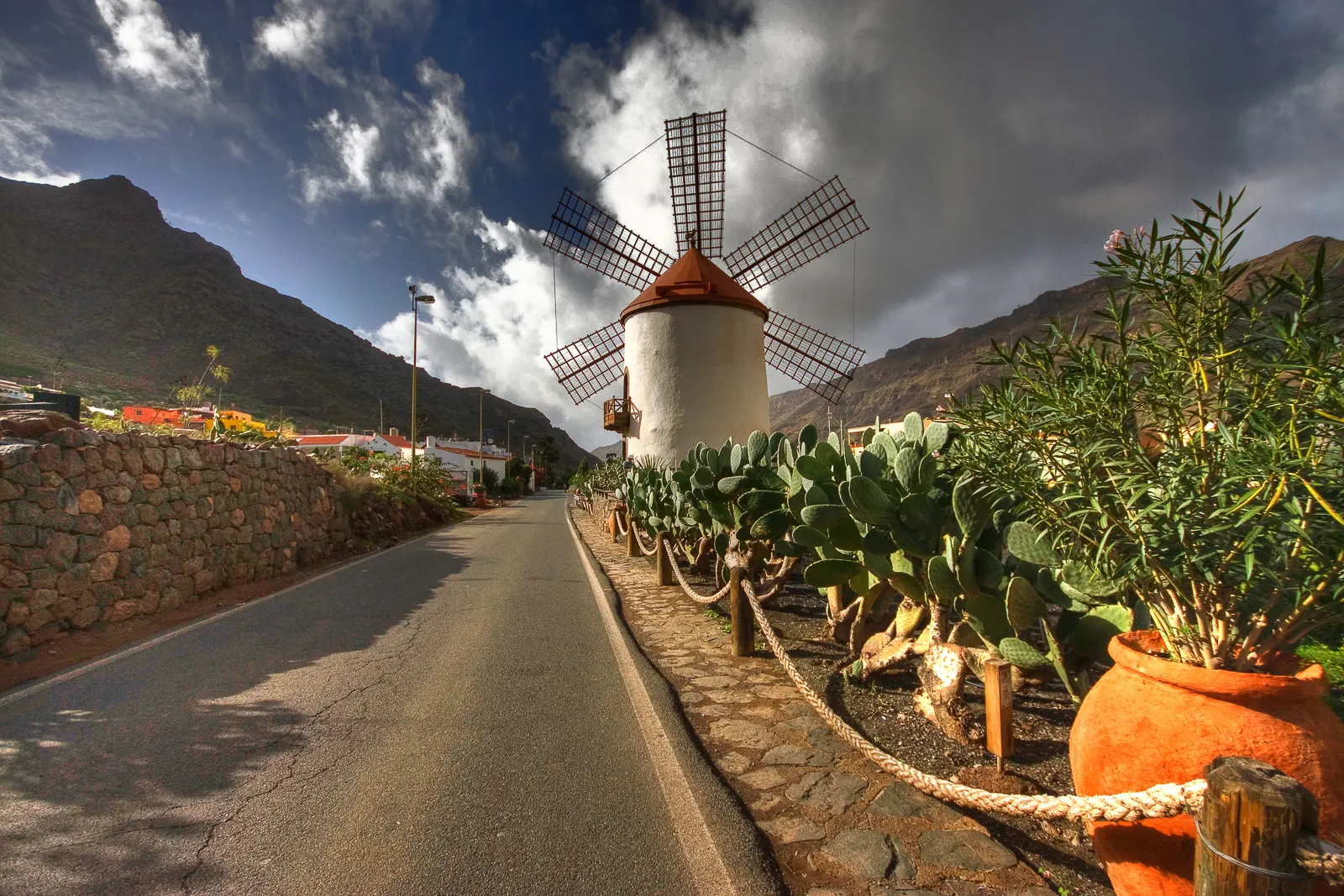
Traditional Mogán: white houses, flowers and silence a few kilometres from the coast.
In the afternoon, drive the few kilometres that separate the coast from Mogán village, the municipality’s traditional centre. Here the tourism fades away and the authentic Mogán appears: the green ravine full of mango and avocado trees, the terraced white houses and an unhurried pace of life. Take a stroll, chat with the locals, and get a feel for how all this was before the hotels arrived.
Day 5 — The heart of the island: Roque Nublo, summits and ravines
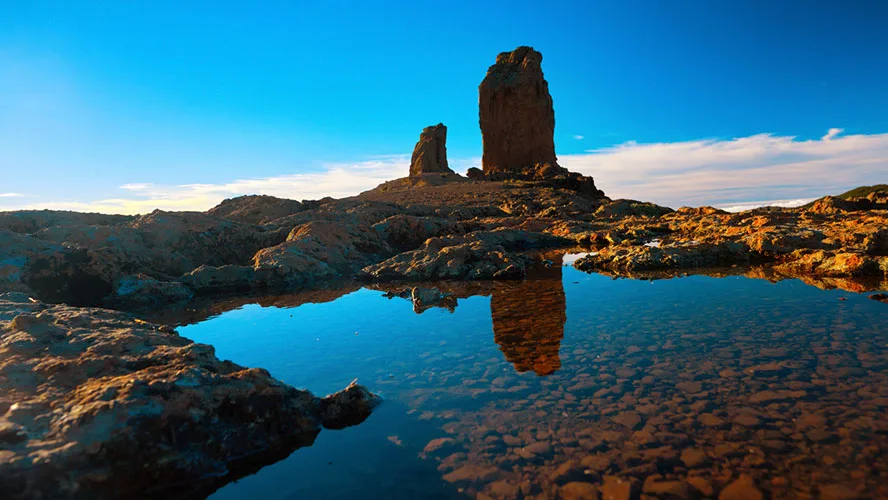
The Roque Nublo, the natural symbol of the island, at almost 1,800 metres.
Save the last day to climb into the mountains, because summit Gran Canaria looks nothing like the coast. The road rises through pine forests to the Roque Nublo, an 80-metre volcanic rock monolith that is the natural symbol of the island. From the car park, an easy 30-minute trail takes you to its base, with views of Tenerife’s Teide cut out against the sea of clouds on clear days. It is, quite possibly, the best panorama in the Canaries.
On the way, don’t miss the Pico de las Nieves viewpoint (the highest point, at 1,949 metres), the white villages of Tejeda and Artenara —with their cave houses— and the lunar landscapes of ravines and reservoirs. If you’d rather not drive the mountain bends, there are organised tours that take you up to the summits and the volcanic heart of the island, stopping at the best viewpoints.
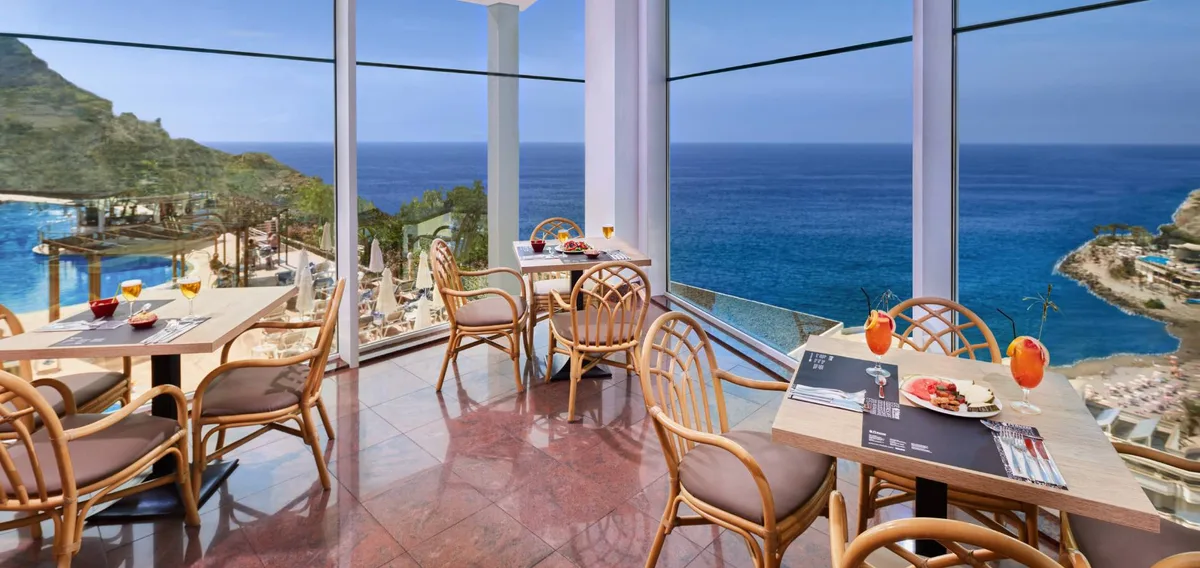
Eating by the sea is one of the great pleasures of the Mogán municipality.
Eating well here is easy if you know what to order. In the harbours of Arguineguín and Puerto de Mogán you’ll find the freshest fish and seafood: vieja (parrotfish) poached with potatoes and mojo, sea bream, wreckfish, grilled limpets or a good fish broth. Inland, in Mogán village, try kid goat, the local cheese and the tropical fruit from the ravine. And for dessert, bienmesabe or a quesillo. Pair it with a wine from the midlands and you’ll have eaten like a true Gran Canarian.
Want a sure bet? Take a look at our pick of the best restaurants in Mogán, rated and chosen by our local team, before booking a table.
🐟
A dish you can't miss
Poached vieja (parrotfish) with wrinkly potatoes and green mojo is the quintessential seafood dish of the south. Look for it in any harbour restaurant in Arguineguín.
Fresh fishCanarian cuisineMogán
Frequently asked questions
When is the best time to visit Gran Canaria?
Any time. The island is known as the island of "eternal spring": the average temperature hovers around 23 ºC all year round. The south, and Mogán in particular, is the warmest and sunniest area even in winter, so from November to March it’s an ideal destination to escape the cold.
Is it worth renting a car?
Yes, especially for the summit days and to explore at your own pace. To move only along the south coast between Puerto Rico, Anfi and Puerto de Mogán, the fast boats and buses are also a very comfortable option.
Are five days enough?
For a first taste of the essentials, yes. But I’m warning you: almost everyone who comes for five days ends up wanting to return. The Mogán coast, above all, gets under your skin.
And that’s it. Five days, a whole island and a very special little corner —Mogán— that I hope you enjoy as much as those of us lucky enough to live here do. Have a great trip.
A tireless explorer of every corner of Mogán. A lover of good coffee and an expert at finding the best fresh fish of the day. His motto: “In Mogán there's always something new to discover”.
Local Tip
From the heart of Mogán
“Do not drive into the centre of any southern village between eleven and four. Park up the hill and walk down: over five days that saves you more than an hour of circling.”
How to get there and where to park, why the water is so calm and the sand so golden, the seafront walk to Puerto Rico, when to go to dodge the crowds, and which southern beaches to weigh it against.
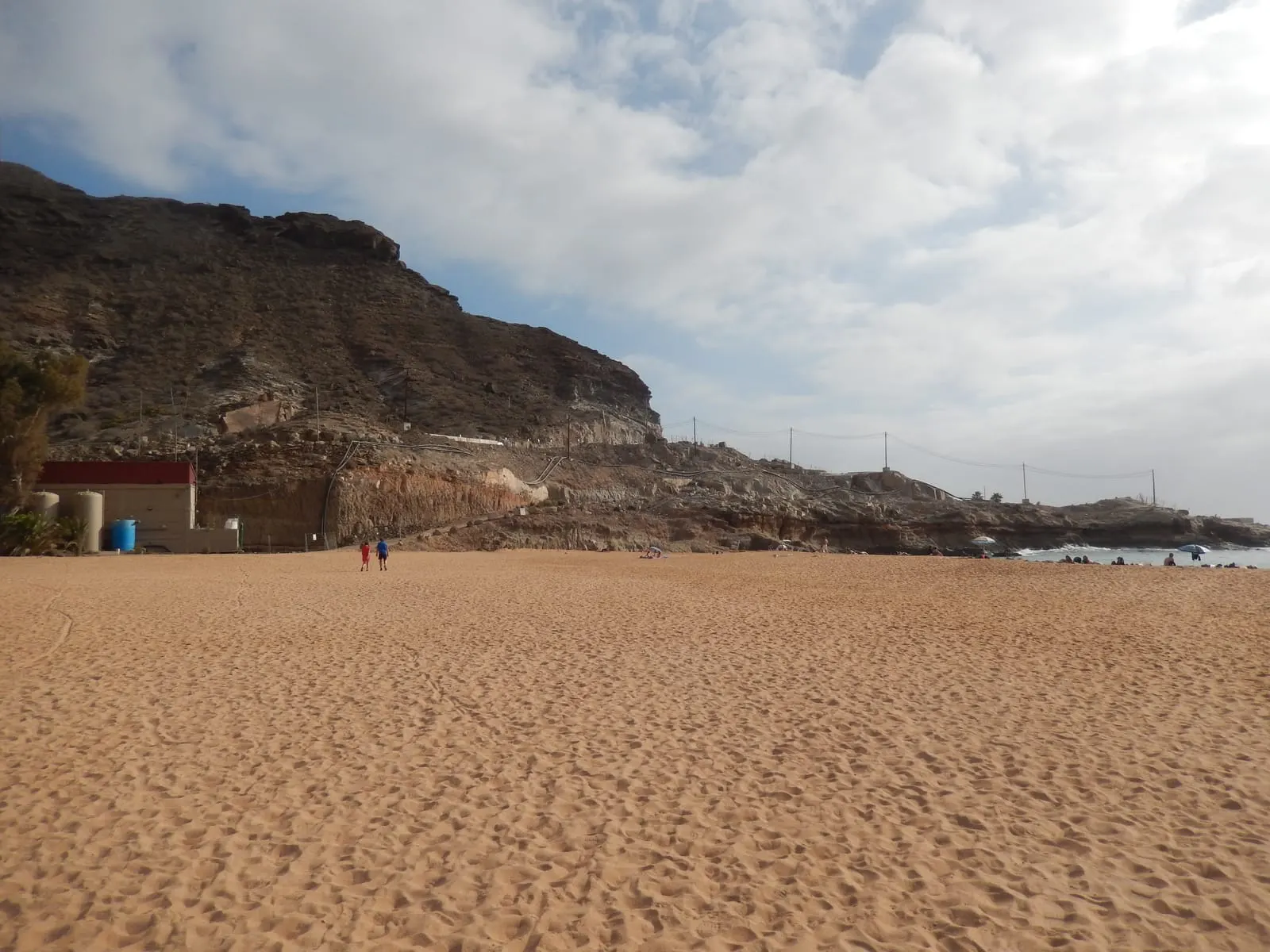
How to get there and where to park, what the sand is really like, what the Tauro blowhole is and when it erupts, where the cave sits, where to eat without emptying your wallet, and which southern beaches to weigh it against.
Everything about Puerto de Mogán’s Friday market: opening hours, where it is, what to buy, how to get there, where to park and the boat trips to enjoy it without a car.