We are writing this from Mogán, the stretch of coast where the south of Gran Canaria turns rocky, with cliffs, caves and coves sheltered from the wind. This is where you will find almost everything you can do at sea without being an athlete: jet skis, parasailing, kayaking, beach combos and, for the bold, coasteering. When we talk about the south we mean Taurito, Playa de Mogán and Puerto de Mogán, Arguineguín and Pasito Blanco, just over the border in San Bartolomé de Tirajana, which is where the seven experiences in this ranking start.
Where to do watersports in the south of Gran Canaria
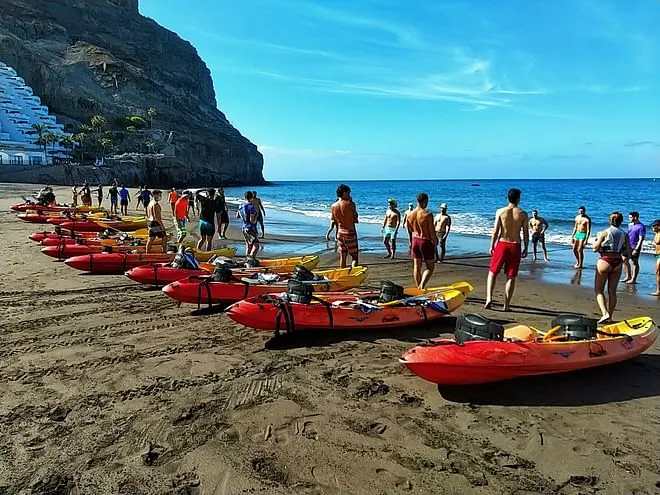
Taurito and Playa de Mogán are the two main bases. AquaSports has its beachfront centres there, with lockers and toilets, and the jet skis, parasailing and combos all leave from them. The coasteering meeting point is also in Taurito. Arguineguín is where the kayak tour starts, with coves and caves a short paddle from town. Pasito Blanco, a small marina between Arguineguín and Meloneras, is the starting point for jet ski trips towards the Maspalomas Dunes. Puerto Rico, for its part, is the big harbour for catamarans and dolphin watching, a different plan we cover in other guides.
Jet skiing in Gran Canaria: hire or guided tour
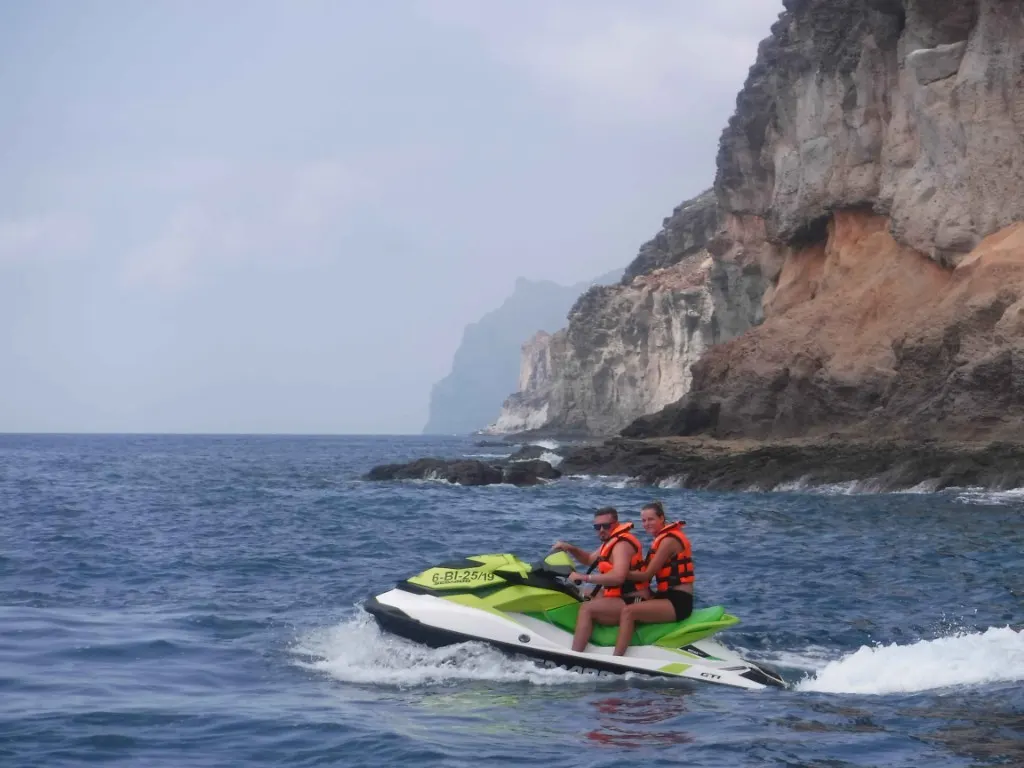
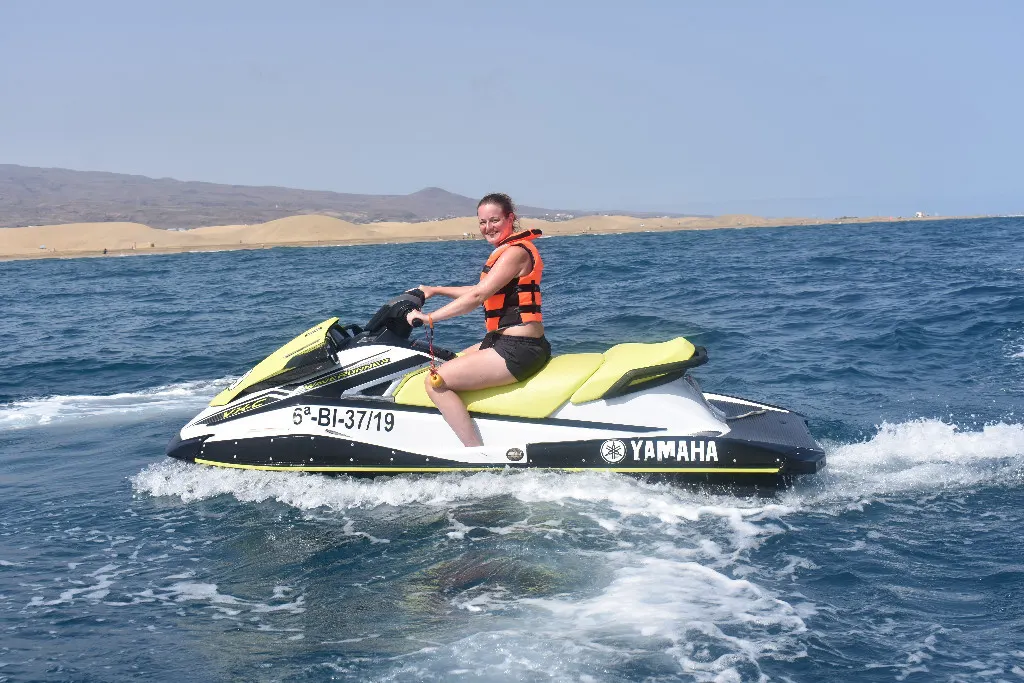
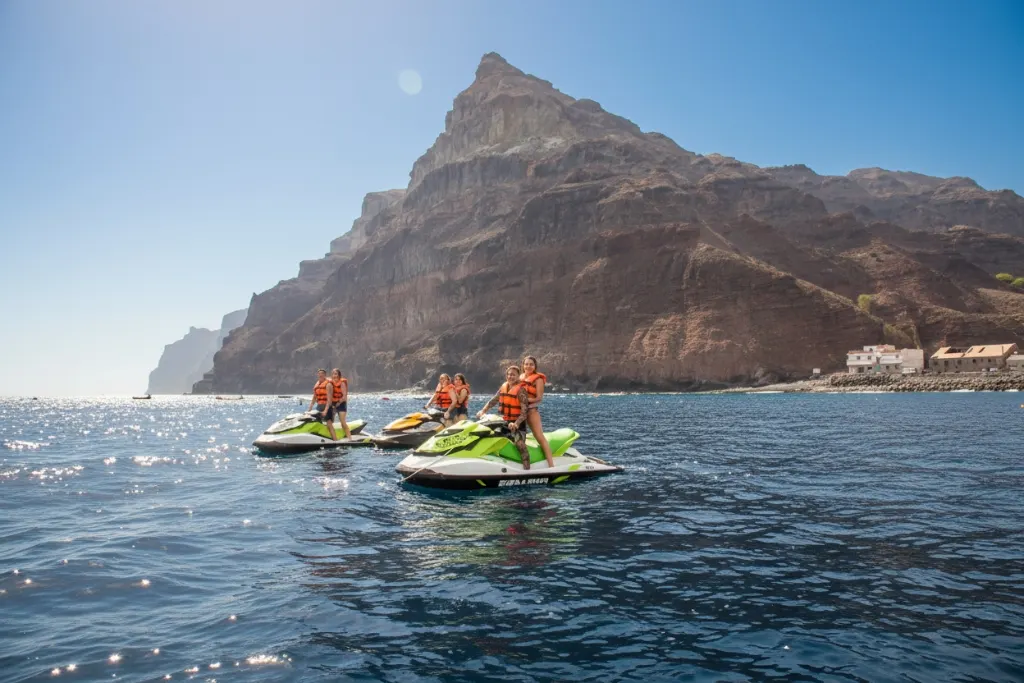
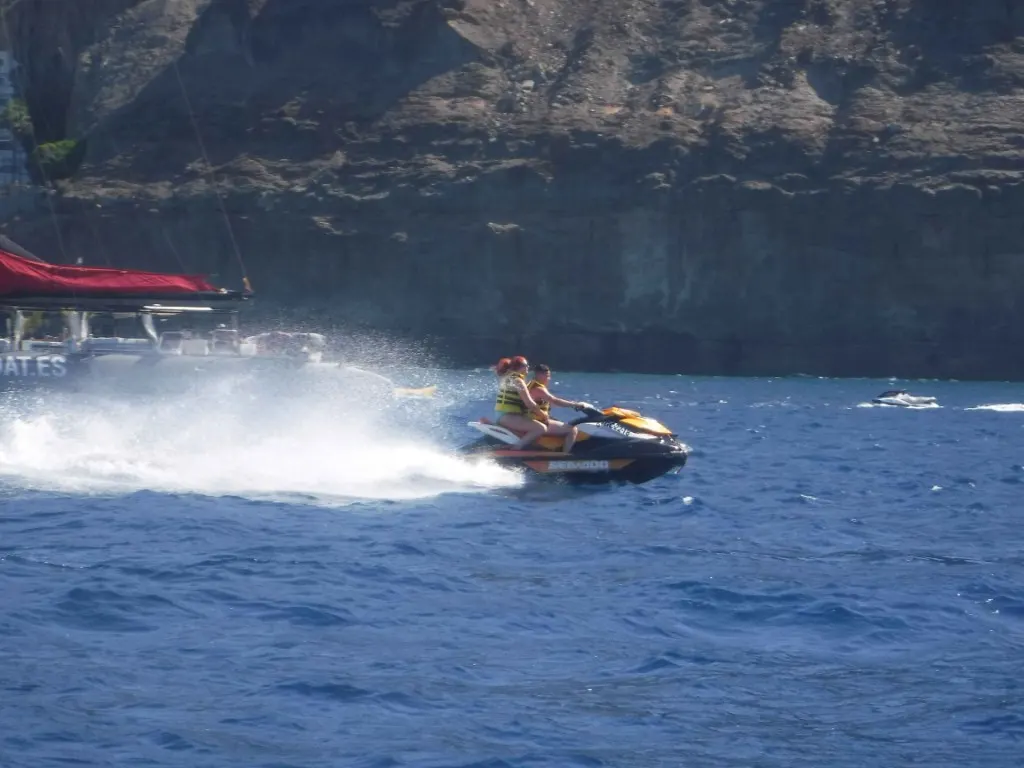
This is what most people look for, and there are two formats. Hire is a 15 or 30-minute circuit near the beach with an instructor, for those who want speed. The guided tour lasts an hour and follows the coast behind the guide: from Taurito or Playa de Mogán it heads to Tasarte, the wildest coastline in the south-west; from Pasito Blanco, towards the Maspalomas Dunes. If you are only doing one, choose the tour: the scenery makes up for the difference in price. Jet skis are single or double, and passengers can ride from age 6.
Coasteering and kayaking: the sea without an engine
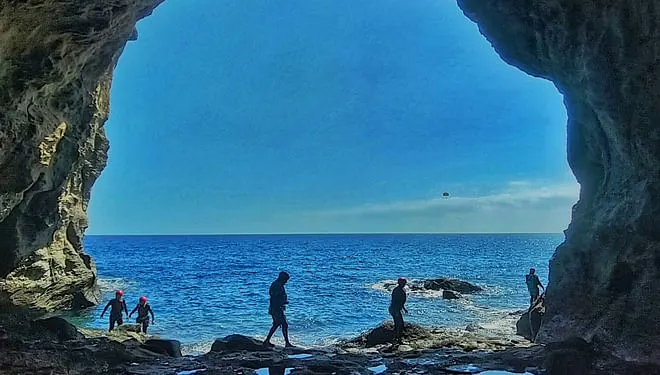
If you would rather move under your own steam, the south has two guided half-day plans. Coasteering works its way along the Mogán cliffs with jumps, abseils, a zip line inside a cave and stretches of swimming; it is the most intense activity on the list and the best reviewed. Kayaking is the opposite: relaxed paddling in a double kayak, coves, caves and a bit of snorkelling, ideal for families. Both are run by Mojo Picón Aventura, a Canarian active tourism company that has been guiding groups since 2000, and both include a picnic, insurance and photos.
What you will see from the water
The best of the south is seen from the sea. West of Mogán the coast turns wild: mountains drop sheer into the water, the Tasartico caves open up in the cliffs and Playa de Tasarte, inside the Biosphere Reserve, is one of the most geologically valuable stretches of the island. Heading east from Pasito Blanco, the reward is the Maspalomas Dunes seen from the water. Along the way sea turtles and flying fish are a common sight, sometimes dolphins too, and on clear days Mount Teide appears on the horizon. By kayak you also stop at small coves and archaeological sites along the shore.
Wind, sea and the best time to go
The Mogán coast is the most sheltered on the island: the operators themselves explain that the rocks and cliffs protect it from the wind and that it is the sunniest part of Gran Canaria all year round. That means you can get out on the water practically twelve months a year. Even so, any activity can be called off in bad weather; if that happens you are offered another date or a refund, so it is worth booking at the start of your trip rather than on the last day. Coasteering is the seasonal exception: it runs from late April to November. Kayaking, parasailing and jet skiing run all year.
Requirements: age, licence and swimming
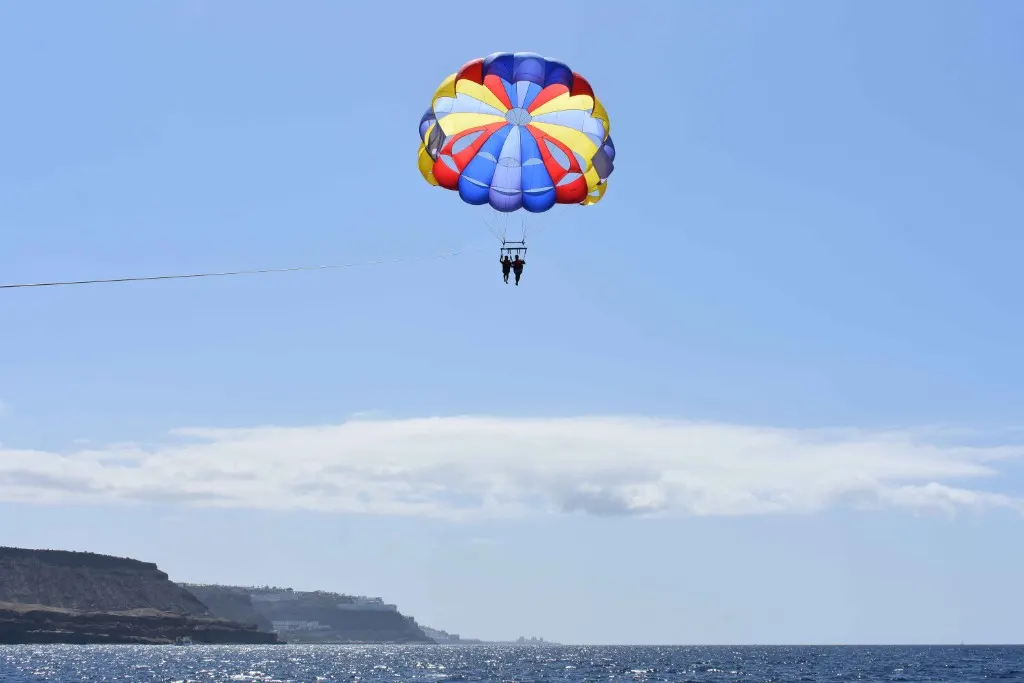
To drive a jet ski on the trips in this list you just need to be an adult: Spanish rules allow hourly hire on a circuit and group excursions without a boating licence, always with instructors from an authorised company who brief you before you set off. Passengers can be from 6 years old. Parasailing takes children from 6 with their parents and needs no preparation. Kayaking requires you to swim and a minimum age of 8. Coasteering is the most demanding: you must swim, be at least 12 and have a head for heights, because there are jumps and abseils. AquaSports' combos are adults only.
Safety and what to bring
Every trip includes a life jacket, a briefing and accident insurance; for coasteering you also get a wetsuit, helmet and harness. Bring swimwear, a towel, sun cream and sunglasses with a strap. For coasteering, trainers that can get wet plus a spare pair; for kayaking, a cap and plenty of sun cream, because it is five hours in the sun. Leave your phone and wallet in the free beach lockers: the operators sell the photos and videos of your activity afterwards, so you can go without a camera.
Guide prices
As a reference: jet ski hire and parasailing start at around €50, combos at €105, kayaking and coasteering at €65 with picnic and photos included, and the one-hour jet ski tour at €130. Prices are a guide only and vary with the season, the number of seats and whether you add hotel pick-up or a photo package.
Watersports with children
With young children, parasailing is the safe bet: they fly with their parents from age 6 and it is a calm experience. From age 8, the Arguineguín kayak tour makes a full day of coves, caves and picnic. From 6 they can also ride as passengers on a jet ski driven by an adult, and teenagers from 12 can do coasteering with a parent.
Local tips
If you are staying in Mogán, Taurito or Puerto Rico, go straight to the beach instead of booking a pick-up: you save the transfer and start earlier. If you are based in Maspalomas or Meloneras, Pasito Blanco is much closer. In high season book ahead, because slots for each activity are limited and parasailing gives you a set time. And if you are in Puerto de Mogán on a Friday, pair the sea with the street market, which fills the harbour in the morning.
We review this ranking regularly: if an operator changes its route, prices or conditions, we update it. And if you have done any of these activities and want to tell us how it went, we would love to hear from you.